‘An Asian brand for Asian families’: How Le Petit Society built a modern childrenswear label from Singapore
What started as a baby gifting brand has evolved into a go-to label for children’s accessories and essentials. Founded by Robyn Liang and Dylan Ong, Le Petit Society was born from a search for better-designed kids’ products in Asia and is today a homegrown brand shaped by parenthood and purpose.
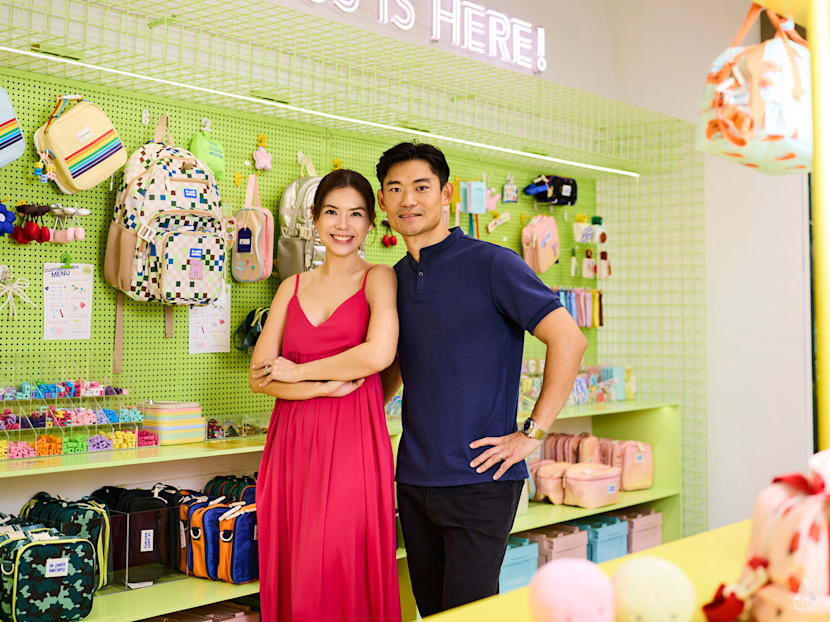
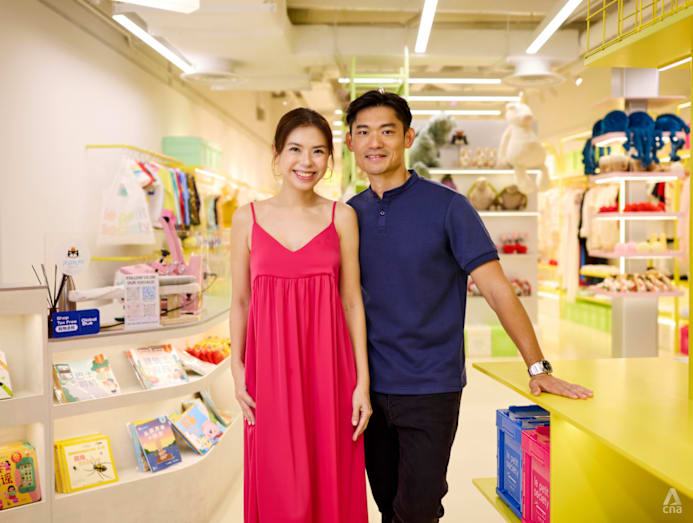
Le Petit Society was founded by husband-and-wife duo Robyn Liang and Dylan Ong in 2012. (Photo: CNA/Aik Chen)

This audio is generated by an AI tool.


There’s a certain predictability when it comes to children’s apparel – pink for girls, often with princess or sparkly motifs; blue for boys, stamped with trucks and dinosaurs. But go through the racks at Le Petit Society and you will notice a different approach.
The Singaporean brand has built its identity around a distinctly modern take on childrenswear – the designs are playful without being loud; colourful yet never garish.
The founders are husband-and-wife duo Robyn Liang and Dylan Ong, who started the brand in 2012. The couple are former bankers who were based in Hong Kong – Liang was a fixed income trader, while Ong was a private equity investor. Their move into entrepreneurship was driven by a desire to build something more purposeful and entirely their own.
Children’s apparel, however, was not the original plan. When they first set out to create their own brand, the couple did not even have children of their own. “A common assumption is that we started Le Petit Society because we are now parents of three. But in fact, this is our first baby,” Liang said.
As they explored different ideas – from opening a fitness gym to a custom tailoring business and other ventures tied to their personal interests – they found themselves drawn, somewhat unexpectedly, to kidswear.
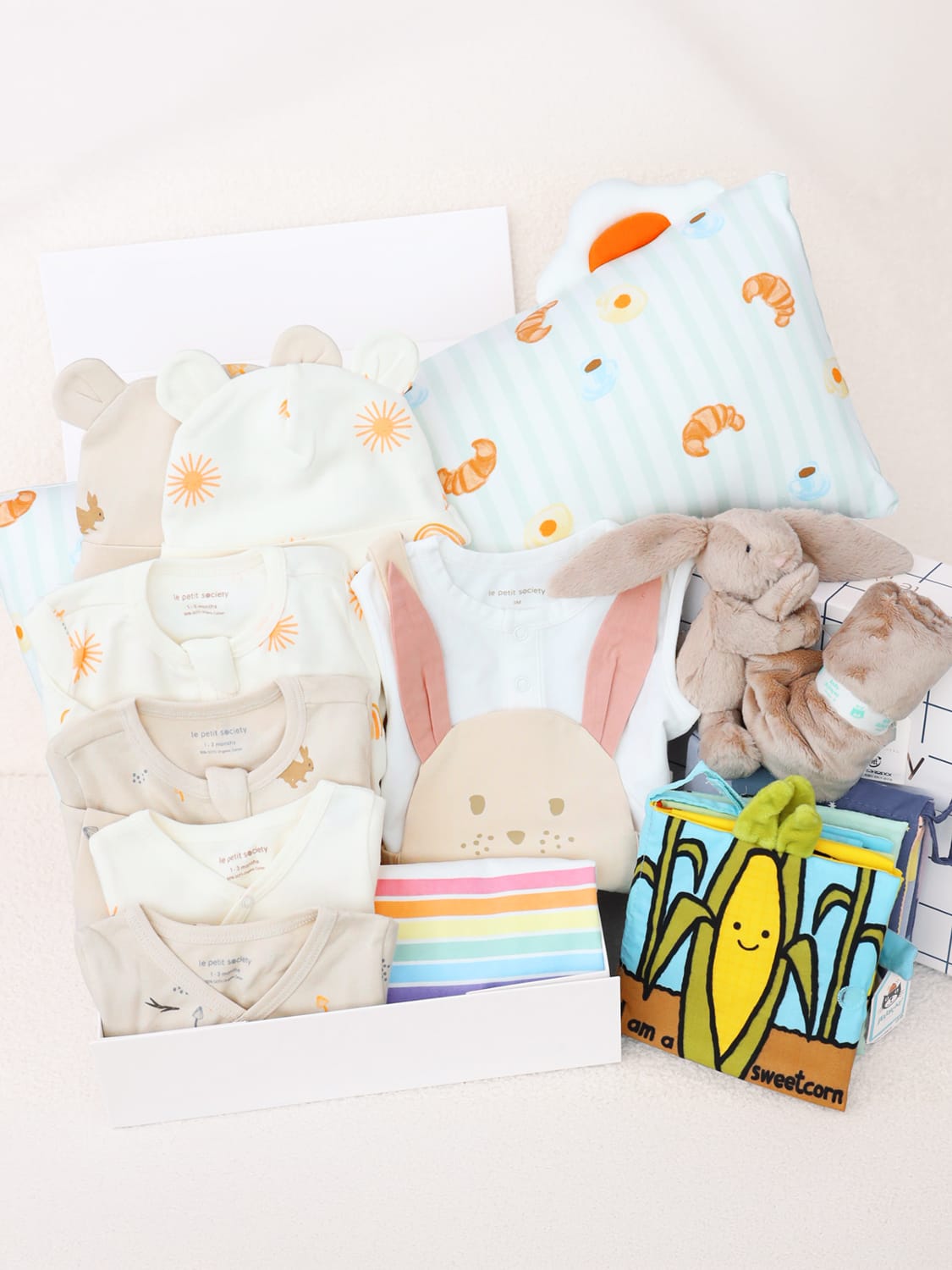
“At the time, a lot of our friends and family were having babies,” Liang recalled. “We started becoming exposed to baby and kids’ products and would buy gifts ourselves. When we travelled to France or even South Africa, we would find well-made, affordable kids’ brands. But in Hong Kong or Singapore, you had two extremes: department store products with cartoon prints, or better-designed pieces at luxury prices, often from France. There was very little in between.”
Gradually, the idea for Le Petit Society began taking shape. “We wanted to create an Asian brand that would be top of mind when people are buying a gift for someone who just had a baby,” Liang said.
The couple spent their weekends trawling textile markets in China and looking for suppliers. Ong then left his job first to begin conceptualising and preparing the brand for launch. Liang quit her job “the day after our first photoshoot,” she revealed. “It was the first time we saw our products on children and thought, ‘okay, this is going to work’.”
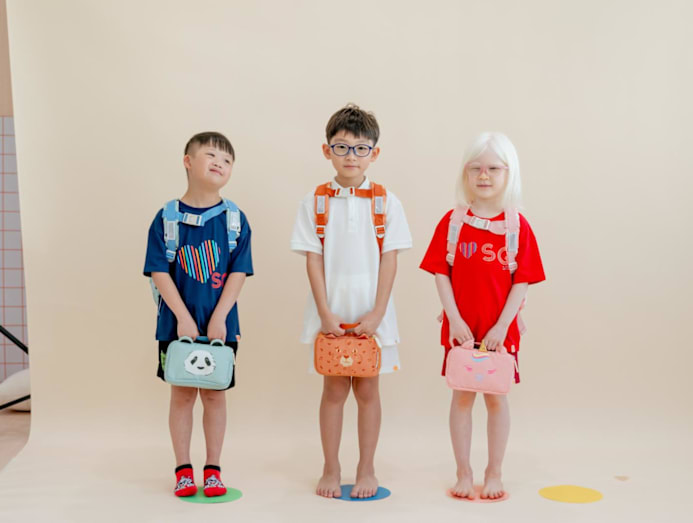
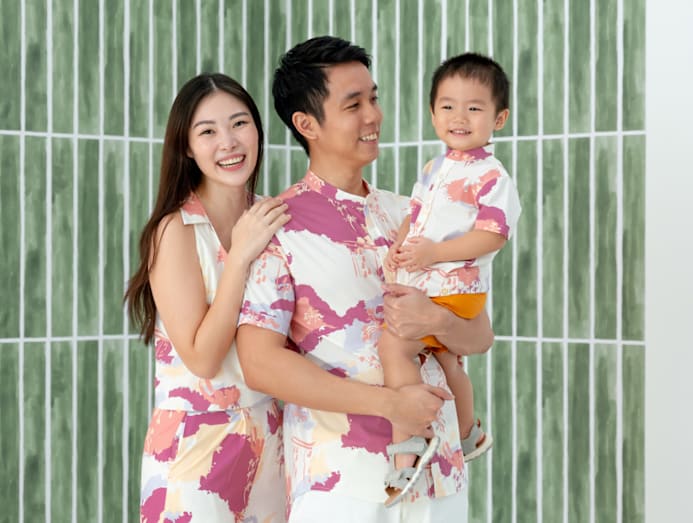
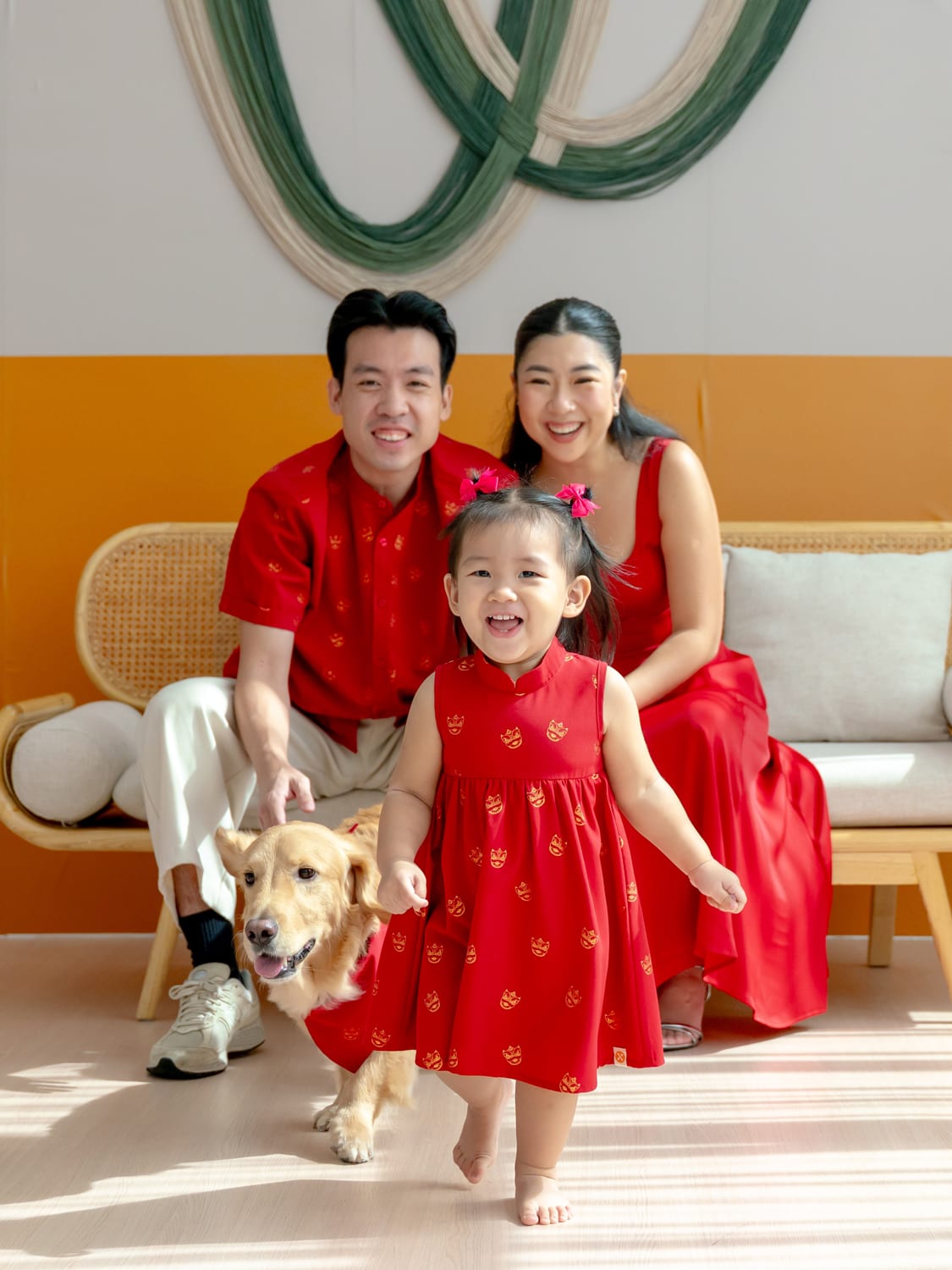
The pair eventually moved back to Singapore when Liang got pregnant with their first child. Today, they are parents to three kids, two girls and a boy, aged 13, 11 and eight. Becoming parents themselves has undoubtedly shaped the brand. Beyond apparel, Le Petit Society is also known for their school essentials such as backpacks, lunch bags, bottle bags and wallets. Their family sets for Chinese New Year and National Day are also popular amongst Singaporean families.
“Our products have evolved through our understanding and learning as parents, knowing what we need, what parents need, and what is hard to find. We are constantly on the lookout for gaps in the market that we can fill,” said Liang.
BEYOND BABYWEAR
Indeed, that instinct for spotting underserved niches and moving quickly to address them is precisely what has helped set Le Petit Society apart from other brands. This adaptability was particularly evident during the COVID-19 pandemic, when the couple recognised an immediate need for well-designed masks for children and responded with speed. “We were one of the first brands at the time to make masks for children,” Liang recalled.
It is a philosophy that has since shaped the brand’s expansion into new product categories. While Le Petit Society started off with newborn and baby apparel, the founders have since identified a growing opportunity in accessories for older children.
The idea for school bags, for instance, came about when their eldest child started Primary 1. “A lot of children get their bags from Nike, Adidas, or even Popular Bookshop. Ergonomic bags are also very expensive and heavy, that to me, don’t make sense for young children because they add more burden to the spine,” said Liang.
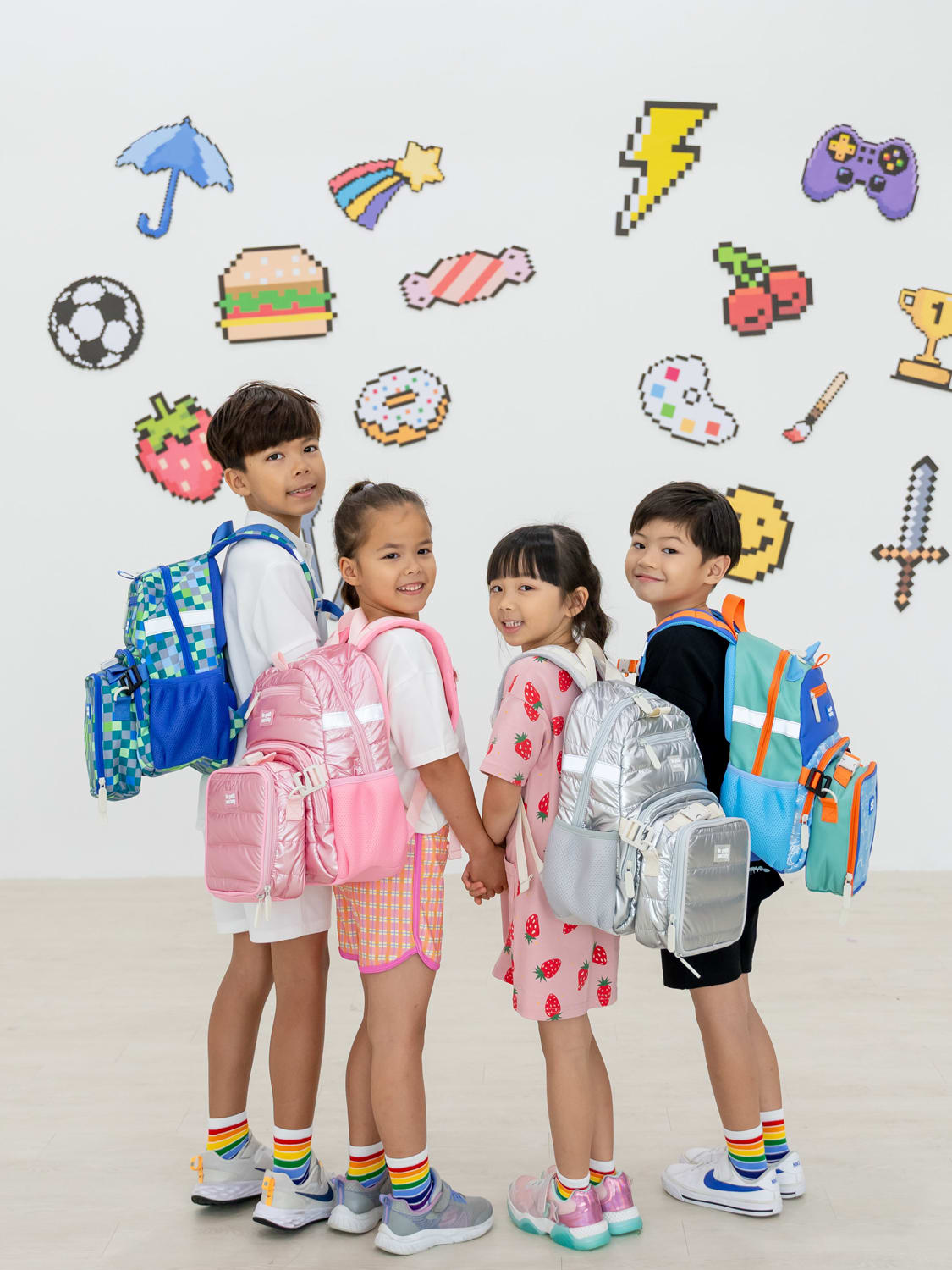
Le Petit Society’s backpacks are lightweight, waterproof and are designed with other practical features such as reflective strips, a padded laptop sleeve and lunchbox attachment buckles. They also come with a one-year warranty and can be customised with the brand’s range of custom patches.
Swimwear is another growing category for the brand. “Singapore is a unique place in that it is hot all year round and there are swimming pools and water parks everywhere,” said Liang. “Kids also have to learn how to swim or take swimming classes again in Primary 4.”
While the current swimwear line is targeted at younger kids, this year, the couple hope to launch swimwear for pre-teen and teenage girls with removable paddings, citing a lack of age-appropriate options in the market. “Some girls develop earlier, some later. There are a lot of swimwear brands that make pieces for women, but then you’re expecting teenagers to wear bikinis or styles that are too mature for them,” Liang reflected.
It’s a small category, she admitted, but one that reflects the brand’s ethos of responding to a need. “There are certain things that a lot of other brands won’t bother with because it may not move the needle. But for us, we are servicing our Singapore community and when I identify a need through my own kids, I want to be the brand that offers that solution.”
While Le Petit Society is, at its core, a children’s label, its products – from bags to pencil cases and even home accessories – often appeal to adults as well. “We don’t just make things for children. When you walk into our shop, you won’t find things that are overly cartoony. We always design with an adult aesthetic in mind,” Liang said.
THE NEXT PHASE
Liang and Ong bill Le Petit Society as “an Asian brand for Asian families”. While the name may sound French, Liang says this was intentionally “aspirational” as “back then, we wanted people to associate us with French quality”.
What began as an e-commerce venture has since grown into a multi-channel retail business, with stores across Singapore – including at Paragon, Downtown Gallery, Jewel Changi Airport and Resorts World Sentosa.
Having established a strong retail footprint at home, the founders are now setting their sights on regional expansion. In January 2026, the brand made its first move into Malaysia through a partnership with local retailer, Happi Kiddo. Vietnam is next on the horizon, with plans underway to enter the market via a collaboration with Singapore-based retailer Motherswork.
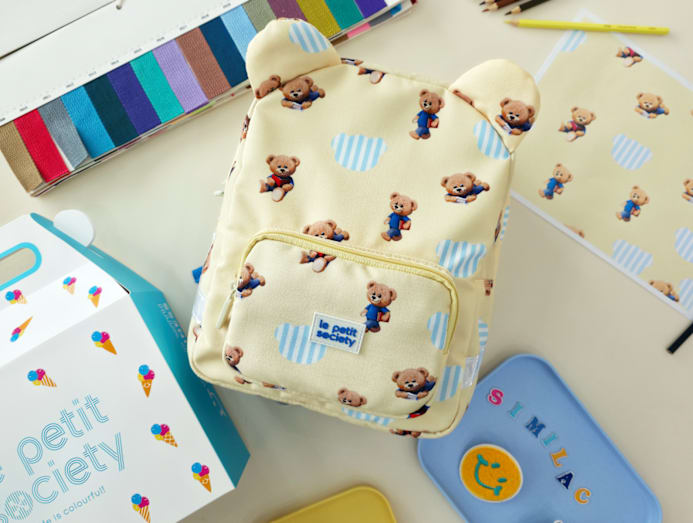
Another avenue of growth lies in corporate partnerships, which have become an increasingly important part of the business. The team kicked off 2026 with a collaboration with Thomson Medical, designing hospital bags for new parents to take home after delivering their newborn. They have also worked with milk powder brand Similac on a co-branded backpack, reflecting a broader strategy to extend the brand beyond traditional retail channels.
But as the business expands, the focus is also shifting to longevity. As founders of the company, Liang and Ong recognise that the business needs to thrive without their day-to-day involvement – a challenge many entrepreneurs eventually face as companies scale beyond their original operations.
“This is the year where we are looking at organising the business, recognising where our assets lie and how to further build upon them, and create a template for doing certain things so that there’s always continuity, even when we are not around anymore,” Ong shared.
CELEBRATING INDIVIDUALITY
An important aspect of the business is a desire to give back. This intention is embedded in the word “society” in the brand’s name, which Liang and Ong say was intended to signal an “all-encompassing brand without any exclusions”.
While Le Petit Society aims to operate as an affordable luxury brand, Liang explains that the team looks for other ways to reach beyond its core customer base. This includes donating brand-new clothing to organisations such as MINDS, which runs thrift stores staffed by individuals with learning disabilities.
“While we try to build a successful brand that is very proudly Singaporean, we also want to use the business to do good,” Liang reflected.
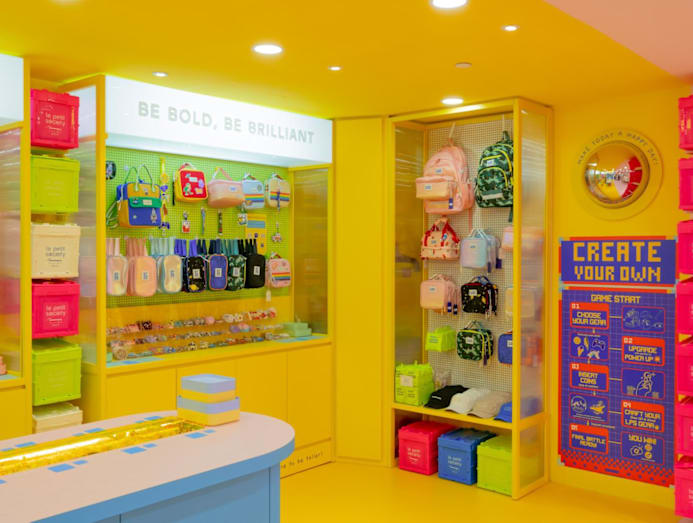
Beyond donations, the brand is increasingly focused on weaving positive message into its retail spaces and designs – from colourful, rainbow-inspired store concepts to a broader messaging encouraging children to embrace individuality rather than conformity. “One key message that we want to spread is for children to be who they are. You can be any colour of the rainbow without conforming – you don’t have to feel that you need to be a certain colour just because everybody else is,” quipped Liang.
LESSONS IN ENTREPRENEURSHIP
Liang and Ong are candid about what it means to build a business as a married couple. “It’s a bit of a miracle that we are still together,” Liang said with a laugh. “It’s a lot of work, but in a way, it’s also what made it successful. Being married meant we didn’t give ourselves the option to walk away.”
Both founders contribute to different aspects of the business. Liang takes charge of marketing, design and sales, while Ong handles legal, technology and finance. Balancing the company alongside raising three children, however, is an ongoing exercise in prioritisation. “Sometimes you have to let some balls drop. But make sure the ones you drop are the rubber balls, not the glass balls,” Liang advised.
Another piece of advice they have for budding entrepreneurs is: “Don’t make your passion into a business. Instead, make your business into your passion.”
“In our case, we didn’t start off with a passion for children’s apparel as we didn’t even have kids. But along the way, we made it into our passion and now, we’re constantly learning, constantly being challenged and are constantly finding solutions for our customers,” Liang said.
Fourteen years on, the business has grown together with the founders and the families they serve. Nonetheless, the focus remains on building steadily, with the same sense of purpose that has guided them from the beginning.