TWG Tea opens its largest store in the world at Changi Airport – with its first permanent museum
The Singapore-born tea brand’s new 2,700 sq ft flagship brings together more than 1,000 teas, a museum of antique tea wares and exclusive creations for travellers on the move.
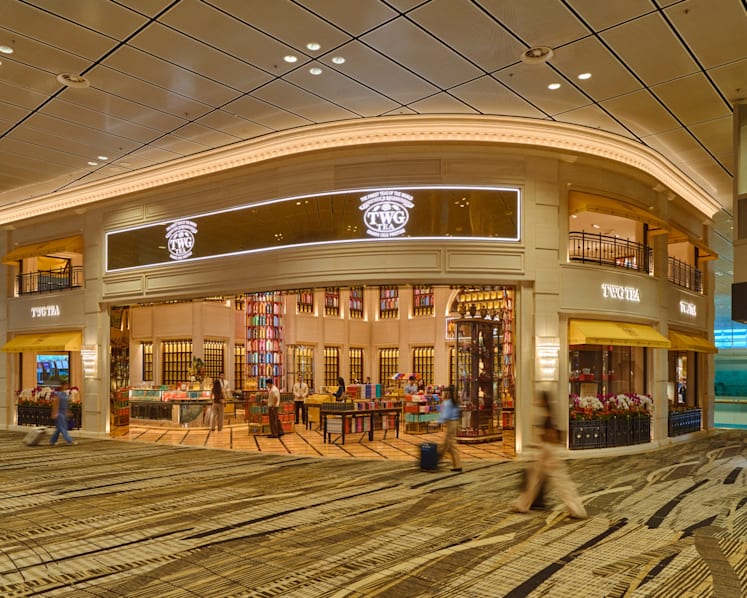
The new TWG Tea Gallery at Changi Airport Terminal 3 brings together retail, tea culture and the brand’s first permanent museum. (Photo: TWG Tea)

This audio is generated by an AI tool.


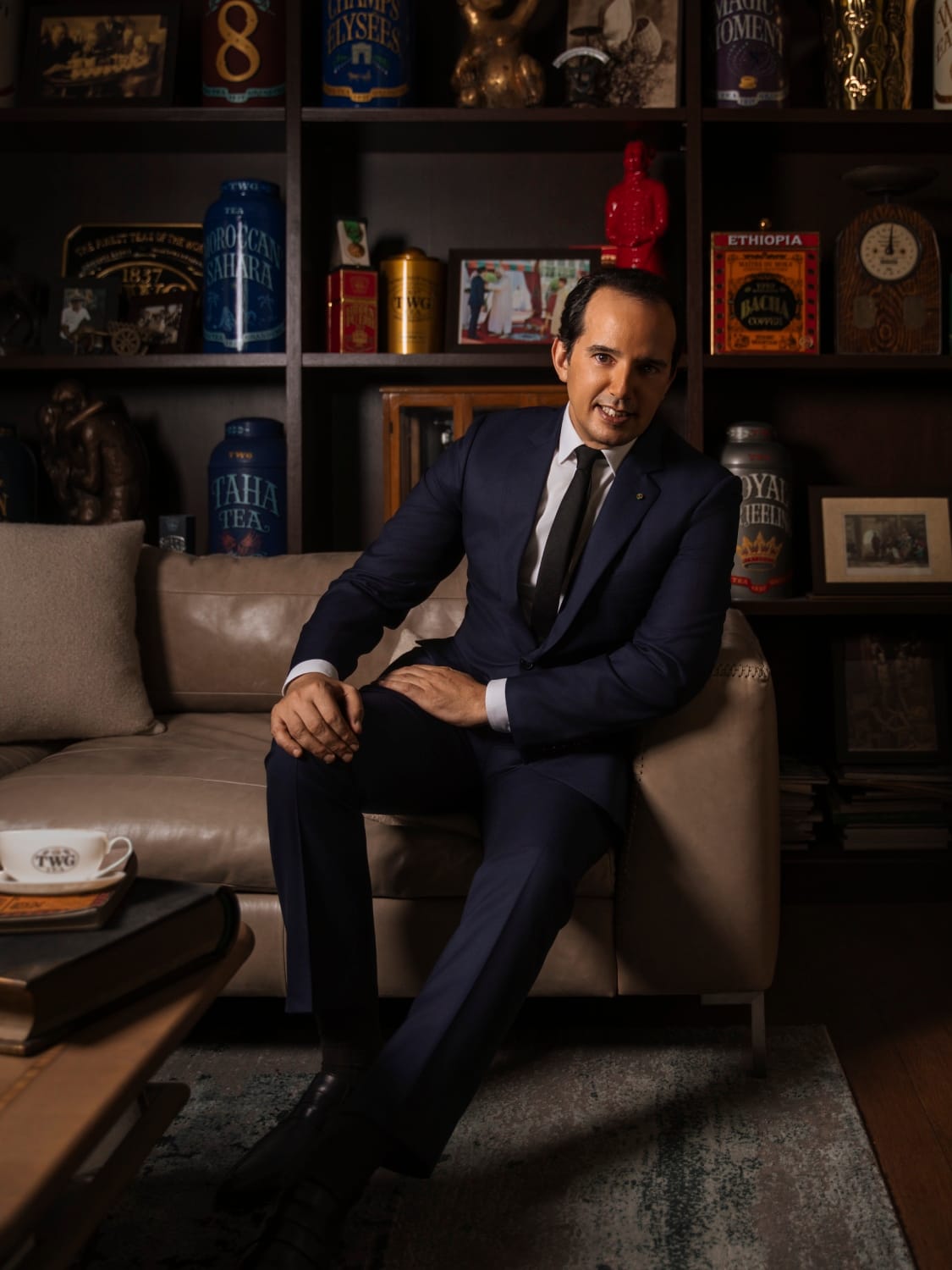
Step over the threshold of the freshly minted TWG Tea Gallery, and the first thing you notice is the grassy perfume of tea leaves from around the world, opened and filling the air, much as a spice souk or an open-air market infuses the air before you've even turned the corner. It is, as Taha Bouqdib will tell you, entirely by design. “Sometimes, the aroma of a tea is your first encounter with a country you have never visited,” he said.
With very little fanfare, Bouqdib, the president and CEO of V3 Gourmet and co-founder of TWG Tea has built what he modestly calls a house, though it’s one that happens to be the largest the brand has ever attempted, anywhere in the world. The TWG Tea Gallery opened its doors airside on Oct 1, spanning 2,700 sq ft beneath a painted ceiling seven metres overhead, outpacing in size, scale and ambition its 2,000 sq ft Terminal 4 sibling.
When Bouqdib first visited the sprawling empty space, he remembers “sitting there for several hours and thought about what the concept should become”. Eventually, he “imagined it as the House of TWG Tea: a place combining retail and culture that draws you inside and gives you many different areas to discover.”
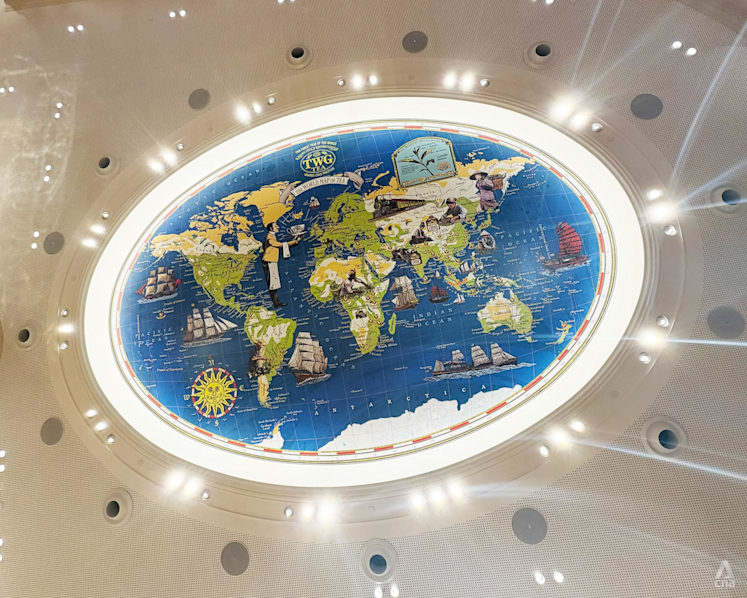
That bifurcated vision is writ large on every surface. Look up, and you'll find the house's centrepiece: a painted world map stretched across the ceiling, its tea-growing regions picked out in colour. The feature is meant to be instructional as much as it is decorative. “Some people have only a limited idea of where tea comes from, but when they look at the ceiling, they can see where the plantations are situated and understand the distances between them.”
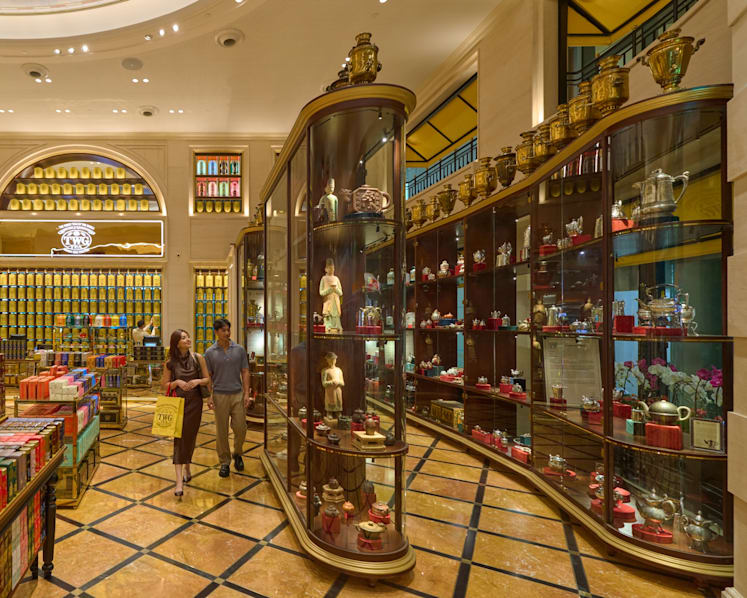
Below the map, tucked into the flow of the store, sits the TWG Tea Museum – the first permanent one the brand has built, and 15 years in the making. “As I travelled around the world, I naturally became drawn to antique pieces that reflected the history, traditions and craftsmanship surrounding tea,” Bouqdib said. "Over time, the collection grew into something much more significant than a personal collection.” Happily, Changi felt like the right place to finally share something so private. “This airport is where Singapore meets the world.”
The collection runs to more than 170 antique tea wares and over 50 Russian and Soviet samovars, spanning the 17th to the 20th centuries, and nothing in it was chosen for age or rarity alone. “I am drawn to pieces that tell a story about tea and the way it has been experienced across different cultures and periods,” Bouqdib said. Among them is a 1930s German Art Deco teapot, its ceramic body wrapped in a felt-lined silver cosy with Bakelite feet – a design Bouqdib describes as turning something as practical as keeping tea warm into “an elegant sculptural object”, and one that finds expression today in TWG Tea's own stainless-steel and gold-finished Design Teapot. Beside it sit Yixing clay teapots from Jiangsu, left deliberately unglazed so the porous clay slowly absorbs the character of whatever tea is poured through it, year after year. For Bouqdib, that relationship between “the object, the tea and the person using it is particularly fascinating.”
While every TWG Tea store carries the same family resemblance – canary yellow, dark timber, marble, and brass – at the TWG Tea Gallery, for the first time, stone joins that palette, laid on at a scale the brand has never attempted before. “Stone conveys permanence, strength and solidity, reflecting the strong foundation that TWG Tea has established over the years,” Bouqdib said. “Tea leaves are light, fragile and constantly changing with each harvest. I was interested in the tension between those two qualities.”
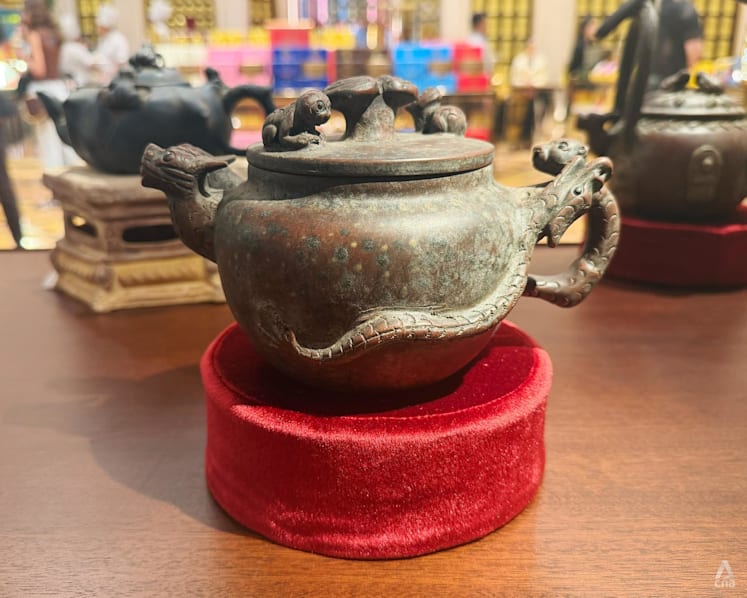
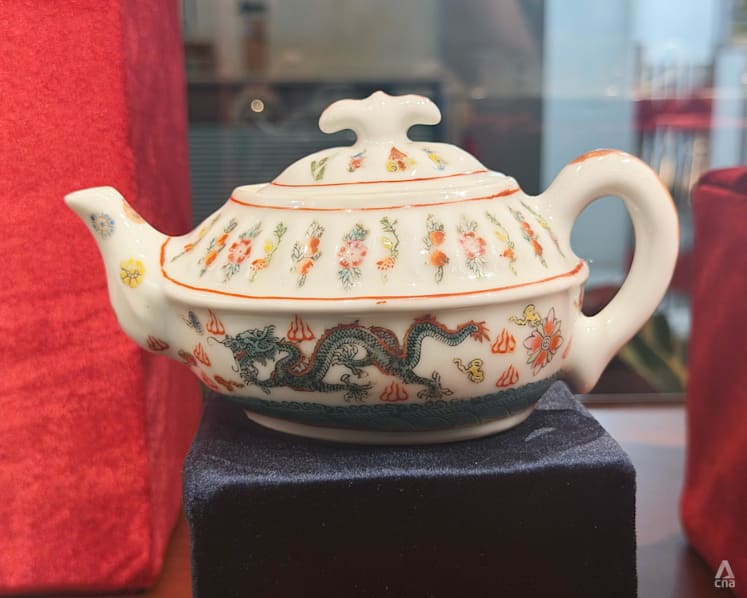
There's a practical case for stone too. Airport retail sees far heavier daily footfall than a mall boutique does, and durability shaped the material choices as much as beauty did. “We used natural materials such as marble, wood, stone, glass and brass,” he said. “These materials do not become obsolete. After several years, they can be refreshed and will continue to shine.”
The store itself is built to hold two very different travellers at once, moving at two very different speeds. There is no tea salon here, no seats to linger over a pot. The Gallery is boutique, patisserie and takeaway only, built for travellers who keep moving. "A traveller with only a few minutes can immediately identify the takeaway and ready-to-purchase collections, while someone with more time can move deeper into the boutique, explore the teas and visit the museum,” Bouqdib said. Race through, and there's a takeaway tea counter and a new ice cream and sorbet offering found nowhere else, its flavours built from Singapore itself – pandan, gula melaka and coconut tea ice cream, soursop, and sorbet made with Temi FTGFOP1, the prized Finest Tippy Golden Flowery Orange Pekoe, grade 1 black tea from the fabled Sikkim estate of the same name.
Slow down, and the full retail floor opens up, its shelves holding 1,000-plus single-estate harvests and exclusive blends alongside creations found only here: the Grand Voyage Tea, its packaging artwork echoing the ceiling map directly overhead, and a Singapore Surprise Gift Set pairing Singapore Breakfast Tea with Silver Moon and 1837 Black Tea.
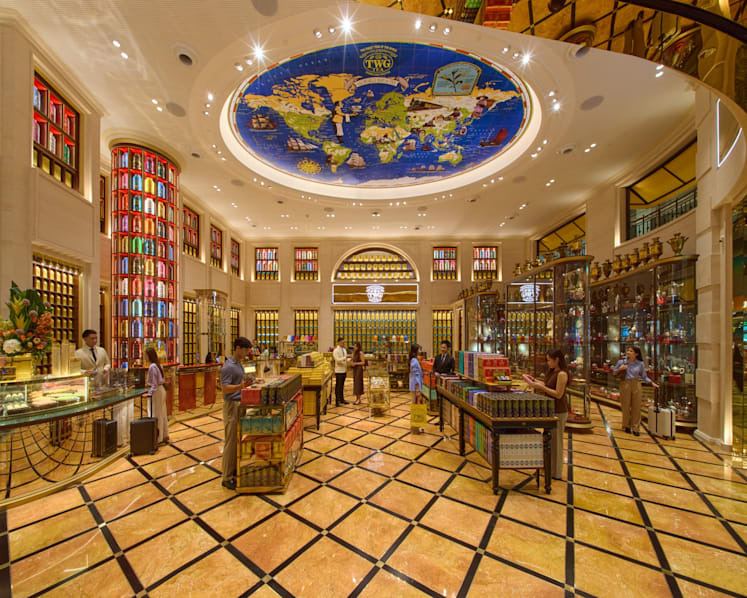
Remarkably, every inch of the space was drawn up in-house, as every TWG Tea store has been. “We never use outside designers for our group,” Bouqdib said. “An external architect might produce a beautiful design, but someone who has never truly experienced the world of tea may not capture that soul.”
Bouqdib is quick to wave off any suggestion that TWG Tea Gallery signals a move further upmarket for the brand. “TWG Tea was created for everyone from the very beginning,” he said. "The design may be luxurious, but it should never feel intimidating.”
It’s a dreamy world view that’s paid off. TWG Tea opened in Singapore in 2008. Nearly two decades on, that single store has grown into more than 70 salons and boutiques spread across 20 countries with recent openings in Saudi Arabia and Mongolia, and continued growth in Seoul, London and Kuala Lumpur. Thirteen of them are still in Singapore, the city where the brand began, and five now sit inside Changi itself. The TWG Tea Gallery is the latest of those five, and, for now, the grandest: a house of tea, and of history, for travellers who have ten minutes to spare, or an afternoon.