When a design constraint becomes this home’s defining feature
In western Singapore, a difficult site constraint becomes the starting point for a tropical family home centred on a garden, pool and courtyard.
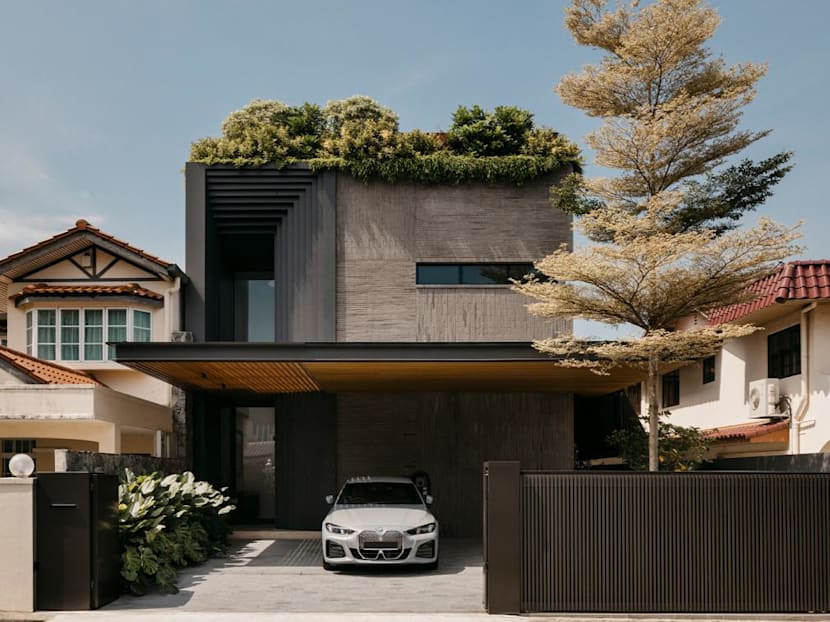
The house’s restrained street-facing facade gives little away, concealing a tropical courtyard and pool at its centre. (Photo: Studio Periphery)

This audio is generated by an AI tool.
A sewer line running through a plot is not the most promising starting point for a family home. But for ArMo Design Studio, the constraint became the organising idea behind a tropical house in western Singapore.
Maria Arango, co-founder of the Singapore-based architecture firm, explained that nothing permanent could be built over the sewer line because it had to remain accessible for maintenance. Covering it with access panels was possible, she said, but it would have required significant investment for a solution that would barely be seen. Instead, the architects turned the restricted strip into a courtyard with a garden and swimming pool.
Arango founded ArMo Design Studio in 2021 with her husband, Diego Molina, and architect Goh Chong Chia. Before that, the couple from Colombia spent two decades at Ong & Ong, where they designed more than 100 houses and received more than 100 awards. That experience is evident in this house, built for an Australian husband, his Singaporean wife and their two teenage children.
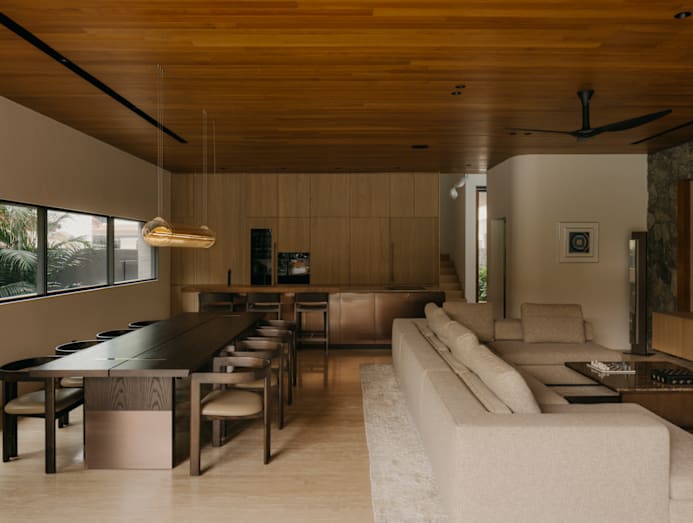
Because the sewer line ran across the centre of the plot, the architects divided the house into two blocks, turning the void between them into the heart of the home. The result is a house with a strong tropical sensibility, where indoors and outdoors are in constant dialogue and the family can enjoy what Arango described as “that outdoor living lifestyle”.
Arango and Molina met the owners through mutual friends and already knew them before the project began during the pandemic. “We couldn’t meet outside, so they would come to our house and I would present the project in the living room. Sometimes, we would go over to their house,” Arango recalled. Those informal meetings helped the architects understand the family better, building a sense of trust over the course of the project.
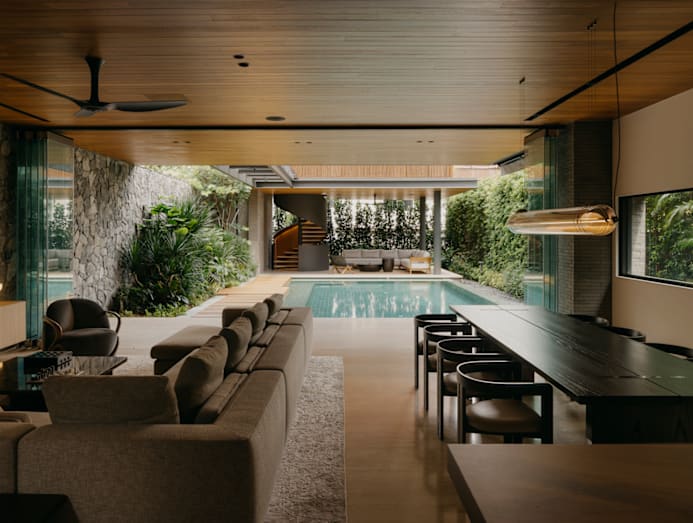
The architects were also familiar with the family’s previous home, which was open to its surroundings. The wife said they wanted to retain that quality in their new home. Her husband had always dreamt of designing and building his own house, and his enthusiasm showed in the “essays” he wrote about what he liked and disliked in each proposal, Arango recalled with a laugh. “But that was perfect. It made their decisions very clear.”
The two blocks have distinct characters. The front volume, clad in grey brick, presents a reserved face to the street, softened by a crown of lush landscaping. “The house gets a lot of western sun at the front facade, so we put the wet kitchen and service areas there, and opened the main interiors to the courtyard,” Arango explained. These spaces form a buffer between the road and the main living areas.
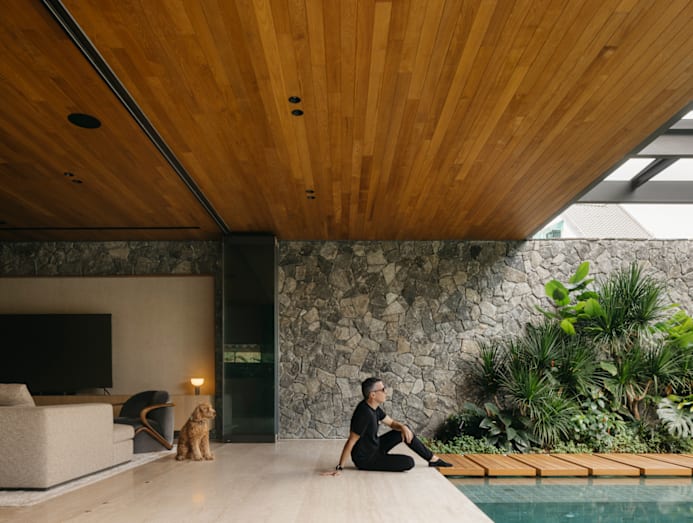
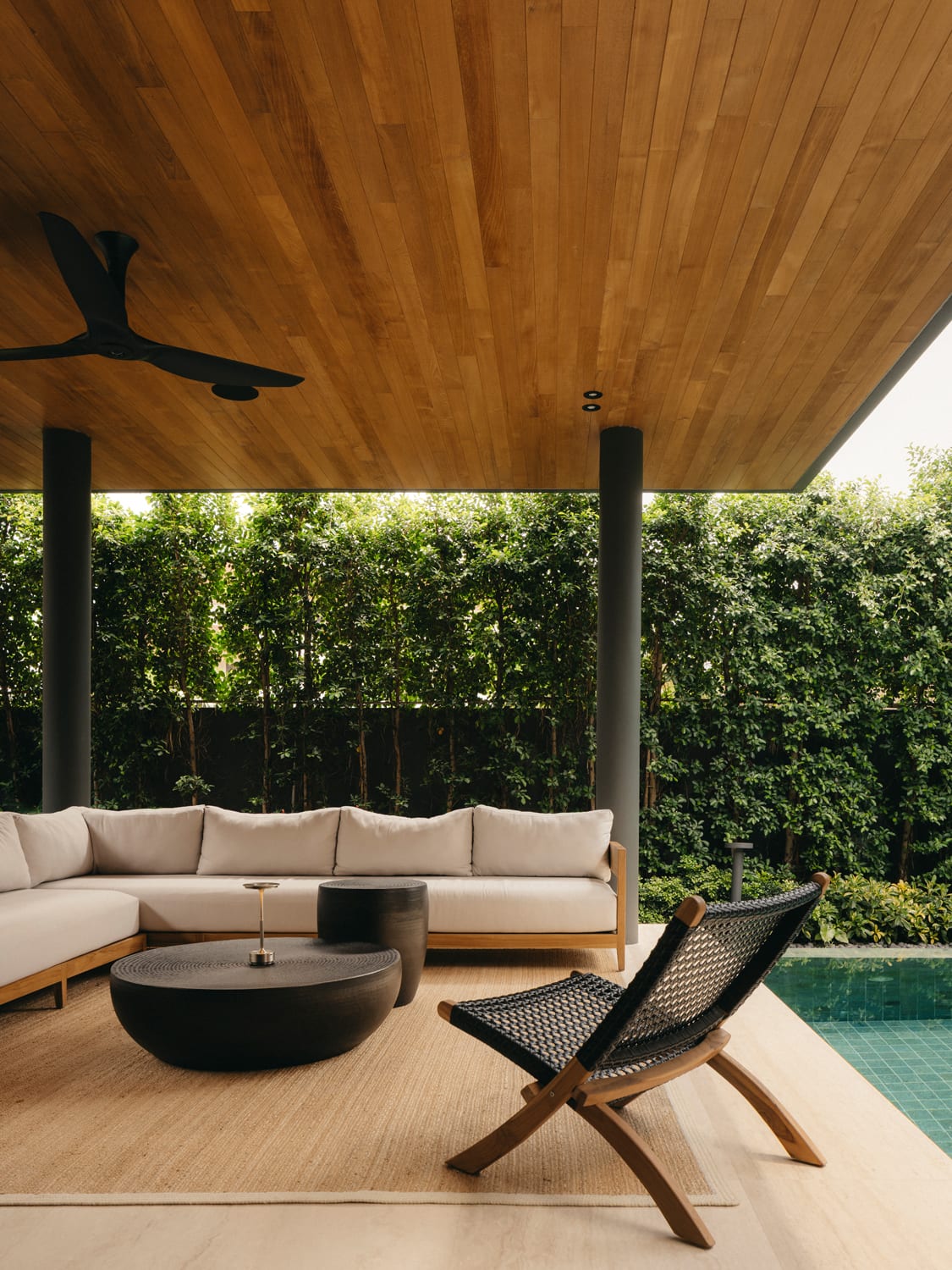
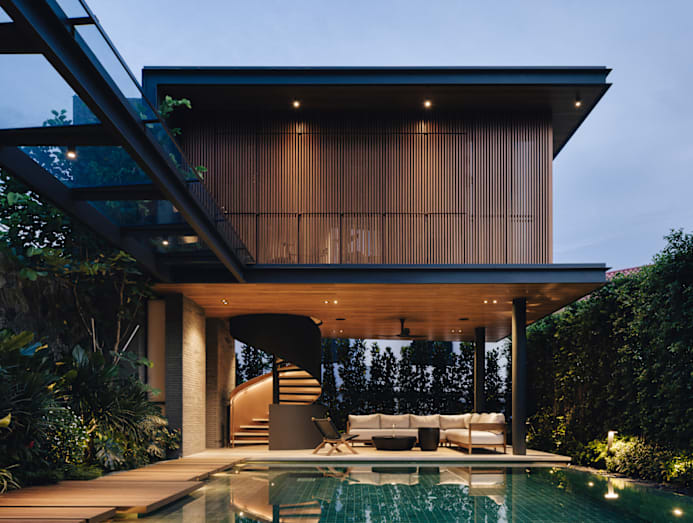
By contrast, the pavilion-like rear block is “a lighter and more open counterpart” to the front volume, Arango said. Designed for informal living and dining, it opens to the garden and pool, while the courtyard brings light, water and natural ventilation into the home. Both blocks have recesses and canopies that moderate sun exposure and frame views of the courtyard and garden.
The entrance portal pays homage to Italian architect Carlo Scarpa, with a variation of a much-photographed detail from the concrete walls of the Brion Tomb, or Tomba Brion. Here, the staggered profile gives the two-storey portal a three-dimensional quality and lends weight to the rituals of arrival and departure. “This house is not very large, so we wanted to highlight this area through a series of frames,” Arango said.
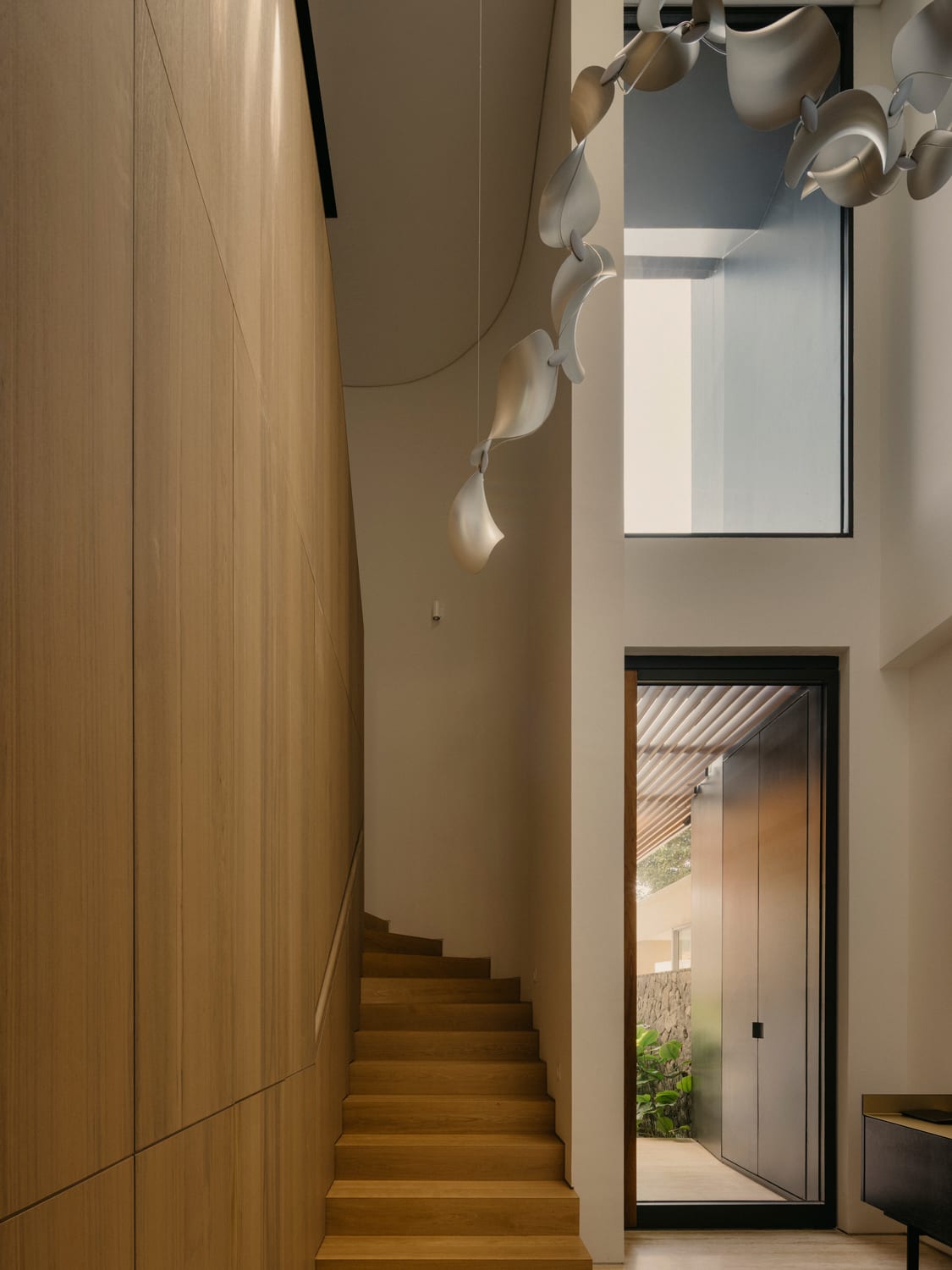
Behind it, a lofty foyer draws daylight from a skylight above. A custom aluminium Dune chandelier by Moss Objects floats in the void like silver leaves stitched together. “It has a softly textured finish, so the light reflects gently on the adjacent stairwell and emphasises the vertical space,” Arango said.
Glass doors fold to the sides, creating a seamless connection between shelter and sky. This reflects the husband’s wish for the house to feel “like an escape from the world” – informal, relaxed and removed from outside pressures. He also appreciates the way the house reveals itself gradually. Its low-key exterior gives little away, but once inside, the view opens towards the living room, pool and pavilion. “This brings together everything we love about Singapore – open, warm and surrounded by greenery,” he said.
The inward-looking plan adds to the sense of calm, directing views towards the pool and greenery rather than neighbouring houses. “When neighbouring houses are so near, we try to create our own views,” Arango said. She credited the garden to landscape firm Nyee Phoe Flower Garden. The planting, she added, was designed to integrate with the architecture and act almost as a protagonist throughout the house, reinforcing its lush, tropical character.
Plants climb across a long rubble wall that begins at the car porch, passes through the living room and borders the courtyard. The previous house on the plot had similar rubble walls, prompting the architects to reintroduce the feature in the new design. Building it, however, was more complex than it appears. “We carefully selected the stones and arranged them on site, working closely with the tilers to achieve the correct pattern and finish. Skilled masons then placed each stone individually to create a natural but stable finish,” Molina explained.
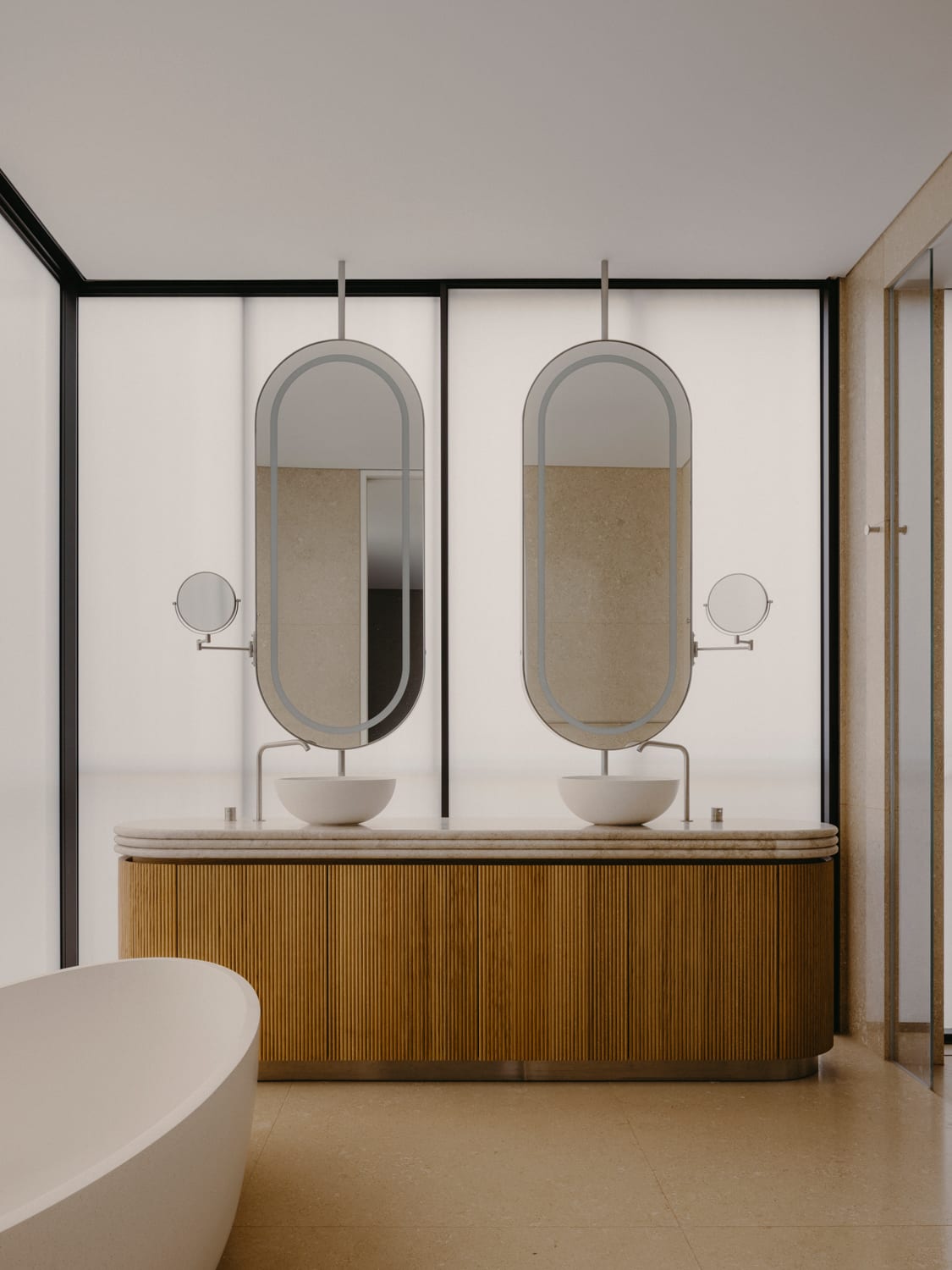
The stones sit well alongside the home’s abundant timber, from the teak ceilings in the car porch canopy and living room to the engineered wood floors upstairs. These are paired with plaster surfaces, travertine floors on the first storey and marble in the bathrooms. “The interiors use a restrained palette of natural materials appropriate for a tropical home,” Arango said, creating “a calm, tactile environment where light and shadow can change through the day”.
Across the courtyard, the pavilion’s first level is a sheltered sitting area that opens directly to the landscaping and pool, without windows. Arango said the space was initially intended as a service yard, but the owners objected immediately. The husband, in particular, wanted it to be a space the family could enjoy.
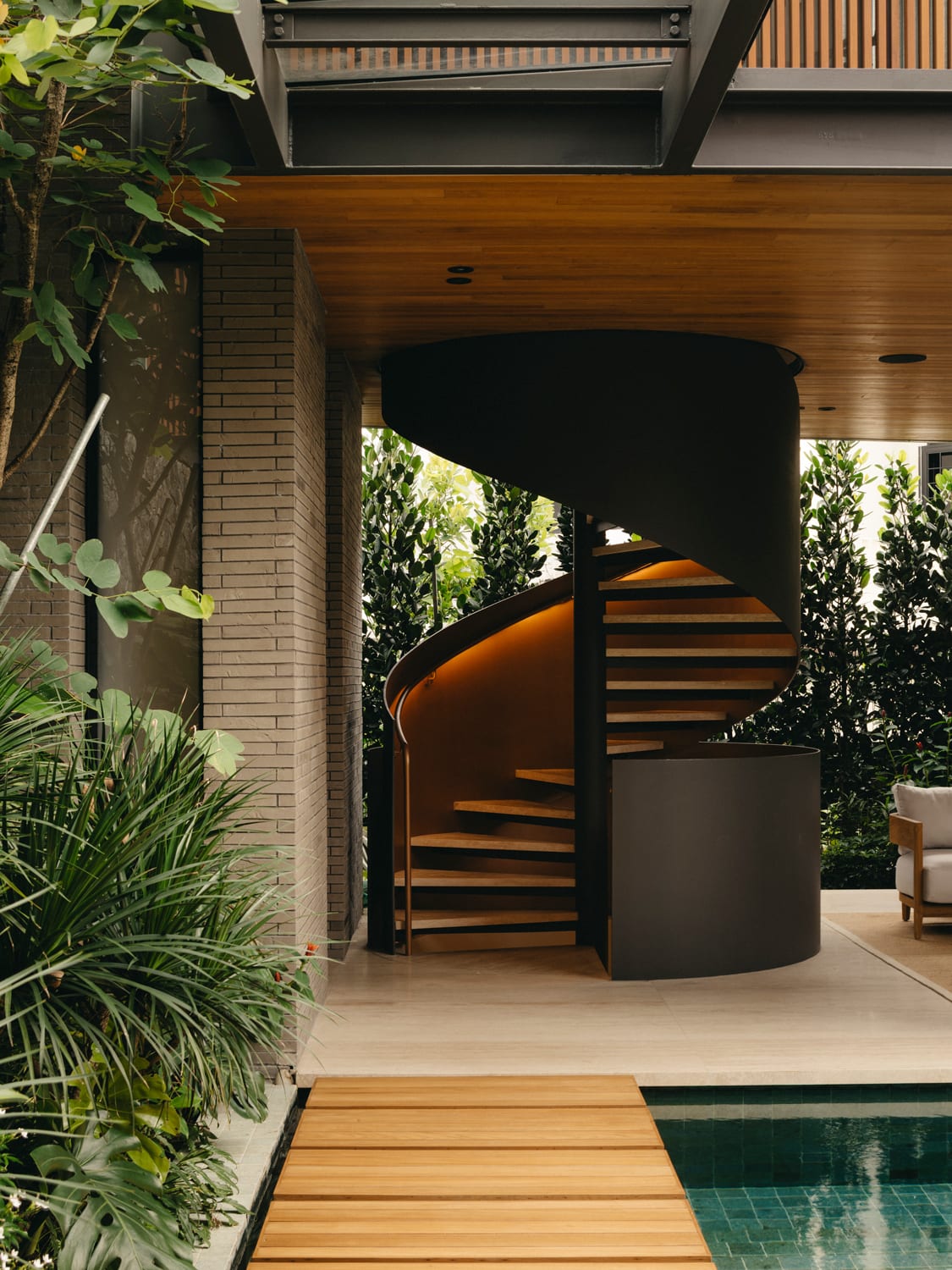
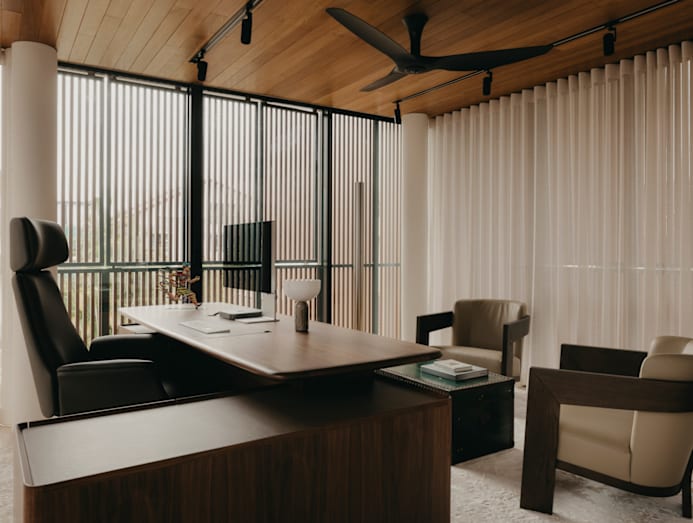
To connect the pavilion’s two levels, the architects designed a spiral staircase with a black aluminium structure and honed travertine treads. It leads to the husband’s study on the second level, where operable screens allow for either privacy or a connection to the greenery.
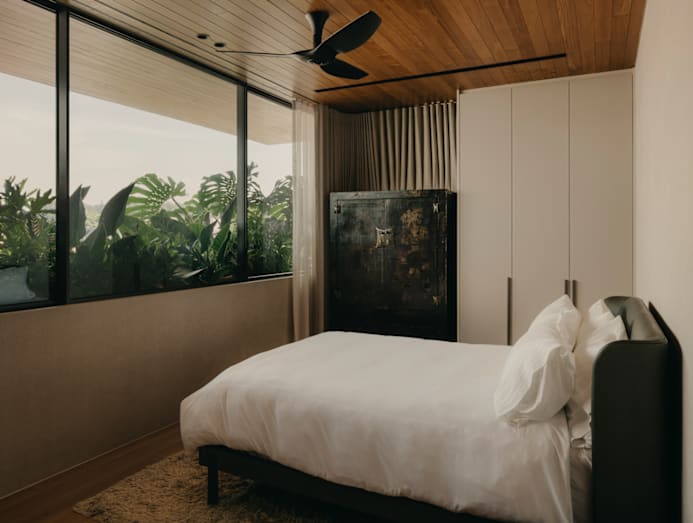
The front block, meanwhile, is organised with a clear hierarchy of spaces. The first storey is the social heart of the house – a place for relaxing, spending time together and hosting friends or family – while the second level is reserved for the family’s private rooms. “It’s where we rest or get ready for the day, and it feels very private and secluded from the rest of the house,” the husband said.
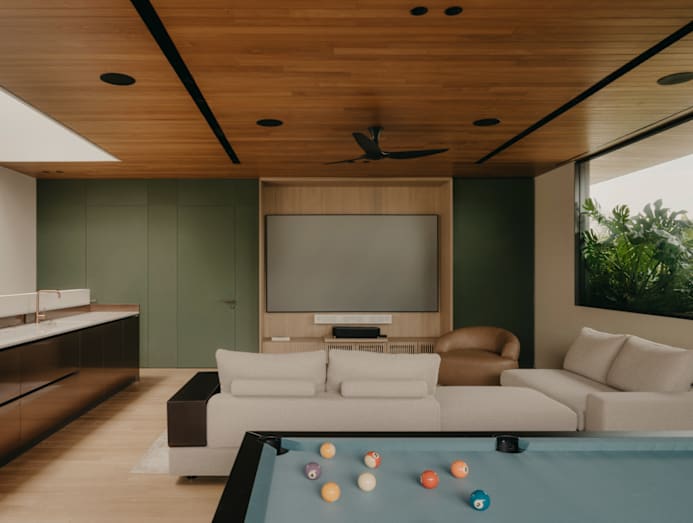
The attic entertainment room remains connected to the outdoors through an expansive skylight, large windows and perimeter greenery. It also offers the best vantage point for sunsets. The husband said the family watches movies together in the room, whose openness and unobstructed views give it a different feel from the rest of the house.
On the first storey, the fluid layout encourages togetherness. Even when everyone is doing their own thing in the living room, he said, “we tend to sit close by each other”. When visitors come over, they move easily between the living room and pavilion.
A typical weekend offers the clearest picture of how the house works. The husband usually begins the day in the pavilion’s living space, sitting by the pool with coffee and the newspaper while planning the week ahead. When extended family visit in the afternoon, they retreat to the enclosed living room for shelter from the heat. By evening, he said, “we’re normally around the pool, sitting in the pavilion, grabbing a drink with whoever is around”.
While her husband was initially more excited about building a house from scratch, the wife is proud of the result. More importantly, the home meets her family’s needs. With one child now in boarding school, she wanted the house to remain a place her children would return to as they grow older or study overseas. She also liked that the bedrooms are on the same floor, allowing the parents to keep an eye on them. “We can also watch them while cooking or when we are in the study room,” she said.
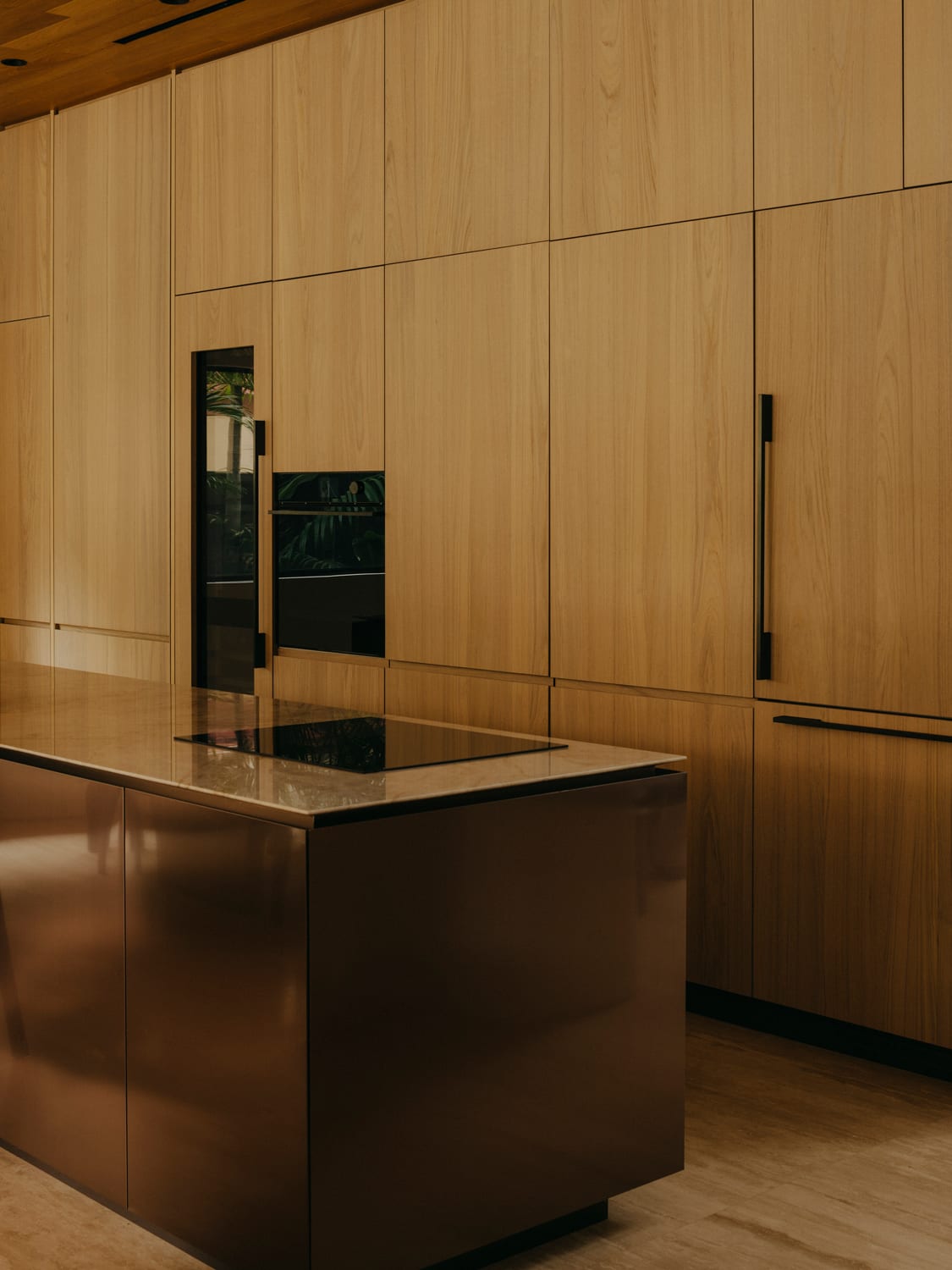
Asked how the children have taken to the new home, the wife said: “They love it. My son and daughter swim often with their friends.” While she does not cook often, the generous dry kitchen counter facing the courtyard becomes, during gatherings, a station with a view for a hired private chef. On one occasion, she said, an Italian chef who had trained as an architect remarked that the house was well designed.
It is not only human guests who have made themselves at home here. With greenery woven throughout the house, the husband said, birds have begun nesting on the property, a Finlayson’s squirrel has become a resident visitor and a bat comes by at night to sip water from the pool. “We don’t mind at all, as bats are very auspicious in Chinese culture,” he said. For Arango, this is “tropical living to the max”.