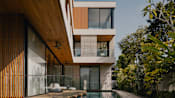
Are branded residences making a comeback in Singapore — and why is Asia-Pacific fuelling the boom?
After an early 2010s boom – and a long lull – branded residences are back in Singapore, led by marquee names and mega projects.

A three-bedroom unit at The Ritz Carlton Residences. Interiors of branded residences must adhere to the design standards set by the brand. (Photo: Eric WK Ng)

This audio is generated by an AI tool.


If you’ve been keeping up with property news in Singapore lately, you may have noticed names like Aman and W making headlines with their “elevated living” branded residences.
But if you’re like me – a pragmatic Singaporean who counts value by the square foot and the number of steps to the MRT – you’re probably wondering: is there really a difference?
Isn’t it just a fancy serviced apartment? And why is everyone suddenly talking about branded residences again?
WHAT EXACTLY IS A BRANDED RESIDENCE?
A branded residence is a private home that carries the name, services and design DNA of a hospitality or lifestyle brand. Think butler-level service all day every day, without having to leave home.
Feel like eggs over easy, served to you in bed? Want to host a group of friends for a dinner party without having to lift a finger? Or perhaps you simply need someone to walk your dog?
“You can even call the concierge and ask them to book a private jet to fly you anywhere,” joked Jimmy Hui of IOI Properties, the developer behind the upcoming W Residences Marina View.
“A branded residence isn’t just a marketing partnership; there will be a clear contractual agreement that commits a brand to managing the building, maintaining standards and delivering a certain level of service for the lifespan of the building,” said Otto Twist, Southeast Asia director of international residential sales at Savills Singapore.
In return, the developers must ensure the building meets the brand’s specifications – from interior fittings and appliances right down to details like smoke alarms.
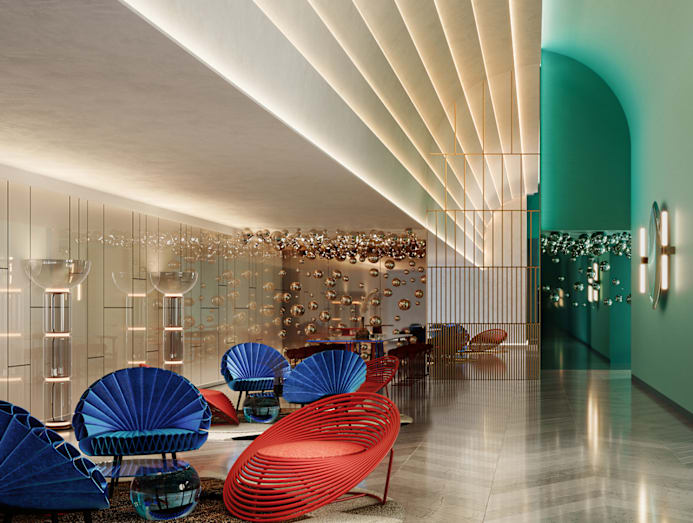
WHY THE SUDDEN BOOM IN ASIA?
In Southeast Asia, we’re probably more used to the idea of a hotel-residence in resort destinations like Bali, Phuket, or Phu Quoc. In fact, one of the first branded residences in the world was Amanpuri in Phuket.
But what began as a resort-driven product has evolved. Increasingly, these homes are appearing in cities, with non-hotel brands joining the fray, such as the Porsche Design Tower in Bangkok or Bugatti Residence in Dubai.
According to a 2025 report by Savills, the number of branded residences in Asia Pacific is projected to increase by 180 per cent by 2031, significantly outpacing growth in the Americas. Fuelled by rising affluence in the region, branded residences in Asia Pacific now make up 40 per cent of the global pipeline.
In Singapore, wealthy foreigners who set up family offices may send their kids to school locally, while parents rotate between different cities. The concierge service in a branded residence is a big appeal for this group of buyers.
“They like that there is someone to take care of their family while they are away. There is 24-hour service, they don’t have to worry about security, it gives them peace of mind,” said a KOP Properties spokesperson.
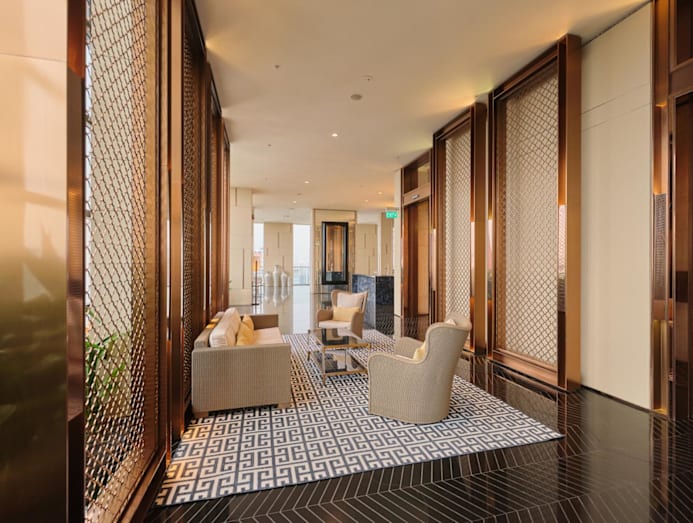
KOP Properties is the developer of The Ritz Carlton Residences. It has a 60-year agreement with Marriott to manage the 64-unit property on Cairnhill Road.
There is also cultural clout in owning such homes.
“Owning a branded residence is almost like driving a Ferrari. It basically tells people that you have arrived,” said Christine Li, head of research at Knight Frank Asia Pacific.
Owners of hotel-brand residences are typically granted elite membership status in the brand’s loyalty programme, enjoying hotel upgrades worldwide, as well as exclusive invitations to events and private members’ clubs.
Beyond the “1.0” experience (that is, concierge and room service), Li noted that interested buyers should also look for differentiating factors such as the pedigree of the architects and the strength of the brand’s identity.
“You have to assess it not just from the quality but also, who are the followers of this brand? If the brand continues to attract followers until you are ready to exit, that’s when your value holds, just like any other luxury product,” said Li.
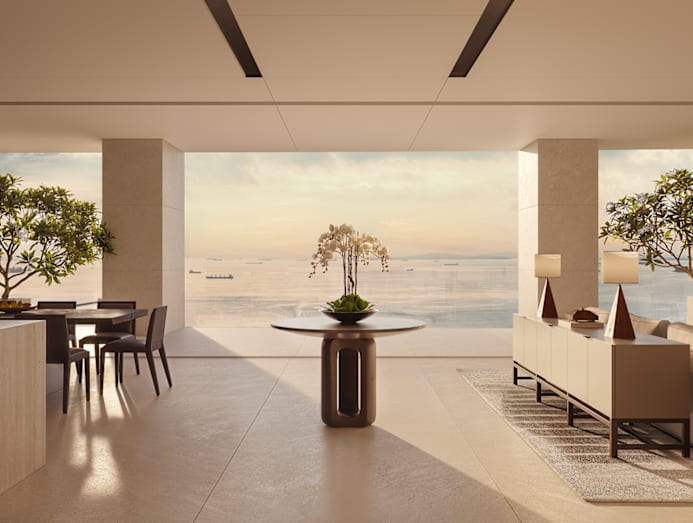
A NEW ‘BRANDED BELT’ EMERGING IN SINGAPORE’S SOUTH
In Singapore’s south, a striking new silhouette is taking shape. At 305m and 63 storeys high, The Skywaters will be the country’s first “supertall” skyscraper when completed in 2028.
The project is led by Perennial Holdings, and marks Aman’s long-awaited debut in Singapore. Levels 24 to 26 will house the Aman hotel, while a limited collection of branded units is located on the higher floors. There will also be an Aman private members’ club.
The remaining floors of the development will be dedicated to office and retail space, along with 146 three-to-five-bedroom Skywaters Residences units.

“The whole planning – the asset plan, the integration, the quality – is first class. There were only a few brands that qualified, and we wanted a real top brand,” said real estate veteran Pua Seck Guan, CEO of Perennial Holdings.
Sales of units at the development are by invite only, underscoring its exclusivity. Three units have been sold so far, including one for a record S$6,501 (US$5,028) per square foot at S$11.69 million in October 2025, according to URA data.
In the vicinity is W Residences Marina View – the first of its kind to be fully integrated and managed under a single general manager, meaning residents will have access to the full suite of hotel services.
There are 683 residential units, with smaller two and three-bedders launched at S$3,230 per square foot – pricing that is not far off homes in districts just outside the Core Central Region.
As Hui put it: “W Residences is in some way luxury, but it’s not unreachable.
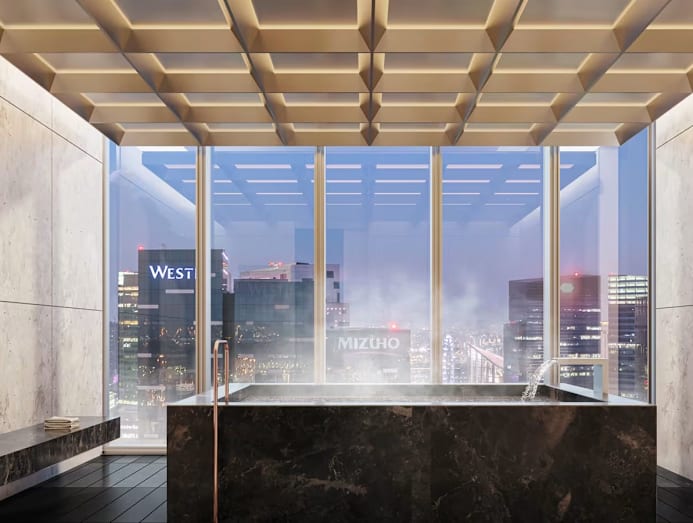
With this price point, IOI Properties said their target buyers are not just the ultra-rich, but also the professionals, managers, executives, and businessmen (PMEB)s, dual income, no kids (DINK)s, and empty nesters.
While properties in the Marina Bay area have historically not yielded the best returns, IOI’s view is that Marina Bay “will not go wrong”, and it’s not alone in that belief.
Master plans for the area include a S$1 billion wellness attraction expected to draw two million visitors a year, and the transformation of Marina South into a vibrant mixed-use urban community.
“This precinct is developing into a branded belt; once all these quality homes start coming up, perceptions will start changing,” said Hui.
HISTORICAL PERFORMANCE
Branded residences are not new to Singapore. Developments like St Regis Residences, The Residences at W Sentosa Cove and The Ritz-Carlton Residences have been around since the 2010s.
While returns were initially impressive – one penthouse at St Regis Residences achieved a profit of S$12.77 million in just eight months – cooling measures soon curtailed luxury transactions.
In the following decade, transactions in the segment mostly chalked up losses, averaging 5.7 per cent below the original purchase price, according to Li.
Foreign buyers were particularly impacted as the Additional Buyers’ Stamp Duty (ABSD) climbed from 10 per cent to 60 per cent since it was first introduced.
“Developers here already deliver exceptional quality, so a branded residence must stand out in meaningful ways,” said Twist.
“Given that a lot of Singaporeans are quite sophisticated, they eventually don't find that a hospitality brand is worth the premium,” said Li.
Still, Li believes a revival is timely, particularly as Singapore seeks to maintain its appeal as a global wealth hub. Buyers familiar with branded living in Dubai, Miami or London increasingly expect similar options in Singapore, Twist added.
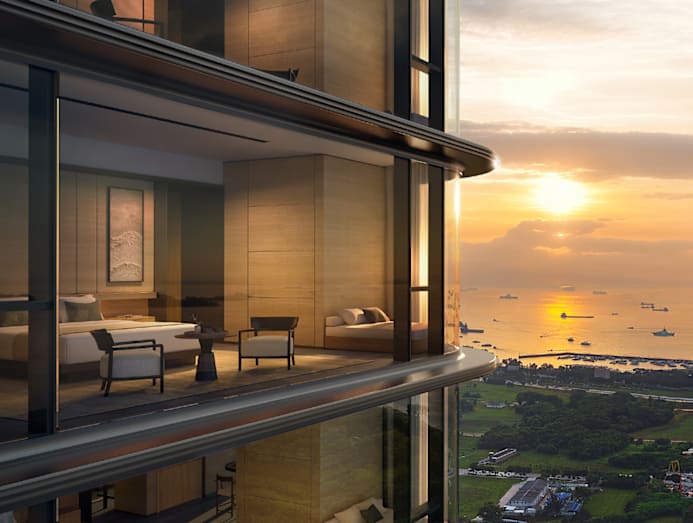
A PREMIUM PRODUCT, BUT FOR WHOM?
Ultimately, a big brand name shouldn’t be the sole reason to commit. “It’s not a matter of just calling it a branded residence and people will pay for it,” said Pua.
As with any property class, fundamentals should anchor the decision.
Experts point to the brand’s track record in managing residences, the length and clarity of its management agreement, location and surrounding price performance, and the ongoing maintenance fees that will come with this style of living.
Buyers should also be aware that living in a branded development often means adhering to stricter renovation and design guidelines.
As Twist put it, this is a product for those seeking a certain lifestyle, not quick yields. For buyers who believe in the lifestyle and the long-term story, the appeal is obvious.
For everyone else, it’s worth taking a second look at whether the lifestyle premium aligns with what they truly want from a home.