Gucci owner Kering is backing Chinese fashion brand Icicle. Can it become a global luxury name?
Buoyed by success at home, Shanghai-founded Icicle is setting its sights on London, Milan and the US. With backing from Gucci owner Kering, the brand is betting that Chinese luxury can find a place on the global stage.
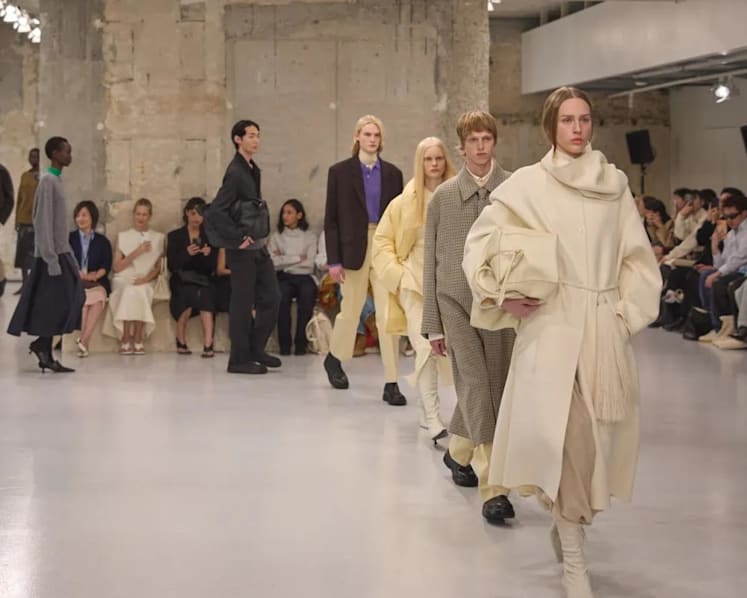
The finale of Icicle’s Fall/Winter 2026 fashion show. After finding success at home in China, the brand is setting its sights on a bigger global presence. (Photo: Icicle)
Buoyed by success in its domestic market, Chinese luxury brand Icicle is forging ahead with plans to expand internationally despite troubles in the sector and tough predictions for the year ahead.
The Shanghai-founded label, which specialises in minimalist ready-to-wear clothing in cashmere and silk, wants to open stores in London, Milan and the US, having received a minority investment from Gucci owner Kering in April. Last week, it also appointed former Gucci designer Sabato De Sarno as creative director.
“The help of Kering will make us accelerate the next phase of development,” Louise Xu, executive president of parent company ICCF, told the Financial Times (FT) in an interview. “We know that we will continue to do international expansion.”
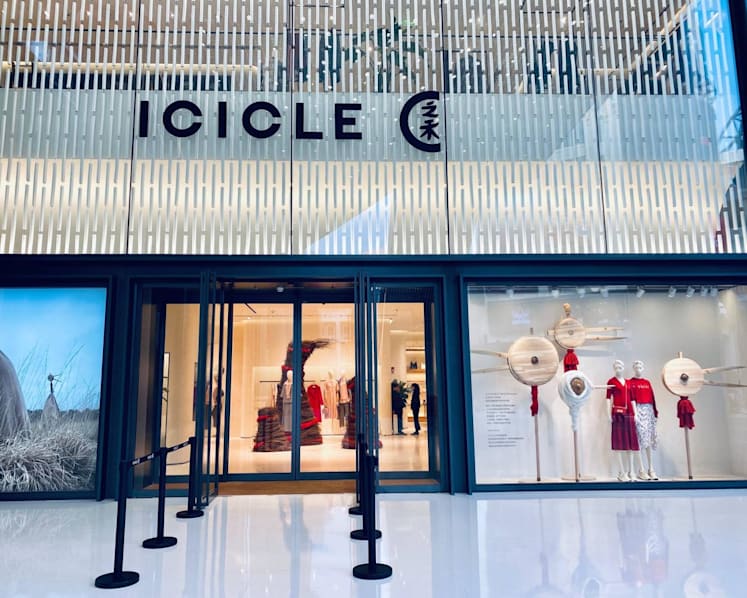
Icicle, which was founded in 1997, already operates a small number of international outlets, with five across Paris and Ireland in addition to more than 240 in mainland China.
It also plans to use the Kering investment, the size of which was not disclosed, to expand into products such as handbags and footwear, having traditionally focused on ready-to-wear.
Xu said the partnership with Paris-based Kering “will bring the expertise in European craftsmanship and the operation and brand development excellence that we need”.
Icicle has not said when further international outlets might open. But its ambitions are notable given the chill in the luxury sector amid a multiyear industry slowdown.
Kering is itself under pressure. Chief executive Luca de Meo this year outlined a plan to restructure the luxury group and reboot its profitability.
Founded by husband and wife duo Ye Shouzeng and Shawna Tao, both design graduates, Icicle owed its first success to attracting China’s then rapidly expanding population of affluent white-collar workers.
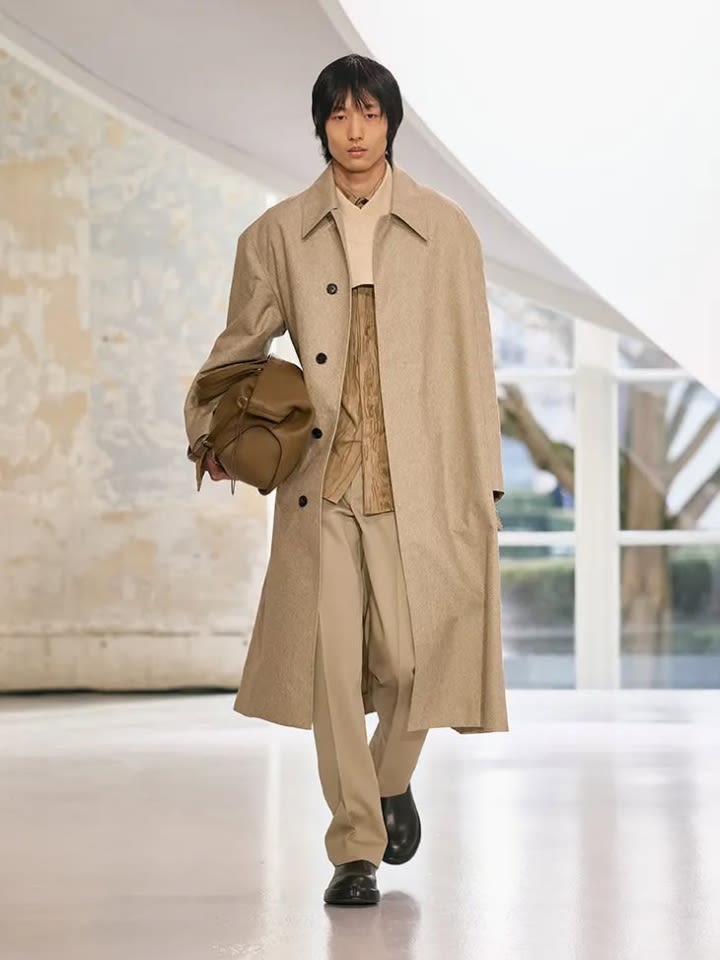
Its early focus on pared-back designs in natural materials such as cotton and linen differentiated it from local competitors and allowed the label to charge premium prices, positioning itself as one of the few contemporary Chinese luxury brands. Today most of its products are priced between £100 (US$135; S$171.35) and £5,000.
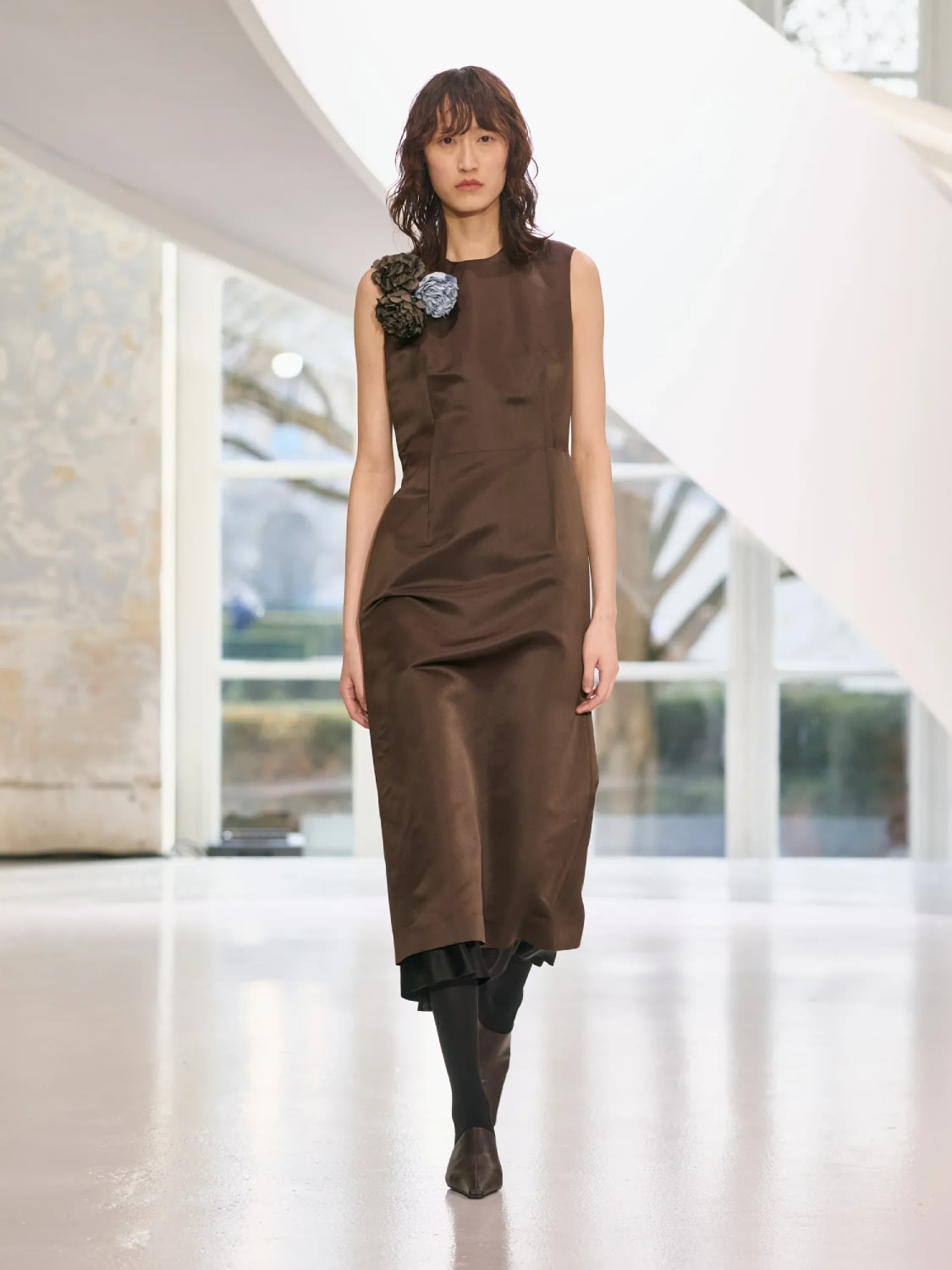
“Its message has always been how can we come up with a solution for the modern, contemporary Chinese woman who works a white-collar job in a big company to make them look better and more professional? The Icicle brand really caters to that target,” said Sukha Zhao, a former project manager in Icicle’s marketing department.
Icicle is also benefiting from the growing popularity of homegrown Chinese brands, including jewellery maker Laopu Gold. While still small compared with the likes of Louis Vuitton and Gucci, such brands are providing Chinese shoppers with alternatives that are more attuned to local taste and sensibilities, often at a more accessible price point.
Chinese fashion companies have traditionally approached international expansion via the acquisition route, scooping up legacy European and American brands.
However, this has often gone badly, as in the case of Shandong Ruyi, which scooped up controlling stakes in brands including Savile Row tailor Gieves & Hawkes before defaulting on debts. Meanwhile, China-headquartered Lanvin Group, which includes French label Lanvin, Italian shoemaker Sergio Rossi and Austrian brand Wolford, reported a €263 million (US$ 304.21 million; S$ 386.04 million) net loss in 2025. Its shares are trading nearly 90 per cent below their 2022 listing price.
In 2018, Icicle bought French label Carven out of bankruptcy, creating ICCF. Efforts to revive the French brand, however, have largely fallen flat.
But Icicle’s international expansion under its own banner has been more fruitful. The first European store, in Paris, was opened in 2019 with another one following in Dublin in 2024.
Icicle is privately owned. But the most recent available records for its holding company in Ireland filed with the country’s Companies Registration Office show sales at the brand grew 6.9 per cent year on year in 2024 to €293 million.
Sales in Europe, which are still a small fraction of the company’s total revenue, increased 36 per cent to €2.7 million in the same period, according to the same filing.
The partnership with Kering, which was negotiated over four years, is a sign of approval from a European fashion group that reflects “our track record of success”, said Xu. She believes that Kering will also benefit from Icicle’s expertise in the Chinese market.
“Kering wants to understand more about the Chinese customer, how their behaviour has changed and what are the trends,” she added. “We can help them think about their Chinese strategy.”
“We want to understand what’s going on. I know what it means to neglect the innovation power of China.” – Luca de Meo, CEO of Kering
Gucci’s collapse in the country in recent years has been a severe blow to Kering. Having overexpanded in China during the luxury boom years and during star designer Alessandro Michele’s tenure, the group is now pulling back and closing some stores.
De Meo, who was hired last year from Renault, said at the time of Kering’s investment into Icicle that he did not “believe for the moment that Chinese brands will explode internationally”.
But he added: “Certainly in China [they] have a strong, rooted culture . . . We want to understand what’s going on. I know what it means to neglect the innovation power of China, coming from the auto sector.”
Other Chinese companies, from outerwear brand Bosideng to fast-fashion retailer Urban Revivo, have also opened international locations. The former reopened a flagship in London’s Mayfair in 2022, while the latter has opened two locations in London and one in New York since 2025.
International expansion could also burnish Icicle’s credentials with its domestic customers.
A European footprint “helps to reinforce the brand image within the China market”, said Veronica Wang, partner at OC&C Strategy Consultants, strengthening its positioning as a luxury label in the eyes of its Chinese clients.
Icicle has also been exploring a potential listing, which could boost its name recognition outside China.
One fundamental challenge is whether Icicle would be perceived as luxury by international shoppers. While in China the company is increasingly playing up its Chinese identity through collaborations with local designers, artisans and craftspeople to tap into a trend for national pride, in Europe the brand emphasises the quality of its fabrics and design details.
The appointment of De Sarno, an Italian designer with luxury credentials, could help the label elevate its status in the mind of western shoppers. Since 2025, it has also shown collections during Paris Fashion Week.
“We are not too aggressive [in terms of marketing]” said Benedicte Laloux, who was appointed creative director of Icicle in 2013 and will continue as design director of the women’s show collection under De Sarno. She is aware of the stigma that “Made in China” can have outside the country, with some people believing it means unethical or low-quality manufacturing.
That mentality, however, is also changing thanks to social media trends such as China-maxxing, which encourage a new appreciation of Chinese culture.
“There is an appetite for a different cultural point of view,” says Claudia D’Arpizio, partner at Bain. “Up to a few years ago people were saying that Americans were not able to develop luxury products. Now some of the fastest-growing, high-end labels are American, like The Row and Khaite. It can happen with Chinese brands too.”
Annachiara Biondi © 2026 The Financial Times.
This article originally appeared in The Financial Times.