A Singapore house stripped to its bare bones finds new life
A 30-year-old Singapore terrace undergoes a minimalist transformation, shedding layers of plaster and polish to reveal a home of light, texture and timeless calm.
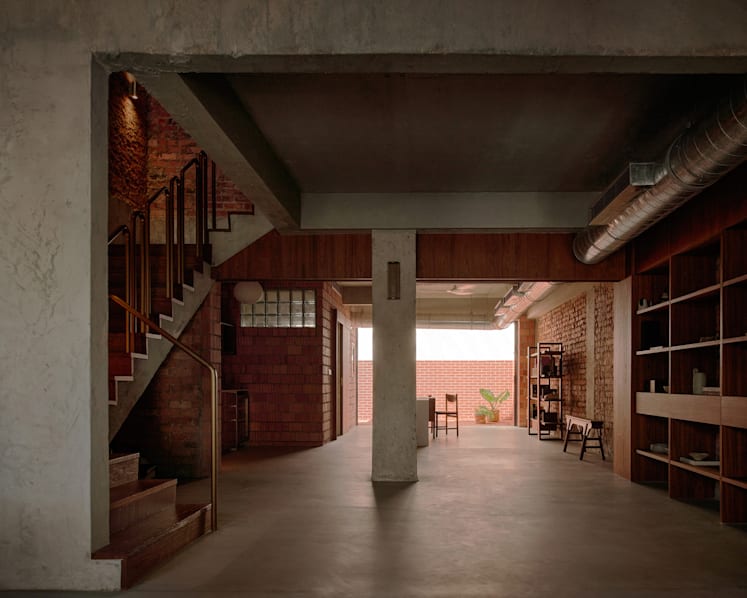
A helper's room and bathroom were removed at the rear so one can now see right through the house from the living room to the backyard; sliding doors in between partition the space for air-conditioning when necessary although that is barely switched on. (Photo: Jovian Lim)

This audio is generated by an AI tool.
While Singaporean architect Lim Shing Hui was holidaying in Finland – dogsledding, to be precise – a potential client emailed her about renovating his intermediate terrace house. A month later, they met up and chatted for almost two hours, according to Lim, the founder of L Architects.
“I had this house for more than 30 years. It was always my base in Singapore whenever I returned after working and living overseas. It was simply a place to store my belongings, to rest and have a roof over my head,” said the client, a professor. After retiring in 2023, he began to see the house differently, saying he wanted it to be more than just a house.
He had already spoken to seven other architectural firms, but while reading an article about the winners of the 2022 SIA Architectural Design Awards organised by the Singapore Institute of Architects, he came across Lim. Her project, A Brick and Mortar Shop, a multi-brand kitchen appliance showroom, featured a gallery-like space that used ordinary materials such as cement bricks, raw plywood and off-cut tiles.
“She stood out immediately – an architect with the creativity and courage to use raw and recycled materials for sustainable building. That spoke to me,” recalled the client. He was also impressed that Lim was the only architect who insisted on seeing his house in person before a formal commission.
“That gesture showed seriousness and respect,” remarked the client. “She listened to not only what I said, but also what I struggled to express. That day, my decision was made – I would work with her.”
What he struggled to express was that he wanted a suitable place to spend his retirement in. Lim said he had told the team – including her colleagues Tse Lee Shing and Loo Quan Le – which nursing home he planned to move into when he eventually needed assistance. “At first, that information might seem to have little to do with the house design. But at that moment, I understood just how meaningful this ‘final renovation’ was to him,” she said.
The homeowner likes to plan ahead. After his passing, the house will be gifted to his church, with rental proceeds used to fund scholarships and bursaries. Initially, he had wanted to renovate it to make it more suitable for renting out, but the church advised him to redesign it according to his own way of living.
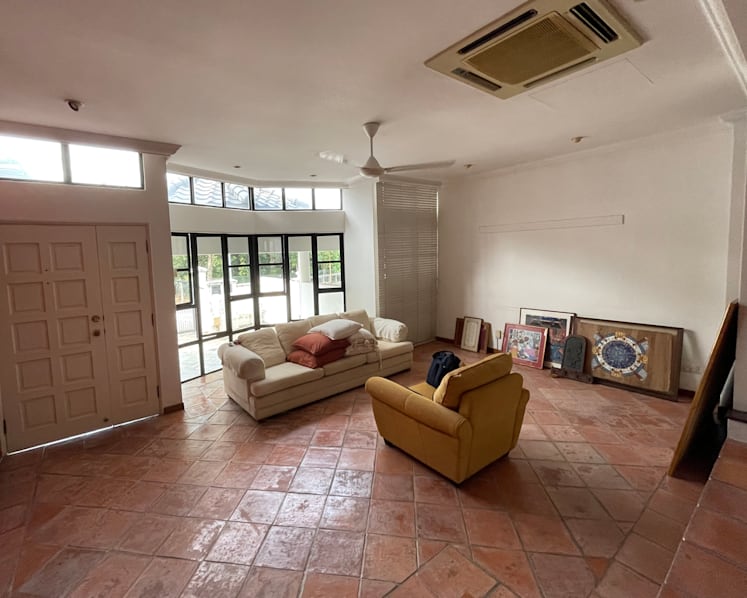
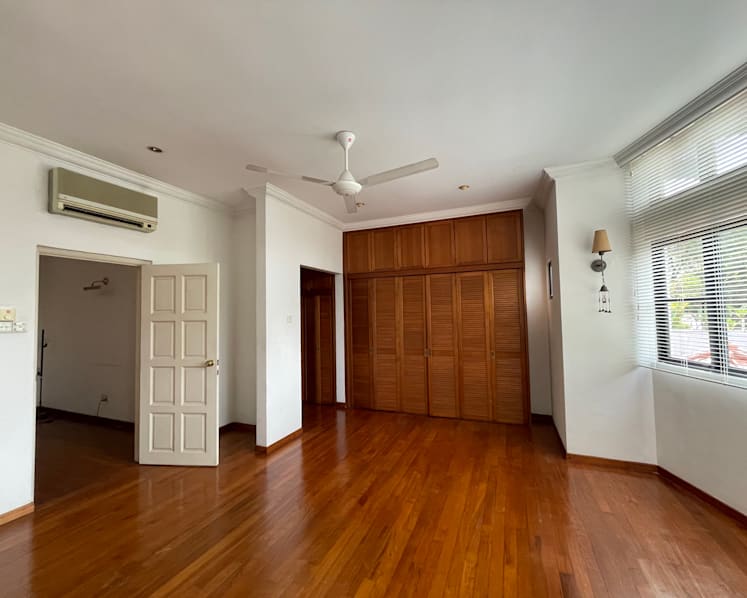
Lim left the meeting feeling a certain weight on her shoulders and pondered whether she could achieve his aim. The house is one of a trio built in a row by a single developer. Terracotta roof tiles embellished the faux-classical, whitewashed facade. It had never suited the client, having been designed for a family of five with a live-in helper.
Its many rooms made the spaces feel “boxed in, rigid and heavy.” He elaborated: “What I longed for was openness – rooms that breathed, natural light pouring in and fresh air flowing through.” He also wanted a flexible layout that could adapt over time to changing needs.
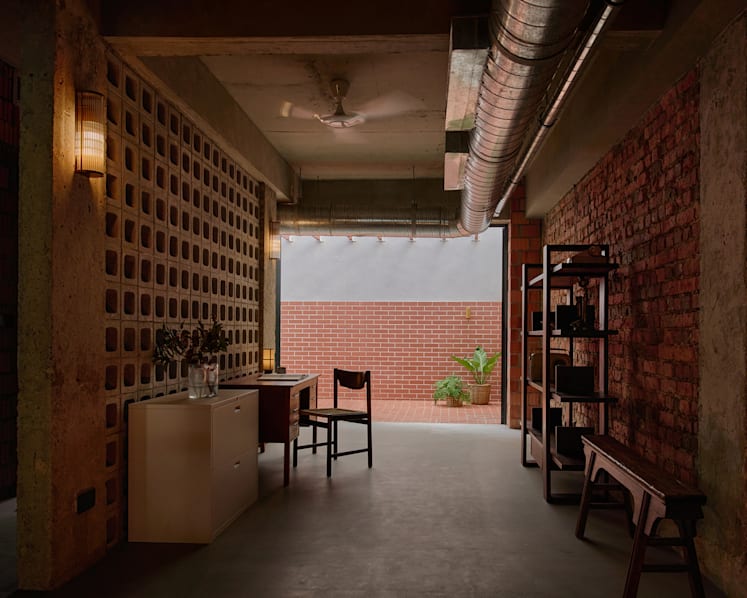
In terms of atmosphere, he wanted the house to be “minimalist, but never cold and sterile.” He was excited by a raw palette of cement floors, red bricks, timber beams, concrete columns and high ceilings. “Actually, I wanted it to look like a warehouse,” he remarked.
“To me, that kind of honesty in design speaks louder than ornamentation. I never liked the idea of hiding wires, pipes or ducts behind false ceilings or plasterboards. I wanted everything exposed, where I could see and touch them, and where repair and maintenance would be straightforward – a house that is humble and bare, yet beautiful, functional and true,” said the homeowner, who believed that houses “must have their own heritage, their own soul.”
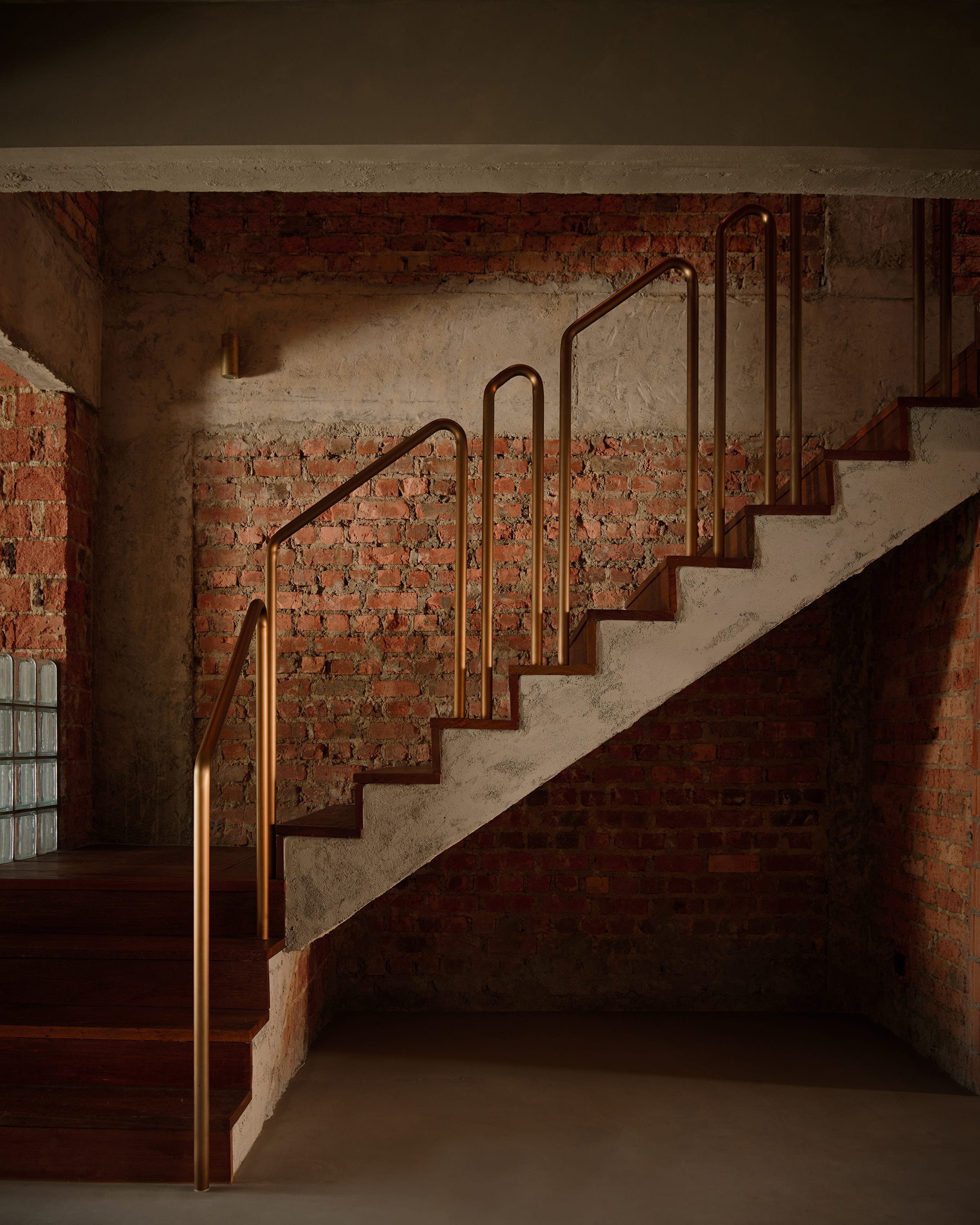
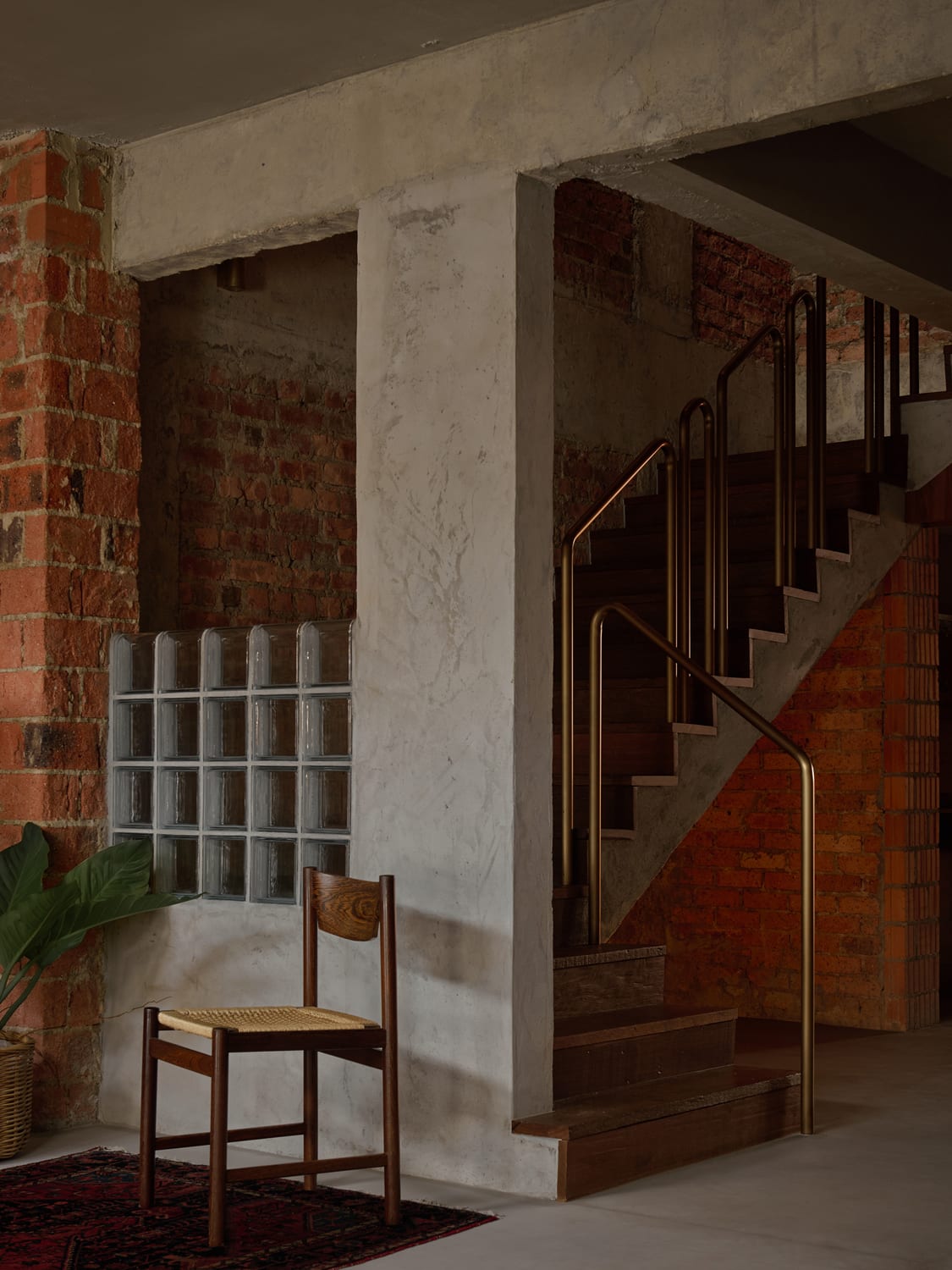
Lim approached the house as she would a conservation project, determined to “rediscover its original spirit, beauty and confidence.” It had a sound structure but lacked sufficient natural light. A helper’s room, bathroom and storeroom blocked the connection between the entrance and the backyard.
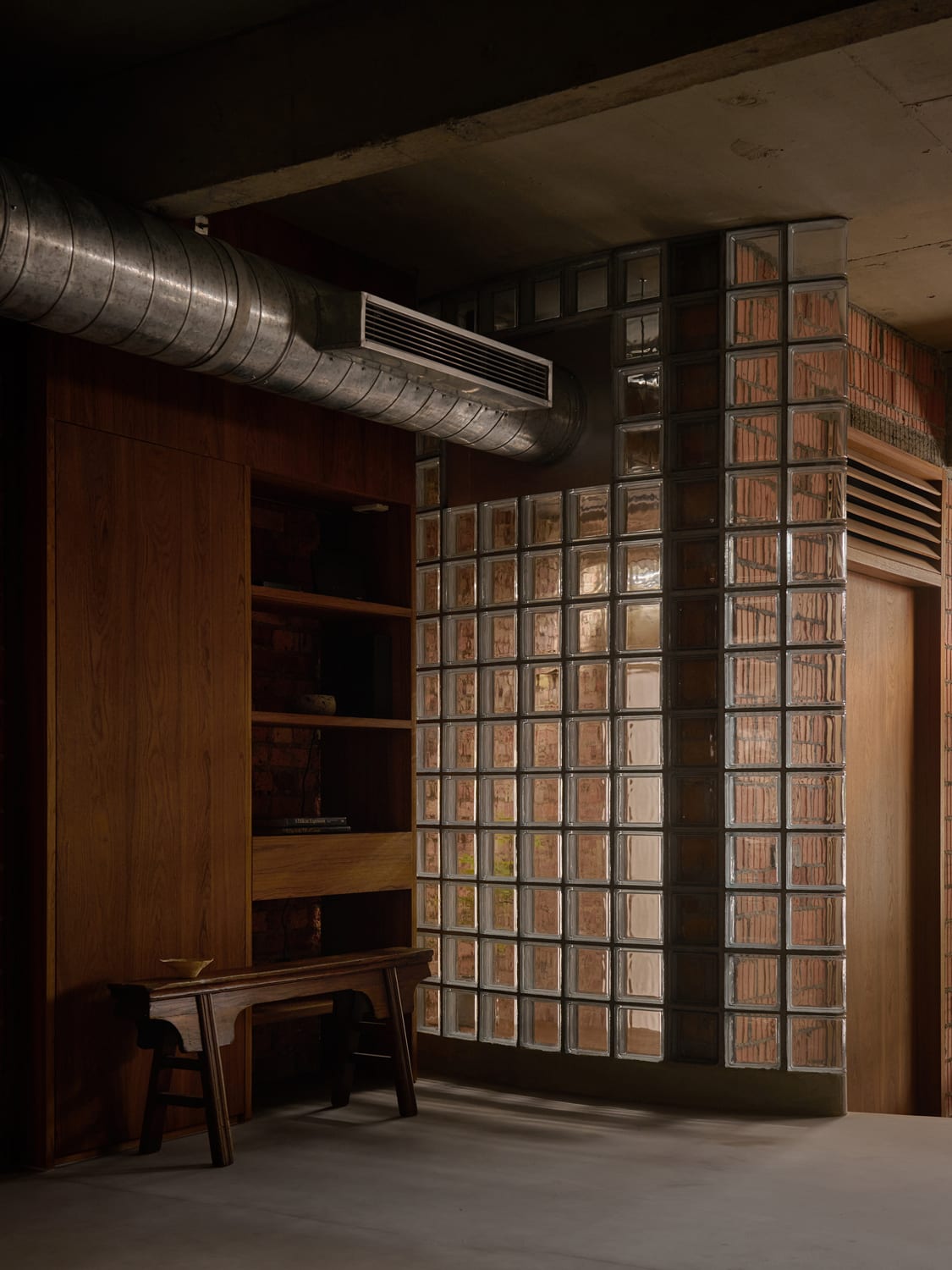
Lim removed unnecessary walls and repositioned the open kitchen, guest bathroom and laundry area in a line behind the staircase along one party wall. This allowed the rest of the first-storey plan to feel more open and connected across its length. The entrance door was shifted, and its original location was replaced by a screen of glass blocks to provide privacy and natural light. This simple and somewhat retro material was used throughout the house for similar effects, such as above the guest bathroom and at the bottom of the staircase.
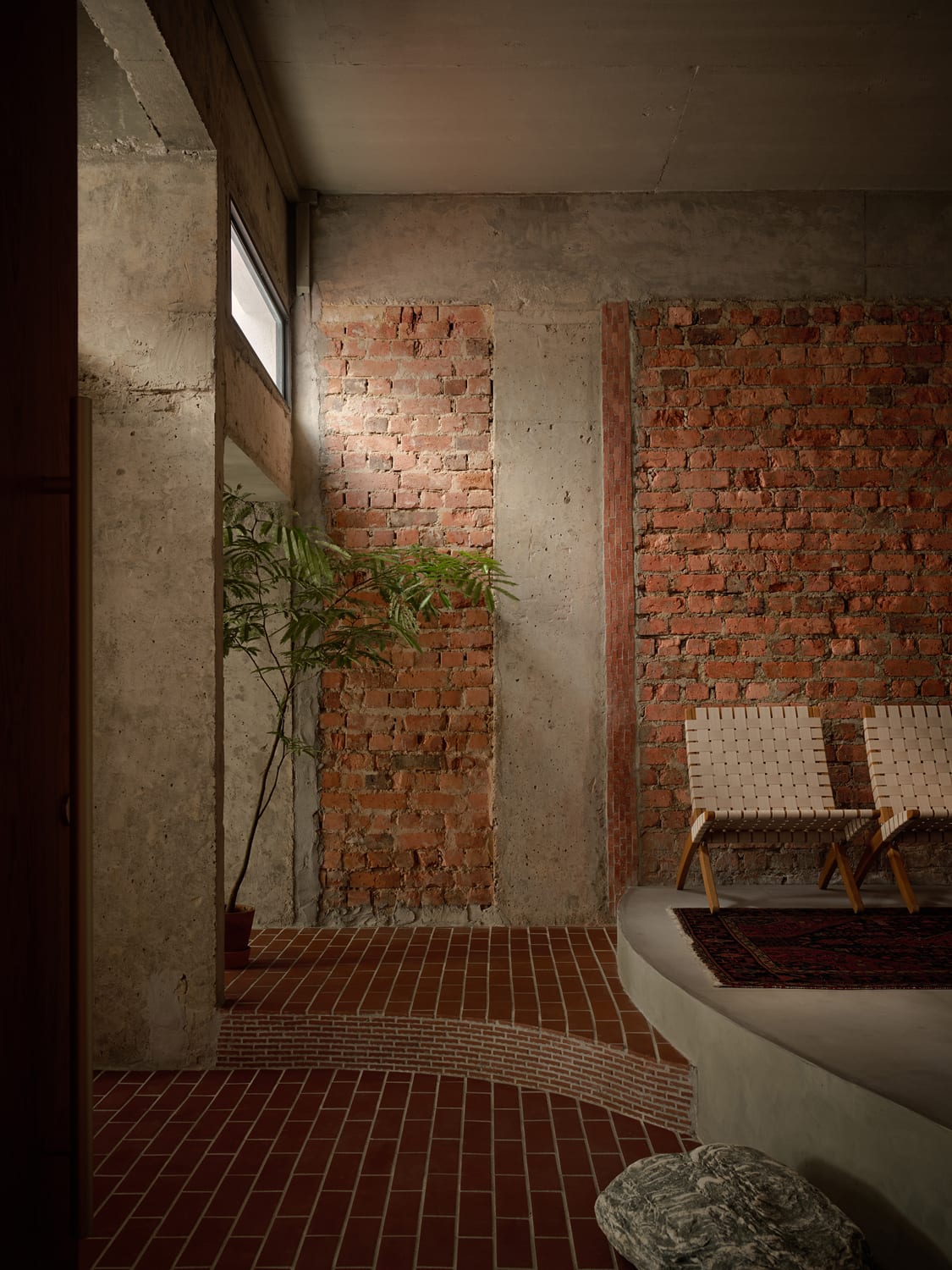
Like many houses designed in the same era, the living and dining spaces were separated by a significant height difference. Lim enlarged the higher portion to create a more seamless transition between the living space and the rear area, which now contains a study room divided by large glass sliding doors.
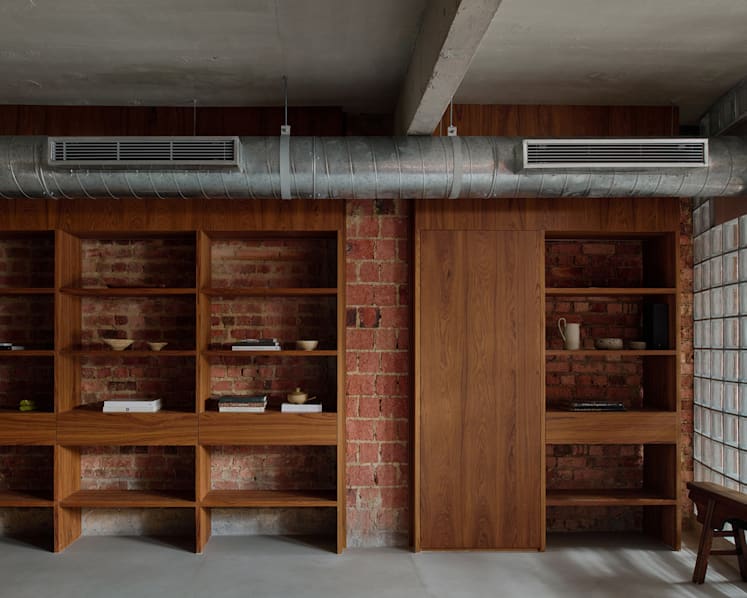
The now smaller, lower front portion became an intimate space for contemplation by the car porch window. Lim added a bench made from reclaimed Chengal timber salvaged from Penang, its aged knots and cracks lending the house patina. “We started the project being functional more than anything – nothing about aesthetics at first,” said Lim. She also installed a row of teak timber-veneer bookshelves across the living and study areas, since reading was a key part of the client’s retirement plans.
At the start of the project, Lim removed a test portion of the wall’s thick plaster and uncovered “a beautiful English bond brick tessellation.” She juxtaposed these exposed bricks with modern ones for new walls and parts of the floor. The backyard, re-tiled with brick slips, contains a small laundry area that the client could also access through a small window Lim installed along the interior walkway. “You can throw your laundry here and then close the window,” she said.
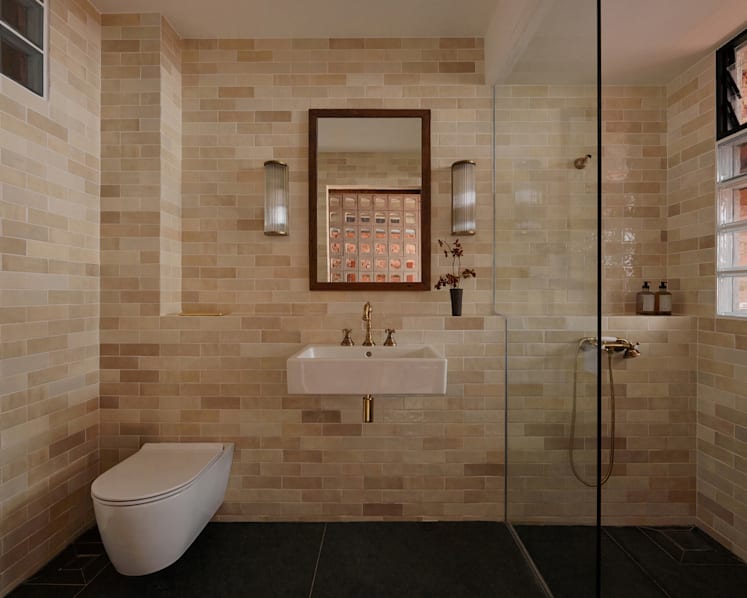
Few materials were used in the house, but they were applied in varied ways. A concrete screen at the study room separates the service walkway from the study area, its texture complementing the exposed concrete structure. All the bathrooms feature simple glazed butcher’s tiles that echo the rhythm of the bricks.
“Through this project, we learned that some design ideas could be simple but quite powerful. This is one of them. You don’t need to complicate things; you can lean on a certain concept already in the house and find clues from it to determine what materials to use next,” reflected Lim, who prioritised natural materials. “When natural light hits natural materials, it feels honest and unprocessed. That is the feeling we wanted to create for this home.”
As the client wished, the electrical and mechanical components were exposed, yet neatly expressed – like silver sculptures suspended from the ceiling. This complemented the overall sensibility of laying bare the house’s bones. Lim chose an exposed spiral-duct air-conditioning system, a feature more typical of commercial projects.
“I think the pairing between the client and us is good as he pushed our boundaries. When the client says he wants the pipes exposed, you have to think about how you are going to deal with it. In this sense, it’s a good exercise for us. We can find other forms of aesthetics apart from what our other clients normally ask us to do,” said Lim, who has developed a new appreciation for revealing the mechanical parts of a house. “When exposed with intention, they become part of the design – honest, functional and even beautiful.”
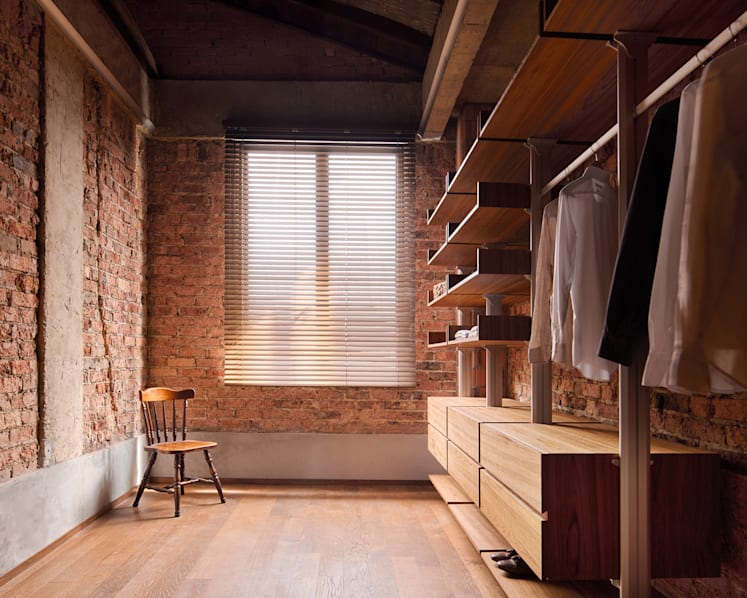
Designing with intention is something experienced throughout the house. At the staircase, reclaimed timber treads and risers were laid over the existing concrete structure – now also exposed – and matched with bronze-coloured steel columns in thick, rounded profiles.
Above this space, Lim removed the false ceiling, uncovering two windows that she replaced with overlapping glass panels to allow natural wind to flow through. The removal also revealed a network of old rafters and beams, which she re-varnished to bring back to life.
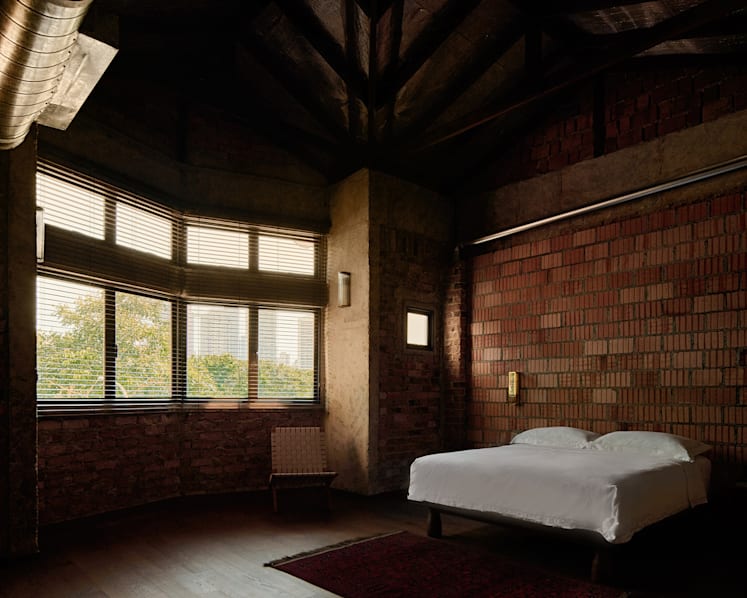
The master bedroom at the front of the house featured an angular layout. Exposing the brickwork and roof structure emphasised this and gave the room an antiquated quality, softened by light filtering through Venetian blinds.
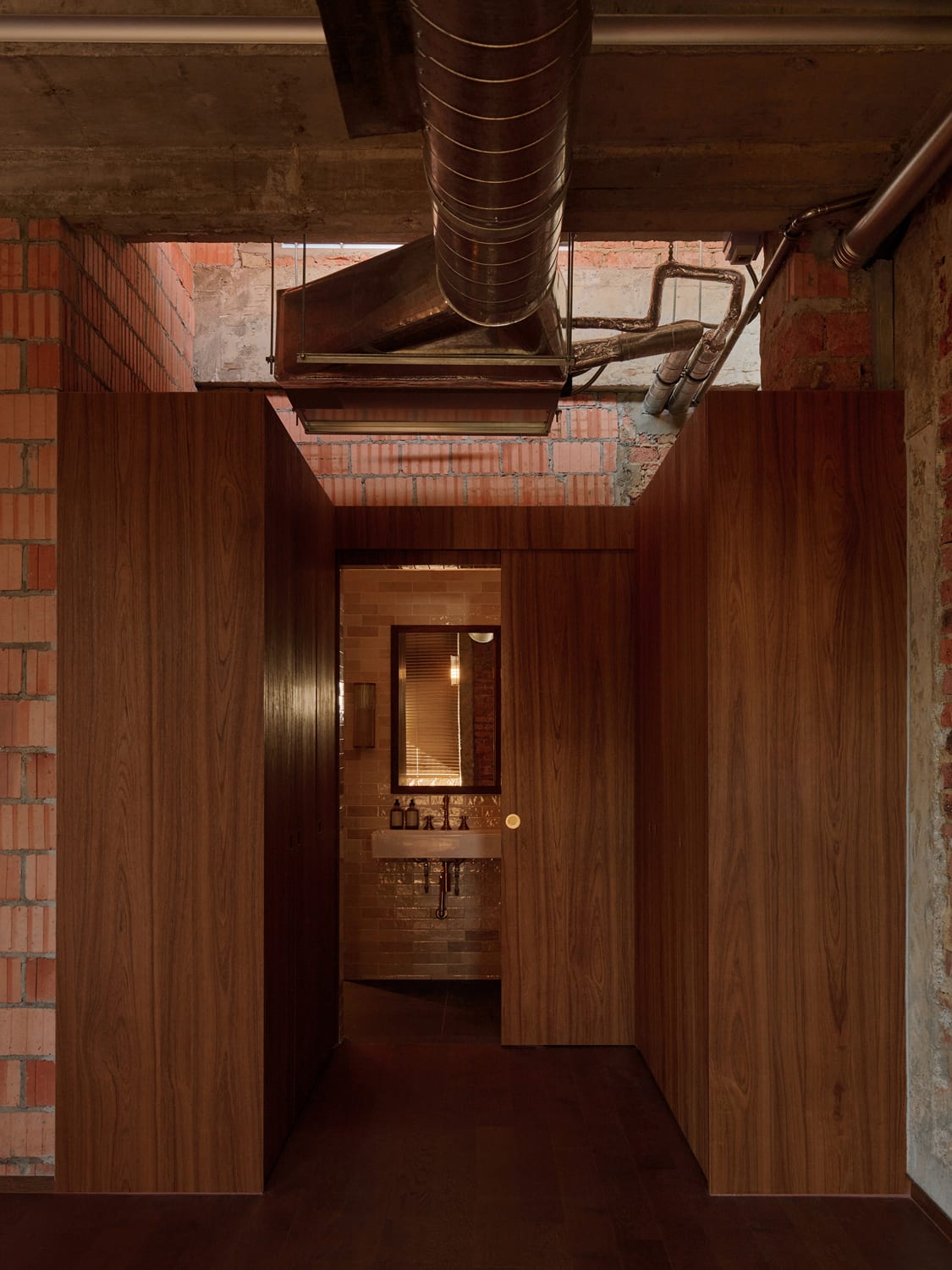
As with many conservation projects, marks of time were found during the process. “When we removed the plaster, a lot of the mechanical and electrical items like the old wiring and conduits were also removed. Upon removing these items, we started to see the grazed tracks on the walls like ‘battle scars’. We convinced our client to retain it as part of the historical story of what the house has gone through over the years,” said Lim, pointing out the old casing marks in the master bedroom’s brick wall.
This design approach is no easier than a standard renovation, nor does it cost less. Removing the plaster is laborious, as each step cannot be quickly done and covered up. “All the M&E are new, as are the finishes and windows; we also sealed the existing brick walls with a matt coating. The ducted VRV air-conditioning system costs almost twice as much but offers better capabilities, power, and long-term savings,” Lim explained.
The house’s “old soul” has been restored, but it now functions more efficiently with high-tech mechanisms. “We also provided an EV plug, as he will use it eventually,” said Lim. “It’s like seeing an elderly man use the latest iPhone 17 or iPad to read newspapers.”
For the homeowner, the house’s qualities have become intertwined with his daily routines. After a morning run, he cools down in the backyard “where the air is fresh and cool.” Mornings are a treasured quiet time for reading, research and reflection before he heads to the office to meet his small team that supports his pro bono work around the region.
“In many ways, this house has become my regional head office of one,” he mused. “It is where I think about life, catch up on years of reading I once put aside, and prepare for the next chapter of work and service.” He now spends Fridays and Saturdays working entirely from home.
But it is at night when, as the client reflected, “the house speaks to me most.” “Upstairs, the old brick walls, wooden floors, high bare ceiling, exposed beams, and rafters glow with warmth. The silence deepens. It feels like a refuge, almost like an old chapel – a sanctuary for the soul. The house has its own rhythm: morning light, afternoon air, evening calm and midnight stillness. That daily transition is something I cherish deeply.”