Luxury hotel Soori Penang is architect Chan Soo Khian’s tribute to the place he grew up in
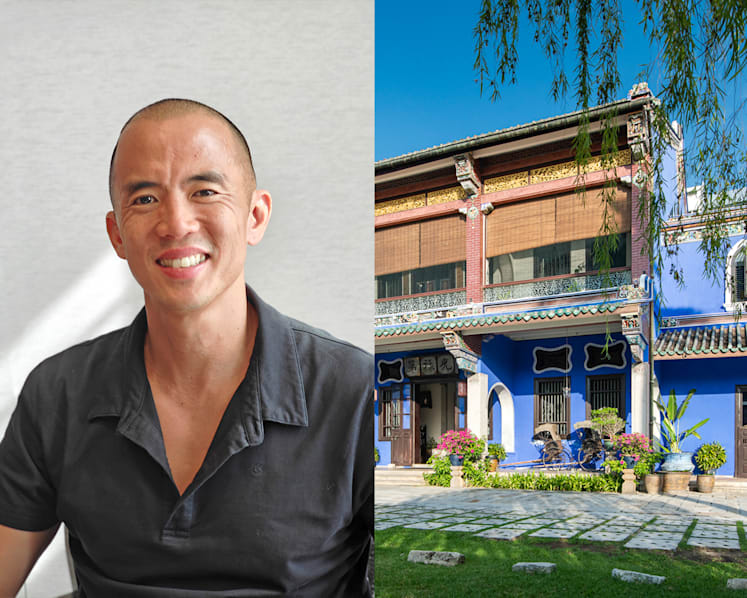
Chan Soo Khian grew up next to Khoo Kongsi, in a world of aunties, uncles, cousins, and a compound alive with activity. His 15-suite hotel now sits in that same historic orbit, translating personal memory into design details and rare after-hours moments inside the clan grounds.
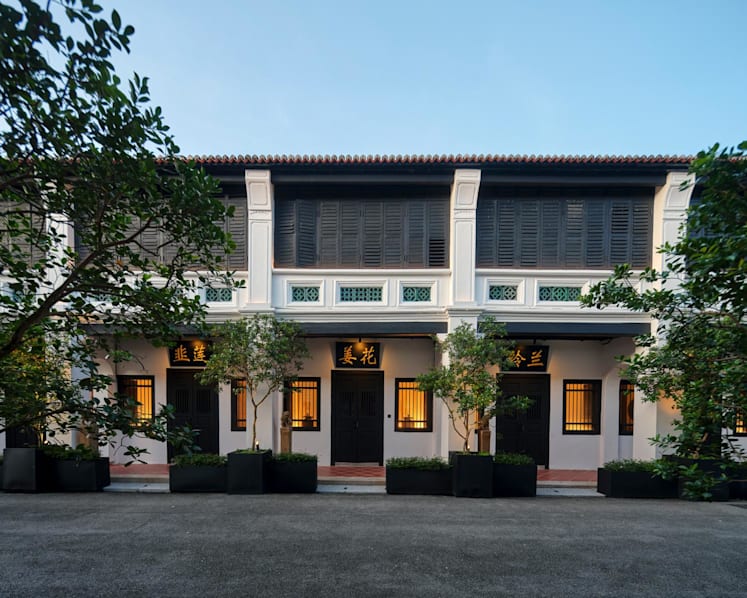
Born beside Khoo Kongsi, Chan Soo Khian realises a long-held dream with Soori Penang, a 15-suite shophouse hotel shaped by memory and craft. (Photo: Aaron Pocock)

This audio is generated by an AI tool.
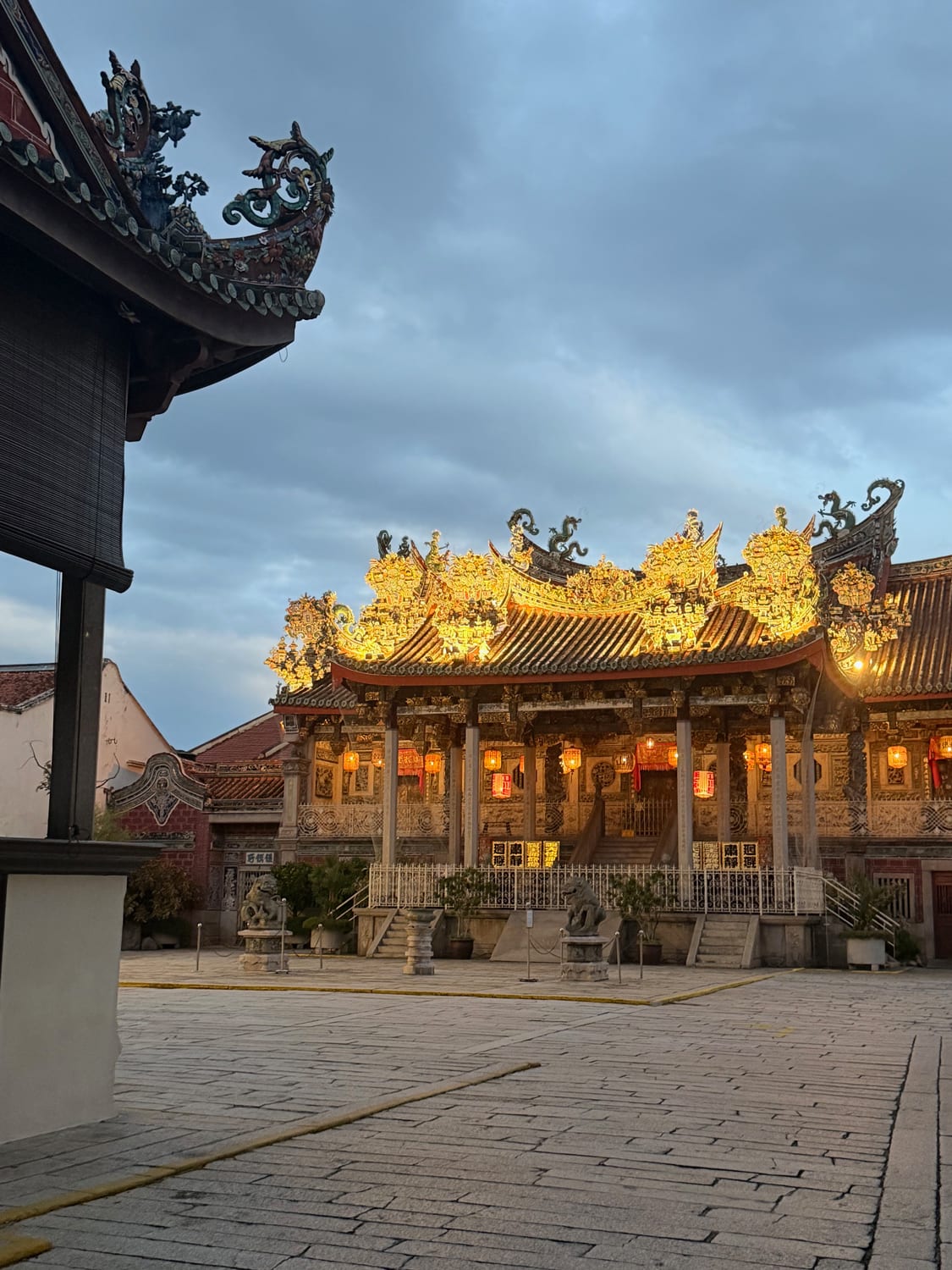
“My favourite part of Soori Penang is after hours,” remarked architect Chan Soo Khian as we stood in front of the Khoo Kongsi temple. It was not hard to see why. Dusk’s pink glow magnified the theatricality of the temple’s roof charms, stacked high with porcelain-covered flowers, figurines, emblems, and dragons’ mouths agape mid-roar. Lit by spotlights and paper lanterns, the jinbo (gold leaf) on century-old beams shone as if on fire.
Most surreal of all was the dearth of tourists. This was rare, as the Khoo Kongsi – Malaysia’s largest Hokkien kongsi (or clan house) – is a mainstay on the itineraries of visitors who flock to George Town, Penang’s capital and a UNESCO World Heritage Site. But I was a guest at Soori Penang, and guests have privileged access to the kongsi grounds between 5pm and 9am, after closing and before opening.
“I think the hotel to me is ideal because it sits on the threshold of public and private. The first half of the day, the kongsi is open to the public but after 5pm when the gates are locked, you are alone in isolation with the beauty of the courtyard,” said Chan. Even after seeing the temple so many times, the architect behind Soori Penang still looked entranced. ‘Many times’ is an understatement once you realise his relationship with the site. Chan’s mother was from the Khoo clan, and he was born in a shophouse next to the temple, where he lived until he was three.
“That’s why designing Soori Penang is a homecoming; a tribute to the place I grew up in, to memory, and to design in a very special way,” Chan reflected. While tourists gaze respectfully at the 120-year-old temple, he remembers it as his playground. “Living here was very communal. I had happy memories with aunties, uncles, and cousins; there was always activity and running around, playing in the courtyard,” Chan recounted. He related how the compound’s nooks and crannies were perfect for hide-and-seek, and the balustrades of the temple’s grand staircase made for an ideal slide.”
HOTEL ON HOME GROUND
Soori Penang, which opened on Jan 15 this year, is the latest addition to the Soori brand that Chan founded with his wife, bag designer Ling Fu. The Soori properties epitomise luxury through Chan’s minimal, sensuous design language in different ways – Soori Bali pairs spirituality and culture with a glistening black-sand beach, while Soori High Line in New York redefines skyscraper living with outdoor pools.
The 15-suite Soori Penang may be small, but it does not lack quality or detail; it is only the second Malaysian member of the Leading Hotels of the World collection, alongside The Datai Langkawi. But it is the most personal for Chan. His affection for both Soori Penang and his hometown was perceptible over the three days I traced his footsteps as he prepared for the soft opening.
Like a consummate host anticipating guests from afar, Chan was adamant that every detail served his Penang narrative – from the temperature of the kopi (coffee) in Nanyang coffee cups and the 1920s Old Shanghai playlist in the lounge, to the complimentary snacks in the suites. “Did you try the banana fritters? They’re very good, right?” Chan asked one morning, eager for my feedback.
It took a decade to bring his vision of a luxury hotel in these haloed grounds to fruition. “I saw the potential,” Chan commented. His conviction carried him through the challenges of persuading the kongsi board, navigating the pandemic, and waiting for the spaces to become available. The idea for Soori Penang was seeded in 2015, when a journalist asked about his roots and the origins of his design ethos. Chan found himself thinking about those days in the kongsi, long buried after a life abroad – studying and working in the States, and growing his firm, SCDA Architects, in Singapore, then New York and now, Shanghai.
CRAFTING JOURNEYS
“That story, in a way, made me look at this place with fresh eyes,” the architect commented. Which is why Soori Penang is inextricable from the concept of home – of place and architecture, culture and cuisine, and history. The hotel occupies two facing rows of shophouses that form part of a ring around the kongsi courtyard. These clan houses were built by sojourners from China who braved harsh sea journeys to eke out a living here. The defensive urban layout offered collective protection and community for those sharing the same surname. As a result, entrances were small and controlled to guard against rival clans.
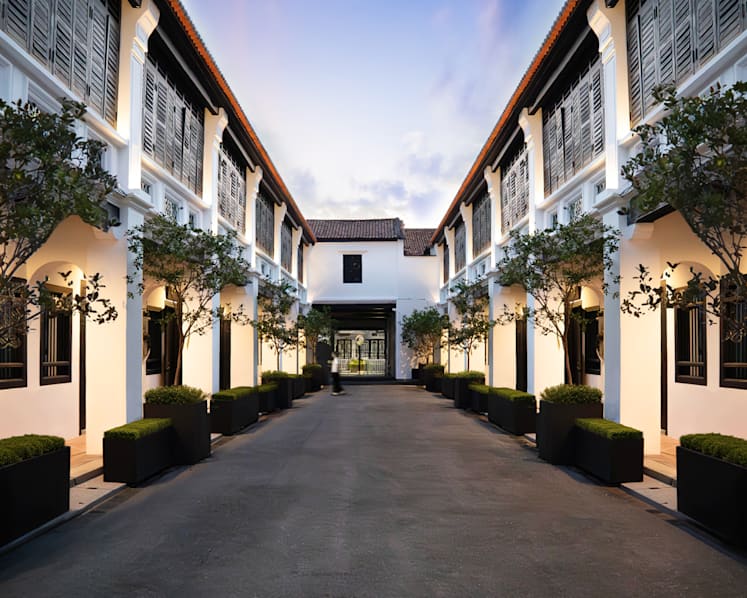
Cannon Square is one such entrance. It is the main avenue leading into the courtyard, which also contains a wayang [street opera] stage and an ancestral hall. Its name, Chan shared, came from cannons British soldiers fired to break up turf wars. Soori Penang’s shophouses front this avenue. Guests can enter from here during the day, but a more formal entry was fashioned from a former car park.
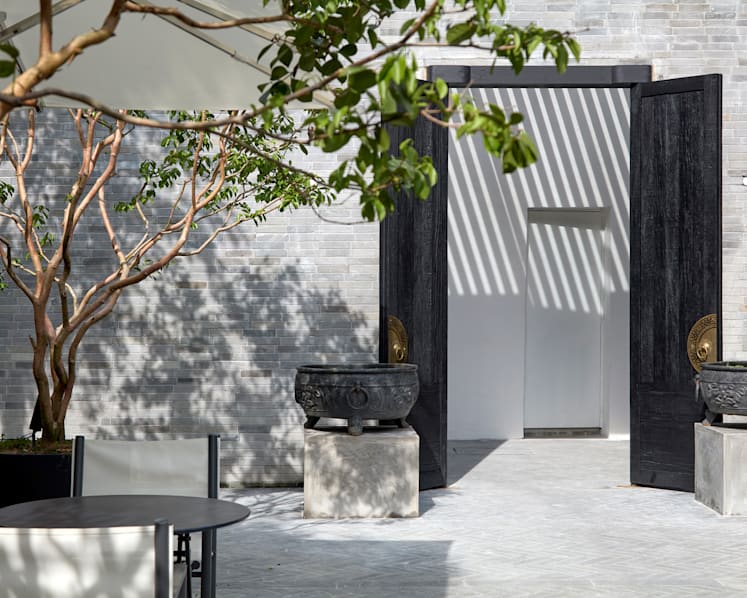
“The initial idea was to let guests come in through Cannon Square but I felt the inside and outside was too jarring. So now, they come in from Lebuh Acheh and transition into a courtyard. The design of the arrival for a hotel is important,” explained the seasoned hotel designer, whose work also includes projects for Aman, Four Seasons Hotels & Resorts, and Ritz-Carlton.
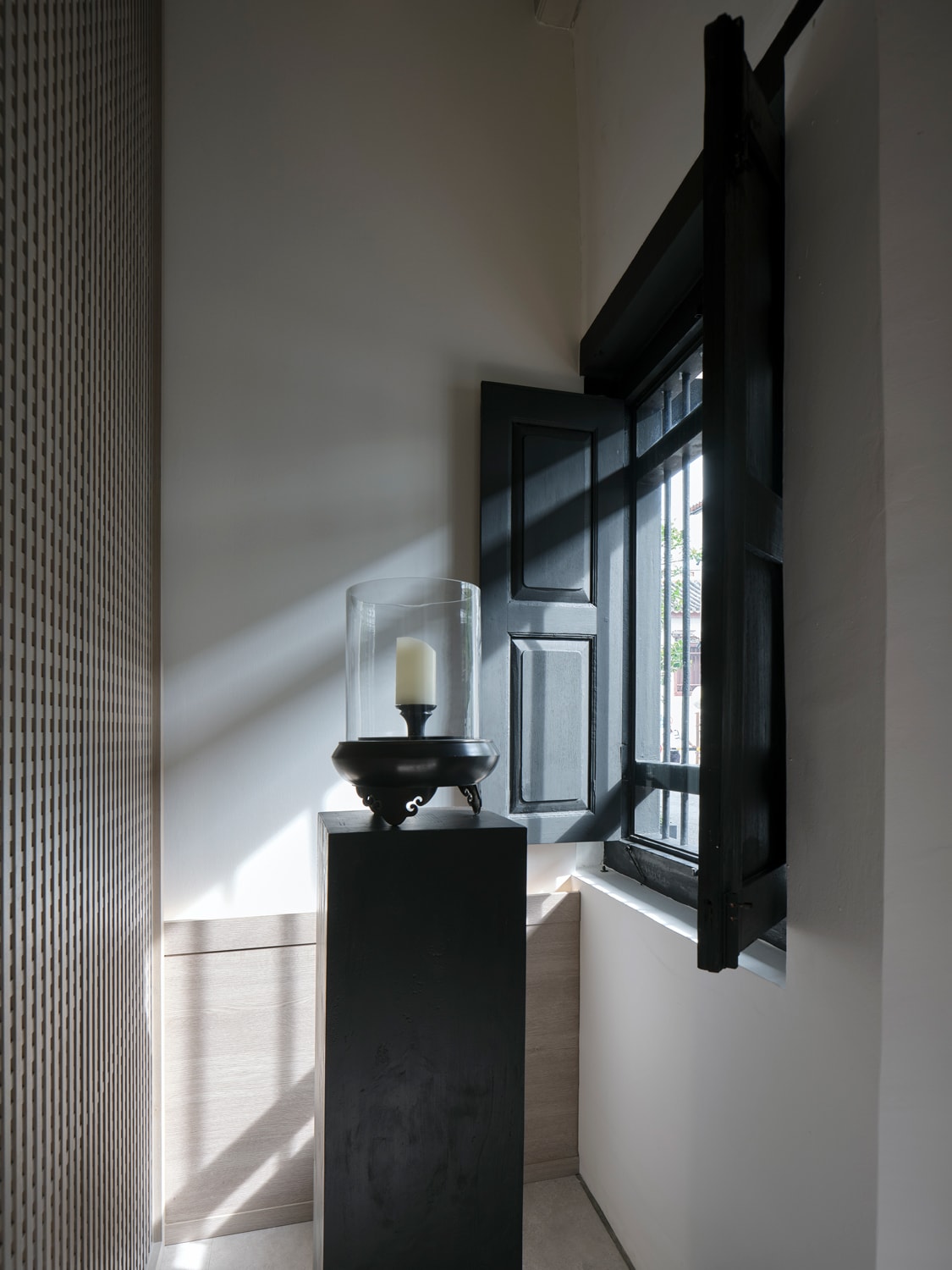
From the outside, Soori Penang looks truly exclusive. White walls with gleaming gold signage distinguish it from a street of canary-coloured shophouses housing souvenir shops, casual eateries, and cafes. “Nothing is revealed until you pass through a set of solid doors made from recycled timber and traditional solid brass door pulls,” said Chan. “Then upon entering, a lush landscape is revealed.”
BLACK AND WHITE
I felt as though I had stepped into the garden of someone’s private residence, adorned with bamboo and sculptural trees, as well as a pond of water lilies and lotus plants. Feng Shui principles dictated that the main door should not face the street, so Chan shaped a non-axial sequence that takes you from the courtyard into a trellised vestibule. Turn right, and you enter the hotel’s dark foyer. A custom alabaster pendant, along with a signature welcome drink of soda water infused with nutmeg, marks the end of this garden sequence and the start of Soori Penang’s sensorial inner world.
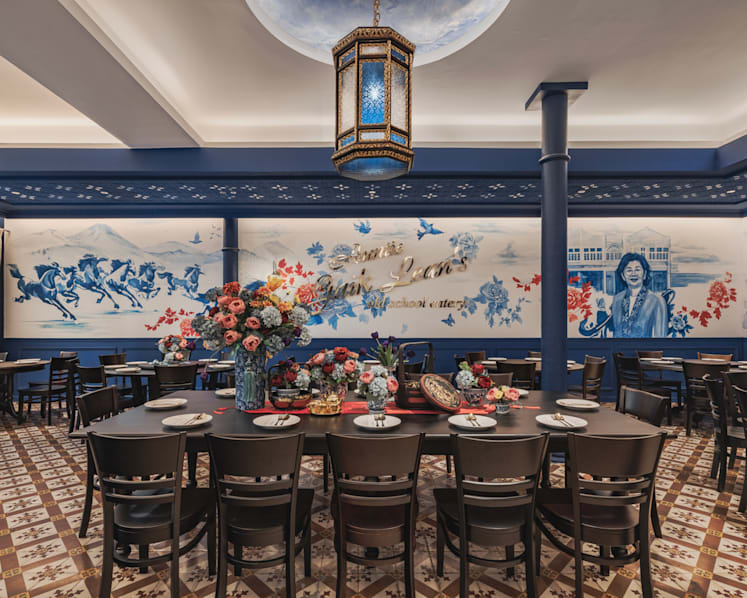
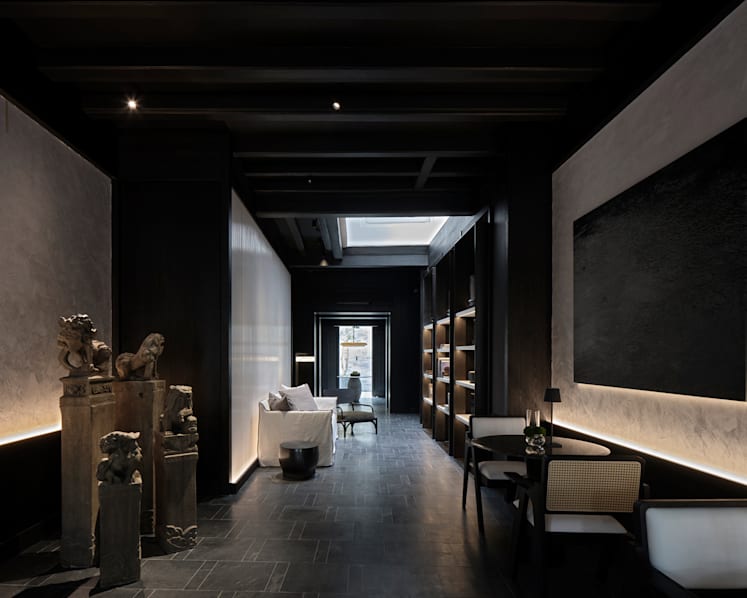
From here, I glimpsed the full length of the shophouse. Chan had removed some walls from a former run-of-the-mill hotel to achieve this. A library and a lounge with a wine bar occupy two shophouse bays on the first storey. On the second storey are a tearoom, a small gym, and a spa treatment room where therapists administer facials and sleep-inducing massages. Order and tactility are hallmarks of Chan’s design language, and he applied them here to the shophouses “to craft something that’s very understated, with some cultural references, and based on memories.”
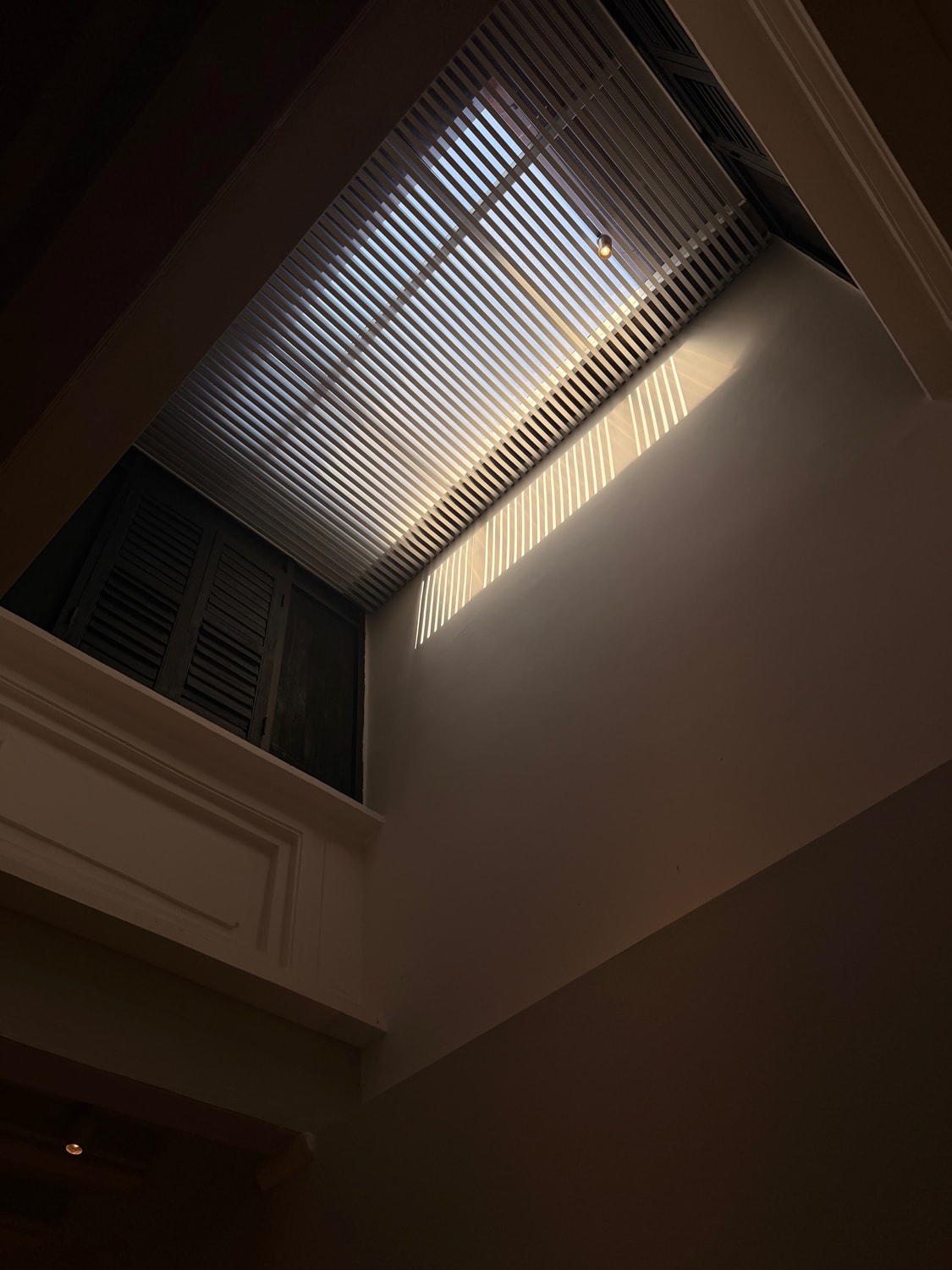
One of these memories is the phenomenological quality of his childhood home. “The shophouse was quite public so most of the time, the door was closed and inside was a dark space. When it’s dark, you have very dramatic light from the air well,” recalled Chan, as we sat in the lounge wrapped in dark timber panels, wire-brushed to bring out the grain. Light from the air well danced across these chocolate-coloured surfaces, which alternate with white lime-washed walls applied using a Venetian plaster technique, and with extruded, ribbed, glazed ceramic panels whose crackled surfaces recall traditional ceramic bowls.
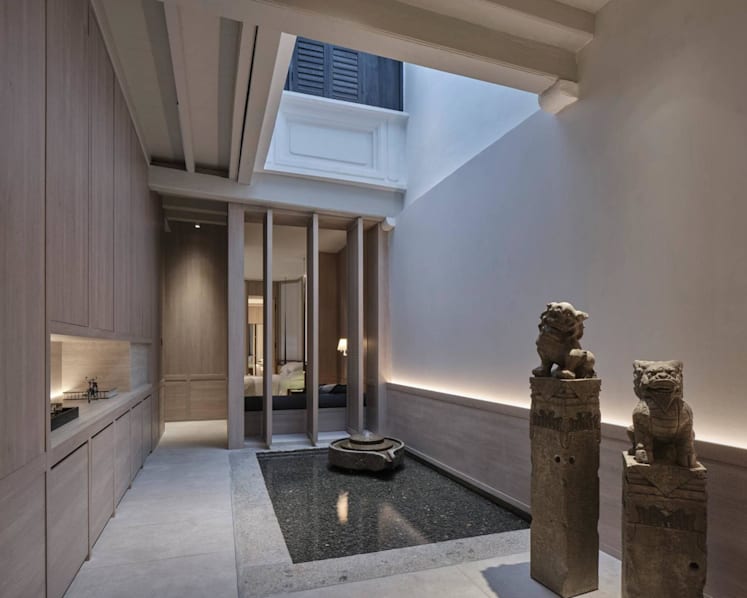
Check-in happens in the suite, which is a cut above for Penang. Each suite runs the full length of a shophouse and spans 1,000 sq ft. A night costs S$1,050 (US$830) – the highest in Penang for a shophouse hotel – but bookings are filling up. One morning, a staff member told us a guest had driven from Ipoh on a whim and booked a room, curious to experience the hotel that had quietly been making hospitality news over the past year. Passers-by are curious too, pausing to admire the mise en scène of manicured planters and custom signboards, framed with flower names, hanging above each suite door. Stone lions – miniature versions of the twin lions fronting the temple – line up like sentries along the five-foot-way, one guarding each suite.
SANCTUARY IN A SUITE
“One of my aspirations was to create a hotel that allows guests to experience the essence of what a shophouse can be in a modern, luxurious way, so I turned over 40 rooms into these 15 suites,” explained Chan. “Guests are very happy to open the door and see the expanse of space, the light, and the tranquillity. It’s almost like they’re entering into a different world. I wanted to make a sanctuary – a place where guests can relax. This is achieved through elemental architectural principles like space, light, and shadow.”
In the suites, the second-storey floor beams were repaired and exposed, and the air well was reintroduced. A reflective pool edged in rough granite was added as another fragment of Chan’s memories. “In the old days, there was no air conditioning. When it rained, the air well would fill up with water momentarily. It was actually quite poetic. As the water dried up, there would be the fresh smell of rain,” he said.
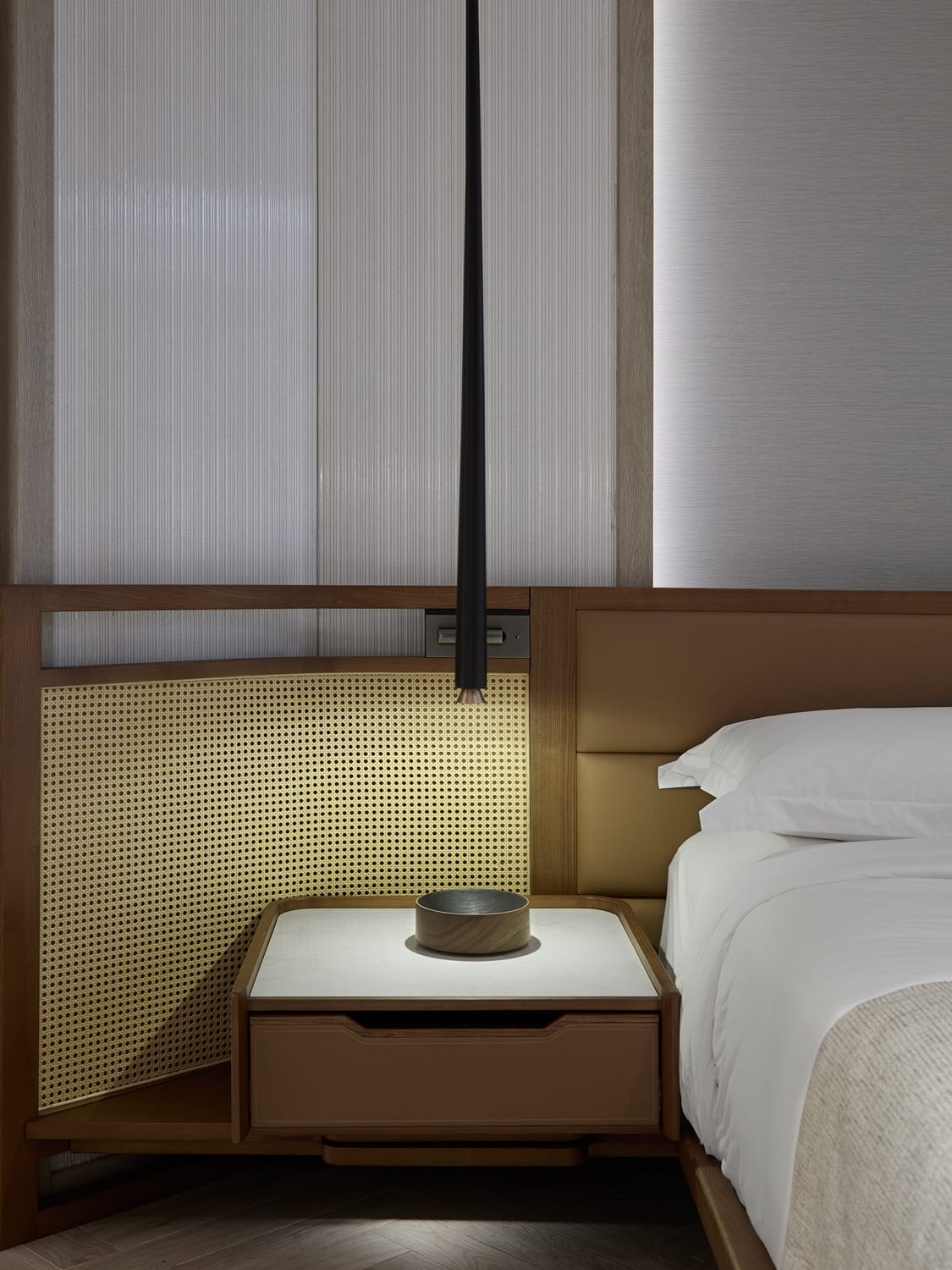
The air well connects the suites to the outside. “It’s not static, with the sound of rain hitting on the granite, the lightness and darkness, and the shadows changing throughout the day,” Chan said. Horizontal, low built-in furniture retains the purity of his refined aesthetic, and timber screens sequence the long plan. Custom alabaster lamps and washbasins lend a touch of preciousness to the tactile canvas of timber, stone, and rattan.
“Everything is streamlined, designed for visual rest so you instantly take a breather,” Chan mentioned. The suite features lime wash and ceramic panels like those in the hotel’s common spaces. But instead of dark timber, the architect used beige solid timber “because it allows you to see the shadows and light a bit more clearly.”
CRAFT AND CUISINE
Through the day, the sounds of gurgling water contribute to the feeling of repose. The source is a small fountain in the pool, whose design recalls traditional rice grinders. “I remember these rice grinders and other kitchen equipment, because of the sound of the granite pestle grinding rice to create rice flour for cakes,” Chan said, sharing yet another memory. Circular air vents with Chinese mythological figures hang above the sofa like artwork, mirroring the air vents in the temple.
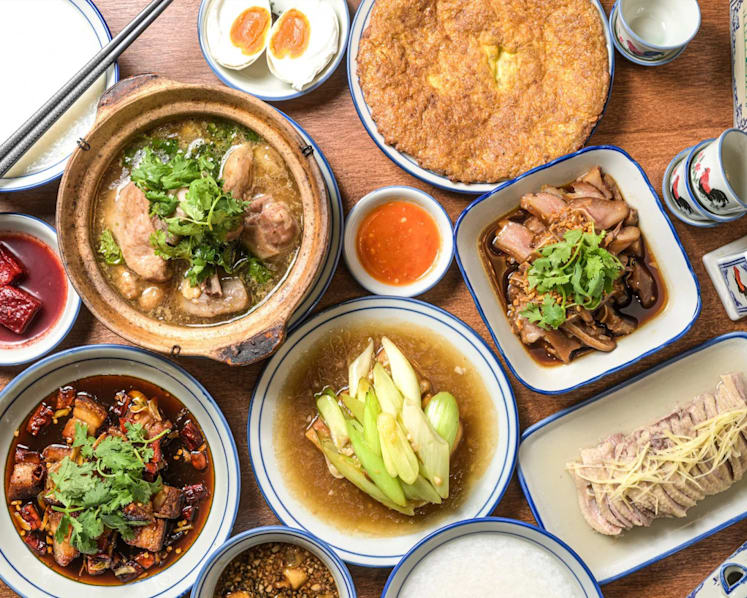
When it comes to dining, Soori Penang offers an alternative model that, instead of competing with the city’s ready stock of multicultural cuisine, takes advantage of it. On request, the staff will bring back a selection of dishes from Chan’s “best places to eat in Penang” and serve them at the lounge dining table.
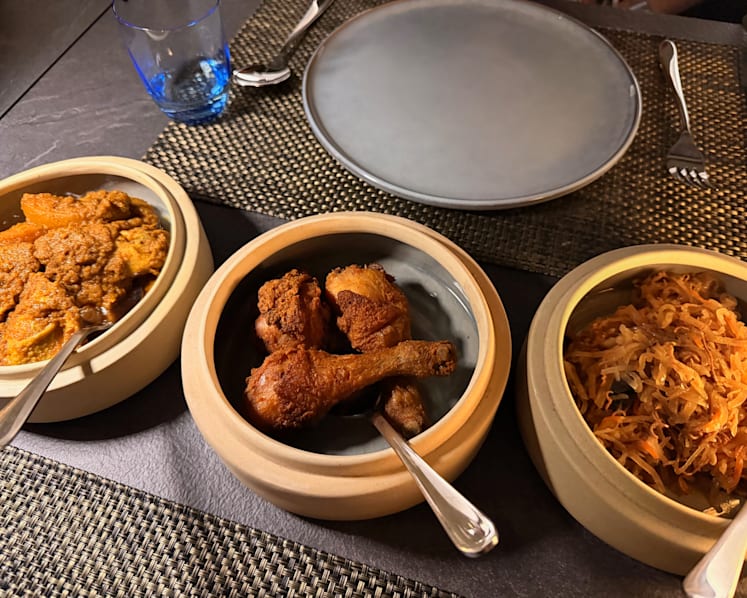
One evening, we were presented with a wooden tingkat of local dishes – spicy curry kapitan (captain’s chicken curry), savoury jiu hoo char (stir-fried vegetables with cuttlefish), tau eu bak (soy sauce pork belly), delicate kueh pie tee cups filled with just the right amount of radish, and fragrant bunga telang-coloured blue rice from Peranakan restaurant BaBa Phang. There were also spring rolls and chicken satay from Ocean Green Restaurant. Dessert was kueh from Michelin-recognised Moh Teng Pheow Nyonya Koay. This was not fine dining per se, but the food was fine indeed.
“Penang is well known for food. My parents would take me to some of these places so this brings the external food culture into the hotel,” Chan shared. Tip: ask for his favourite dishes from Foong Wei Heong Restaurant, which he took us to on another day. Highly recommended is “a special dish of pomfret, where the fillet is cooked with stir-fried vegetables, and the fin and bones are deep-fried to a crunchy, crispy finish, served with century eggs and ginger,” Chan described with gusto. “It’s very unexpected but amazing.”
CURATED EXPERIENCES
Of course, guests can head out to these places on their own. But after gallivanting around Penang during the day, it feels truly relaxing to enjoy local food in the comfort of the hotel. “We’re making it easier for foreigners to, in two or three nights, get deep into being a temporary local through my lens and the lens of others in Penang. We’re not necessarily taking you to the most posh restaurants, but experiencing what I feel is quintessentially Penang,” said Chan.
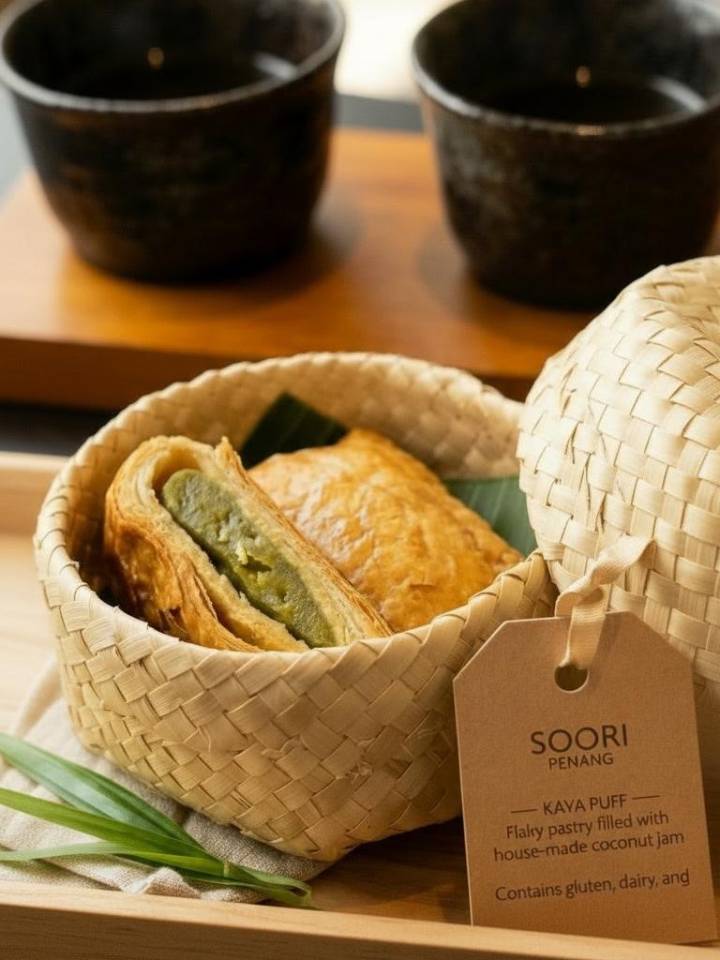
Guests can enjoy Mediterranean-inspired cuisine using many local ingredients dreamt up by executive chef Mathijs Nanne at the hotel. I tried a clean-tasting menu, which was a welcome break from the rich local food and included a prettily plated seared tuna and chickpea salad with nori and local herbs. At turndown in the suites, there is more food – guests receive a rattan container of local delicacies from bakeries like Min Xiang Tai, along with a flask of comforting, hot, non-caffeinated tea. On the first night, it was kaya puffs filled with house-made coconut jam – I finished both, even though I was full from dinner.
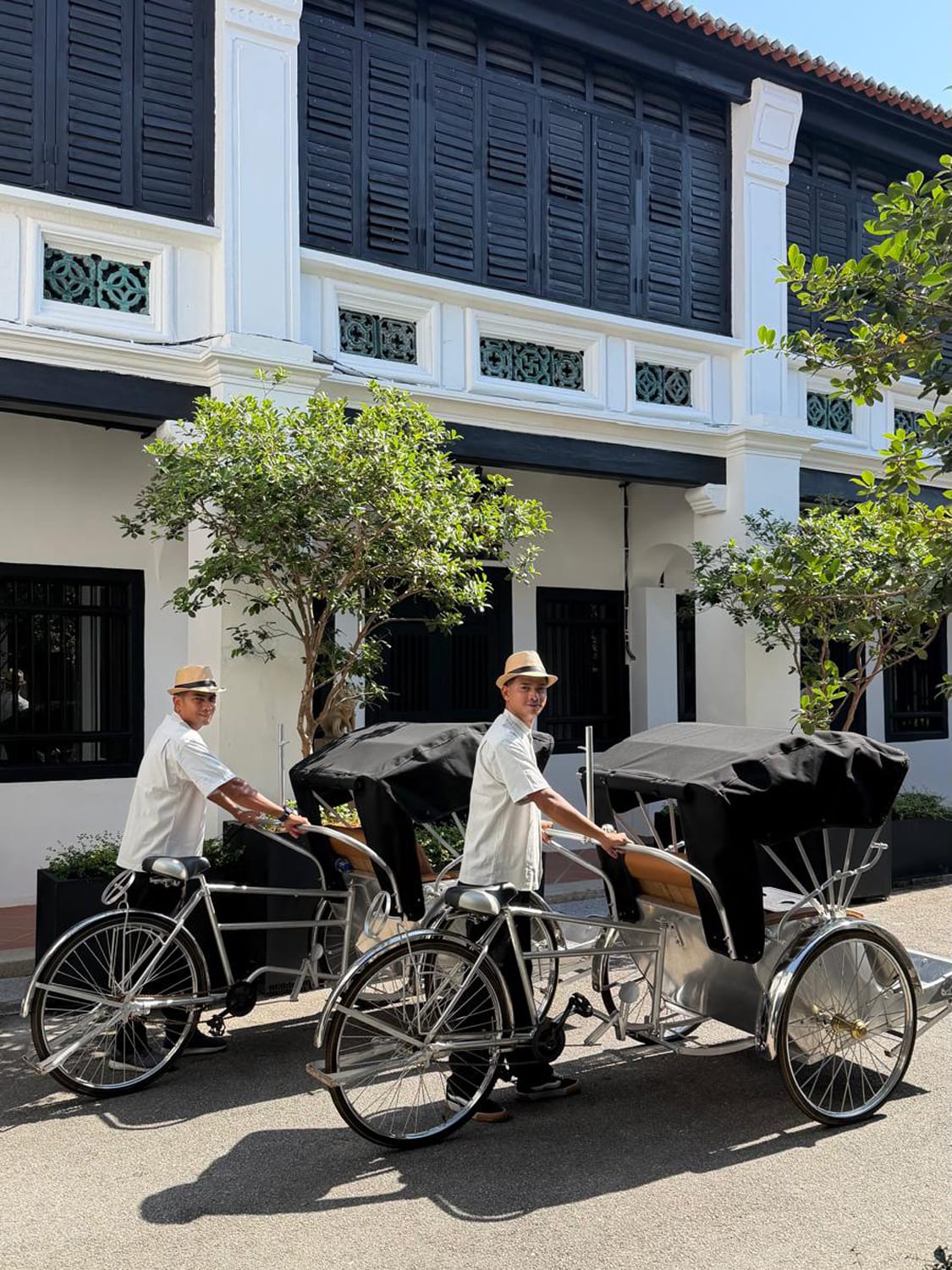
Like the food, Chan is adamant about showcasing Penang’s age-old cultures “in the best possible way” through the hotel’s journeys. “One of the journeys is called Journey of the Gods, which I personally choreographed. It starts with a trishaw ride,” said Chan. The route takes guests to a South Tamil temple, a Chinese temple, and a mosque of local importance in handsome silver trishaws that stand out from the fanciful versions decked with fake flowers, ferrying tourists around Penang’s streets.
Chan customised the trishaws with Penang-based Hup Huat Trishaw and Bicycle Repair. He found the shop on a television programme featuring dying trades. “It took a year to make two trishaws; we customised the materials, and made some modifications to place containers for cold towels. The owner, Ah Choon, has been making these trishaws for a long time so anything that I wanted to customise was a bit of a challenge,” said Chan, who went on to share endearing childhood memories of being picked up for school with neighbourhood kids by a “trishaw uncle”.
SHOW AND TELL
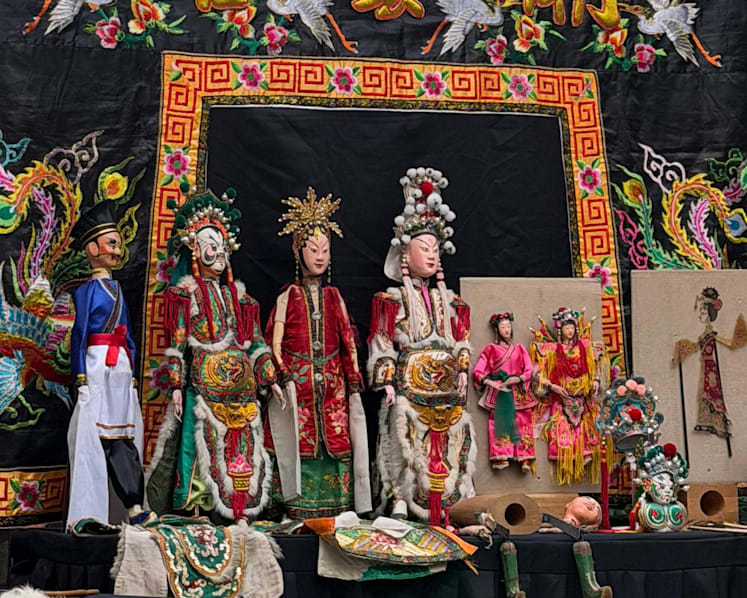
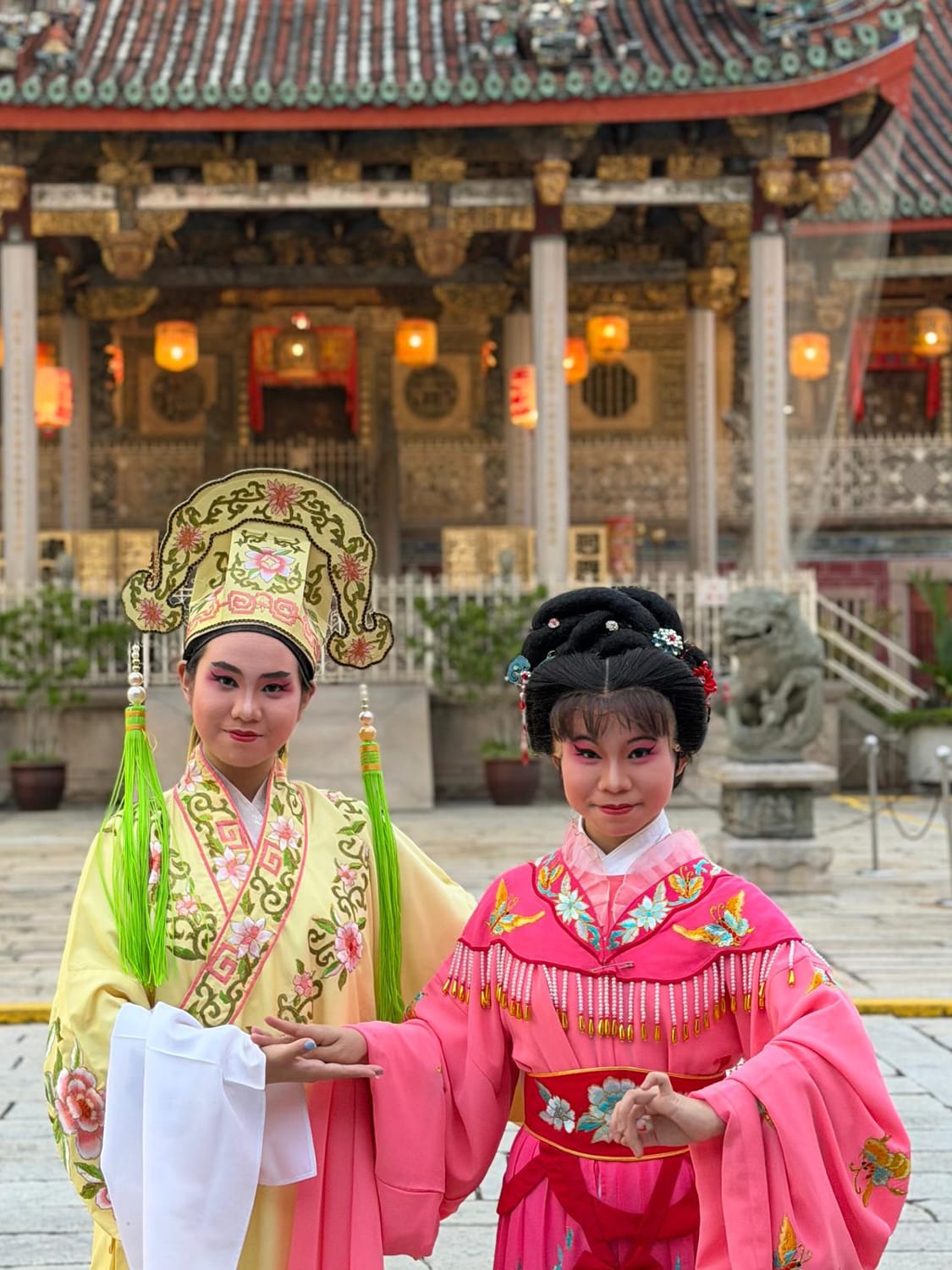
In Soori Penang’s private courtyard, Chan has planned another treat for guests – a private Teochew wayang show and a Teochew puppet showcase. “In Penang, memories of wayang were very much part of being in the Khoo Kongsi compound. I remember at every major celebration of the birthday of the progenitor, there’d be a show and there’d be crowds. There’re very few troupes left but we connected with a group founded by a fourth-generation wayang performer. I see it as a way to preserve the culture, a way of supporting a dying trade. It’s also making these mystical dancers easier to access for our guests,” he commented.
After the event in the private courtyard ended, we adjourned to the kongsi courtyard for photos, where the sky joined in with a glowing sunset, as described at the beginning of the article. The pictures make for beautiful mementoes, but Chan’s ambitions are more far-reaching, with Soori Penang as a catalyst for an overall metamorphosis. “I believe that the hotel, if presented properly, together with the journeys and customised aspects, will also set a new standard for hospitality for Penang,” he stated.
This is why he purchases books about Penang from nearby Areca Books. “We curate our library from that store. I want to support them,” explained Chan. It is also why, in the second half of this year, he will acquire two more shophouses fronting the street and partner with local businesses to open a restaurant and bar that the public can patronise.
This means Chan will be visiting his hometown a lot more. It is a true homecoming, and a meaningful one too. I recalled a meeting with Chan during the pandemic, when he told me about the uncertainty of getting Soori Penang off the ground. Now that it is completed, I asked him how he felt.
“Actually, I didn’t feel that emotional, but now that it’s opened, once in a while at the end of the day or very early in the morning when everybody is sleeping, I have that moment, you know – it felt good to have done this,” Chan pondered wistfully. “It’s a different feeling from doing projects like Soori High Line. It’s the smallest, yet the connection here is much more real.”