Inside a Singapore house that turns its split-level layout into a design advantage
Built on the slope of a hill, the home was reworked around its split levels, with the staircase, air well and garden-facing spaces creating a stronger sense of connection for the family.
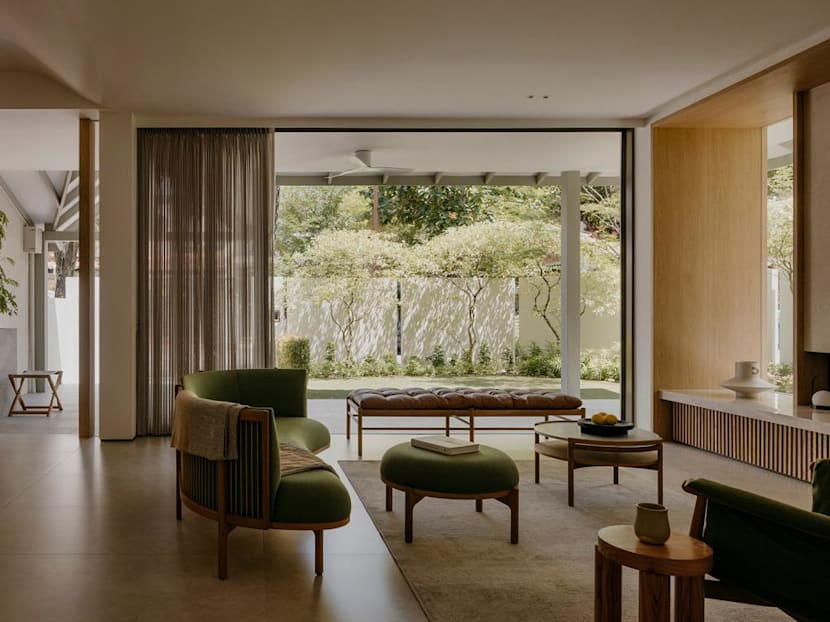
This semi-detached house in Singapore was transformed from dark and dated into a warm, light-filled home with greenery and family-friendly spaces. (Photo: Studio Periphery)

This audio is generated by an AI tool.
Most Singaporean homeowners look for uncomplicated plots, which make it easier to plan and build. But when this pair of lawyers went house-hunting, they sought out “a house with less conventional spaces”, said Alex Liu, founder of Right Angle Studio.
Liu had designed the couple’s former home, and the experience went so well that they asked him to advise them during their house hunt. Their search took them all over Singapore but, in the end, the perfect home was just down the road from the husband’s childhood home in the Thomson areas. “In my teens, I lived in a home less than 100 metres from this house, so moving here definitely feels familiar and comfortable,” said the husband, who had always been drawn to the greenery, quiet and fresh air near the Central Catchment Nature Reserve. His wife was won over after seeing the house, despite her initial reluctance as she was used to living in more central parts of Singapore.
The semi-detached house is part of a developer-built cluster, with orange terracotta roof tiles and balconies jutting out from the second storey. It retains its original profile, save for a fresh coat of grey paint on the roof tiles and enlarged openings that make the interiors brighter and airier. As it sits on a corner plot, the house enjoys a larger garden and more daylight than its neighbours.
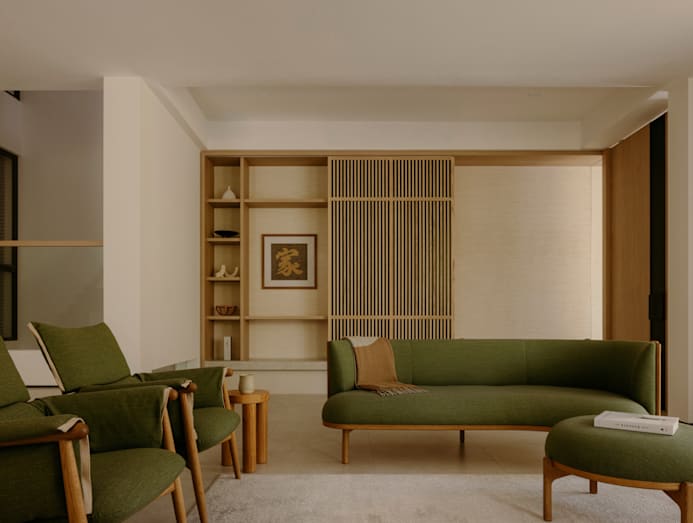
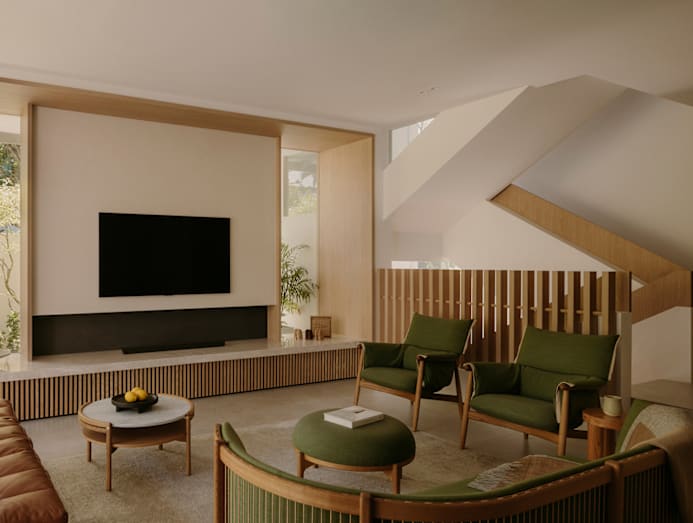
The garden opens into the living room. Behind the staircase, doors lead to the playroom and study. Only when one descends a level do the dining area and kitchen at the rear come into view. This was one of the house’s charming quirks that attracted the owners. “The house was built on the slant of a hill – hence the name ‘Hill House’,” said Liu. The master bedroom is on the second storey, along with the bedrooms of the couple’s two young children, who share a Jack-and-Jill bathroom.
Although the kitchen and dining areas are on the lower ground floor, they do not feel dark or basement-like as they open to the side and rear gardens. “Being tucked in the deeper part of the house means these spaces feel a lot more private when the owners host gatherings and have family dinners,” added Liu.
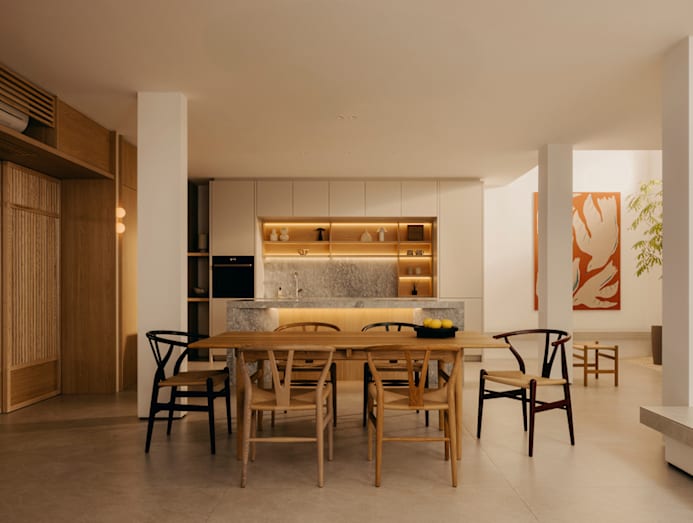
Liu retained the house’s main structure but tweaked its internal functions and finishes. In the dry kitchen, he introduced an island counter that has become an anchor for family life. “On recent weekends you’ll find us gathered around the island kitchen for a baking session. Our daughter is into baking now and we’ve made a large batch of apple crumbles and chocolate cookies to give away. It’s a fun weekend activity for us all,” said the husband.
Under the air well is a cosy nook with a built-in bench, a potted tree and a pebble garden. The owners made it their own by hanging a striking red Passaro Throw, created by Olivia Leino for Slowdown Studio, as wall art. Their children naturally gravitate towards the area to play with the pebbles.
They had originally planned for this to be a breakfast corner with high chairs. “It turned out quite different but I think that’s the fun part of a home, when the space unfolds itself and repurposes itself. That’s something we cannot control but at the same time, that’s the beauty of it,” said the husband.
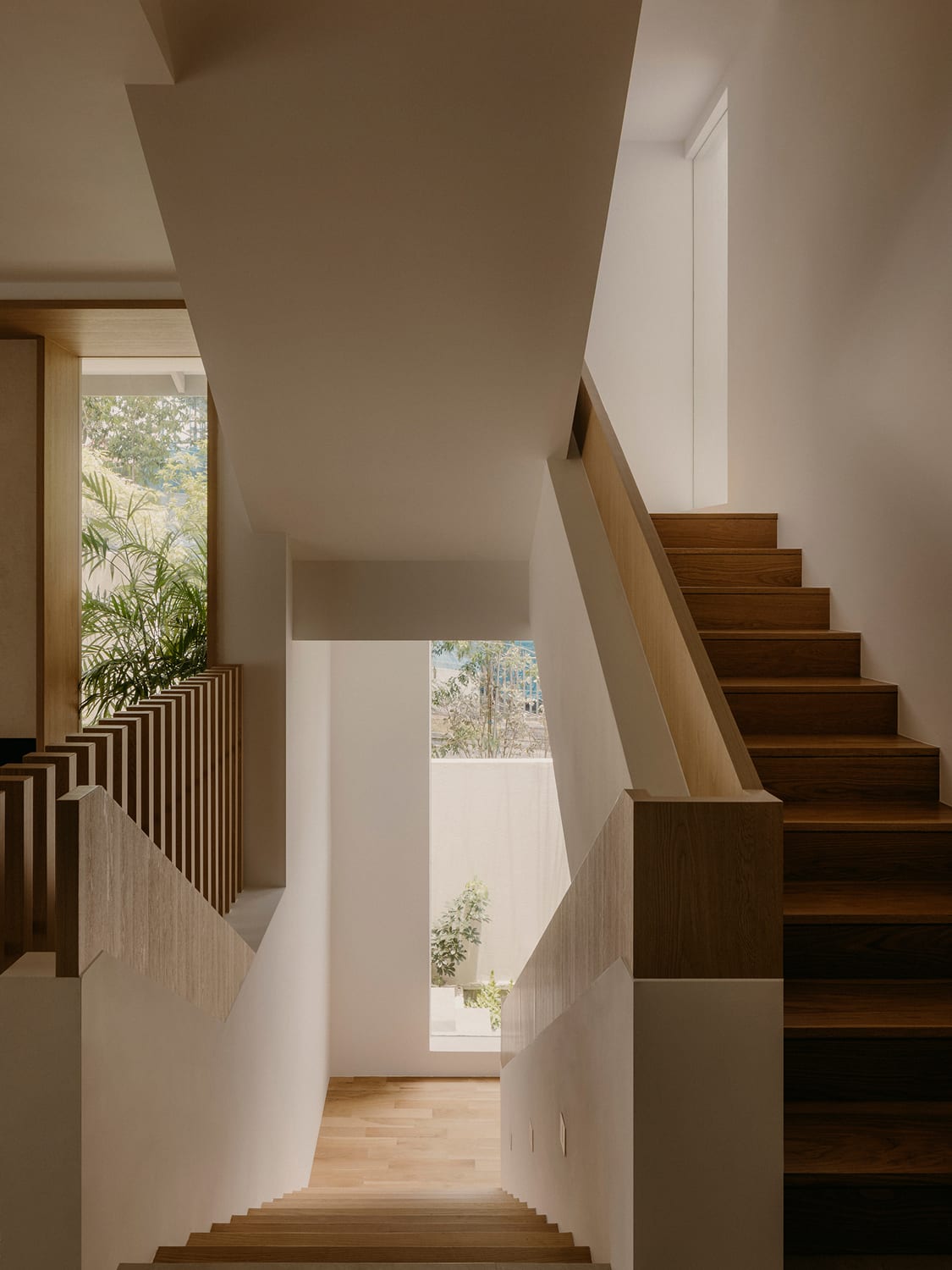
Above the stairwell, bedroom walls were replaced with full-height glass panels, while the staircase parapets were swapped for glass balustrades. This turns the vertical spine into a conduit for light and connection. Liu also added a skylight at the top, increasing illumination and replacing what had been a messy mix of exposed pitched roof and beams. “Apart from connecting all the rooms on every level, the skylight delivers life to every possible corner, and stitches all the levels together,” said Liu.
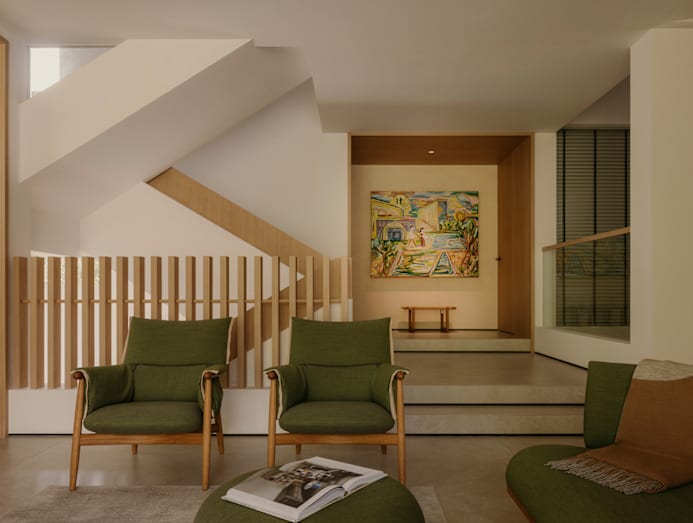
The house is now a far cry from its original state, which the husband described as “quite old and dark”. Liu recalled that it had “old marble floors, dark teak timber ceilings, and was last renovated in the late 70s or early 80s.” Inheriting an existing structure and making it feel current can be a challenge for any designer. “It felt very dissected, so we had to brainstorm]how to make the whole home feel as one,” said Liu.
The house’s exterior remains largely unchanged, although Liu rebuilt the boundary wall and added glass openings that echo the interiors. From inside, the owners can glimpse the new landscaping planted along the road. The biggest external changes were made to the garden. Trees and shrubs were added to encourage outdoor activities, while a steep, narrow staircase edged by bulky planters at the side of the house was redesigned.
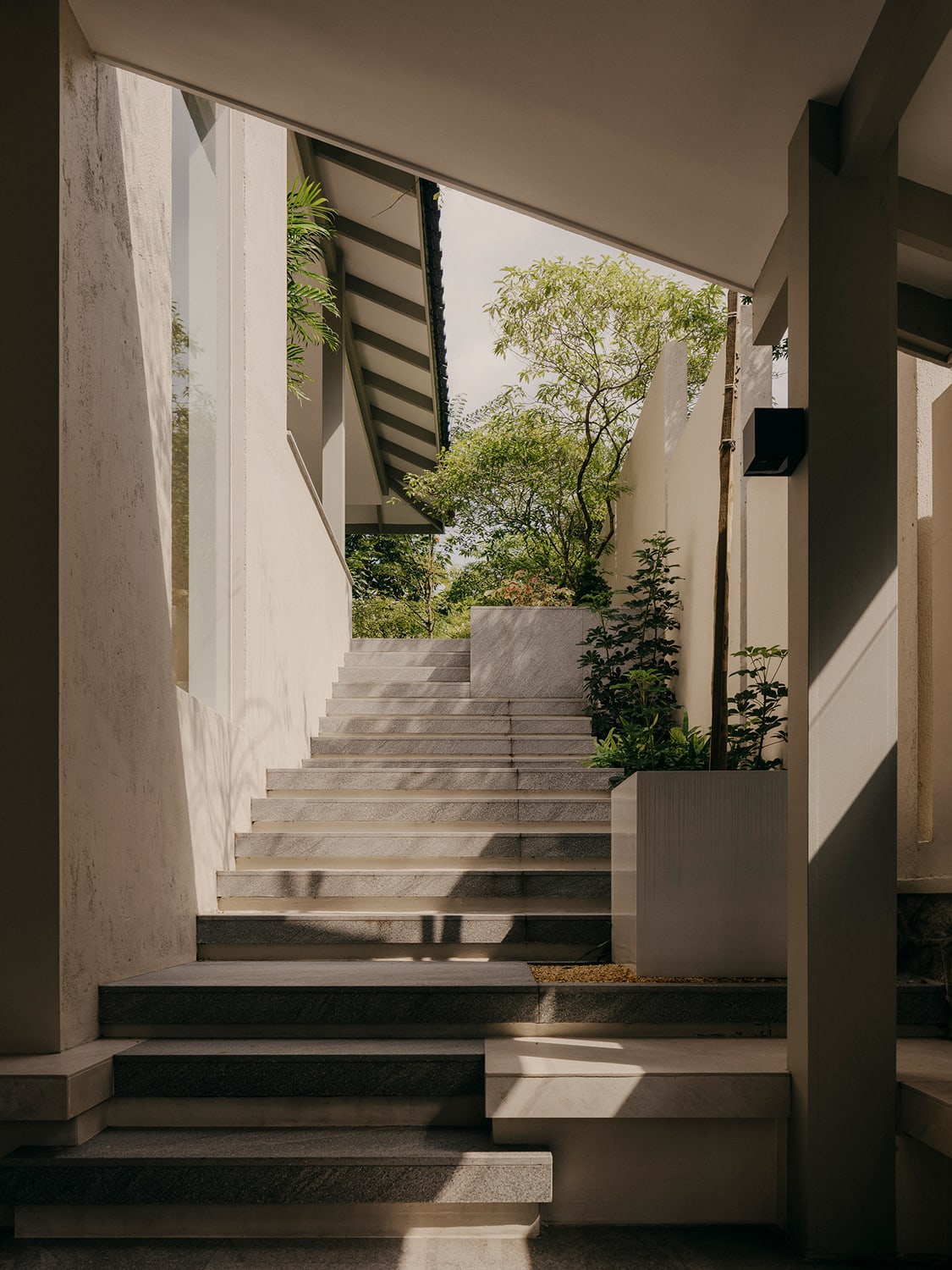
“We redesigned the external staircase, which connects the front garden to the patio at the lower level, to be more ‘dramatic and generous’, with deeper and wider steps, and brighter granite tiles that celebrate this connective space,” said Liu. The steps lead to built-in seats on the patio outside the dining area. “This used to be an enclosed yard. Sometimes when we host, guests walk down to this patio from the external steps,” said the husband, adding that it also makes an ideal barbecue spot.
Such design gestures help create a more cohesive home, integrating old and new elements both visually and functionally. “It’s really about pulling the inside and outside spaces together,” said Liu. “We design a lot of the interior with the architectural perspective in mind.” One example is a large window cut into the external wall at the first-storey staircase landing, which had previously been dark. “There was only one small window here, so we decided to open this up to bring in more light. You see how the foliage from the tree outside casts shadows on the floor, with the leaves moving. I think it’s like living art,” he said.
The husband appreciates these design interventions too. He said the openings allow the couple to keep an eye on their children from different parts of the house – whether the children are moving along the staircase at night or playing in the living room while meals are being prepared downstairs.
He added that the air well now has a “renewed purpose”. It is where he and his wife stand to call out to their children when they cannot locate them in the house. “There is so much movement and life around the various parts of the home even though each space maintains its privacy and separate function,” said the husband.
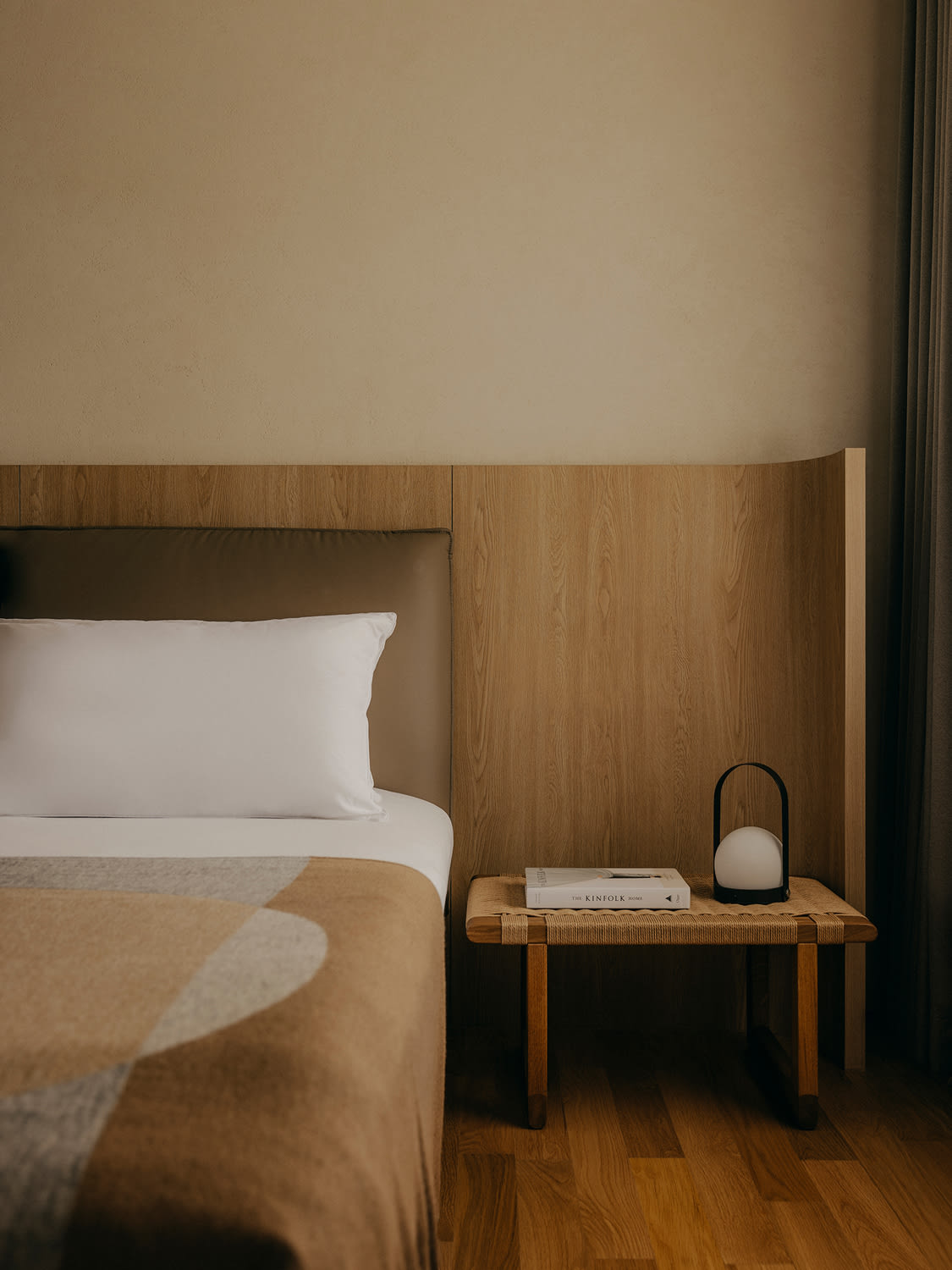
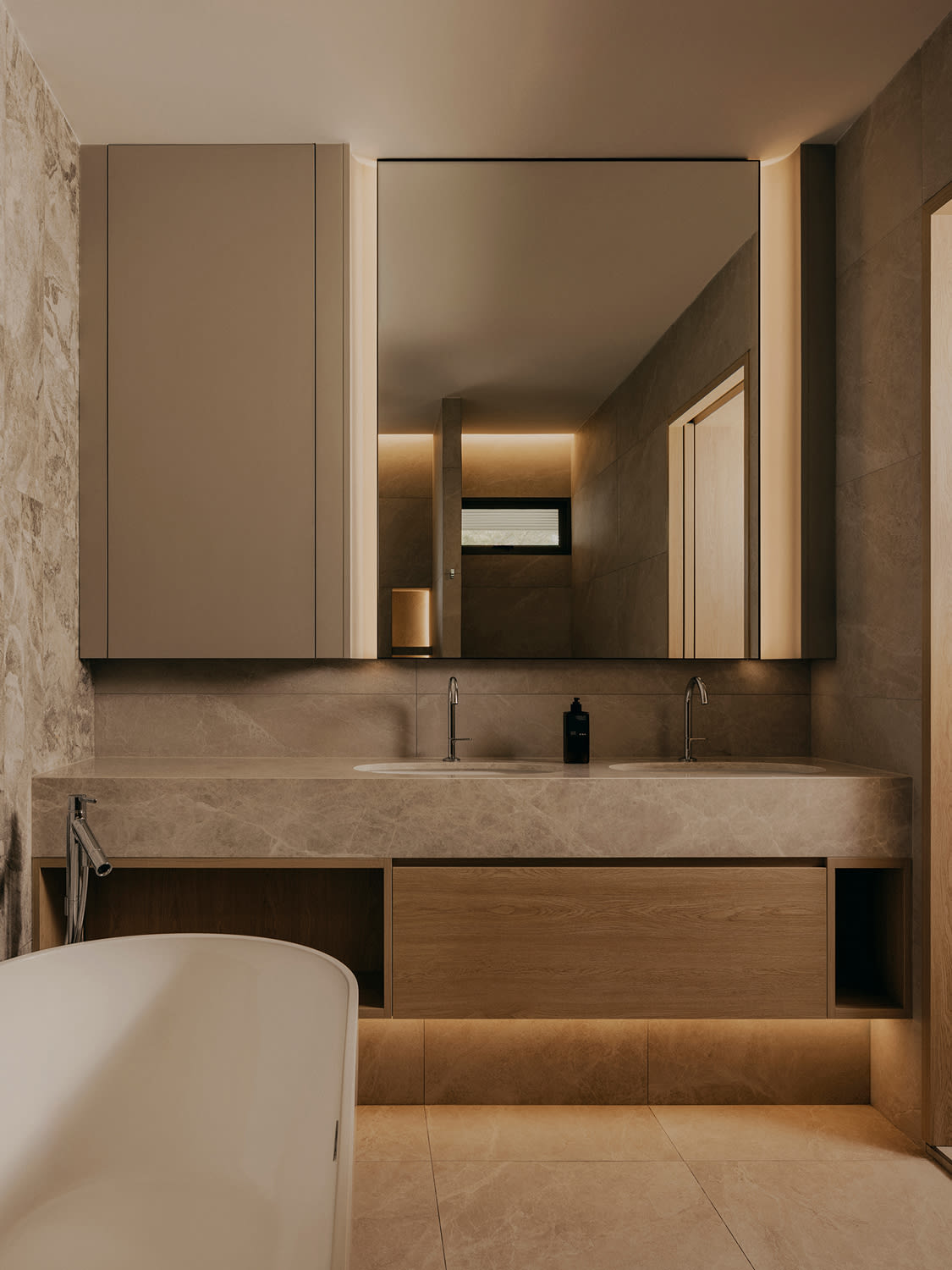
The light wood laminate used for the joinery and staircase is a warm counterpoint to the surrounding greenery. It also sits well with the Scandinavian and Japanese influences seen in the furniture, including the Wishbone dining chairs from Carl Hansen & Son. Upstairs, the changes to the bedrooms were functional yet cohesive. In the master bedroom, Liu carved out space from the sleeping area to create a larger bathroom that now comfortably fits a standalone bathtub.
A house becomes a home when it is personalised. Here, artwork injects character into the various spaces. Outside the playroom is a custom piece by local illustration studio Ripple Root. “It depicts our family at the most memorable destinations we went to – Naoshima, Japan’s art island, and Masseria Moroseta in Puglia, Italy; we like travelling to destinations with extraordinary architecture,” said the husband. He also painted two artworks himself, one of which adorns the wall of the television room.
The outdoor spaces are now well used too. “After we got a swing in the garden, the kids are always there,” said the husband. “Our son is so intrigued by flowers, leaves and insects; the garden has been his favourite classroom.”