5 new Penang boutique hotels redefining luxury stays
From a restored 1926 colonial compound to an annexe of the Blue Mansion and a wellness retreat, these new boutique stays show how Penang’s hotel scene is evolving beyond heritage conservation.
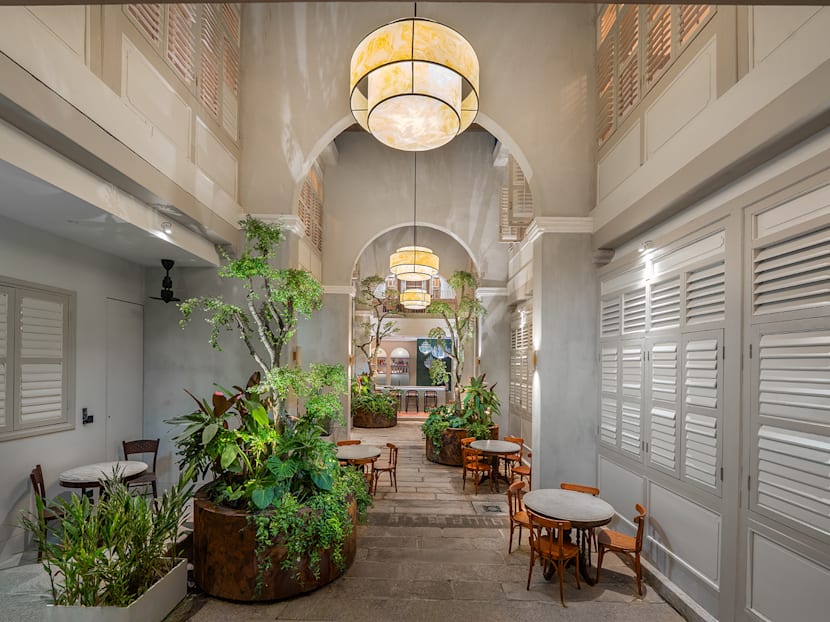
Penang’s newest boutique hotels show how the state’s luxury hospitality scene is evolving beyond traditional heritage stays, with restored landmarks now joined by design-led conversions and wellness-focused retreats. (Photo: The Qing Suites)

This audio is generated by an AI tool.
George Town has become one of Southeast Asia’s most closely watched heritage tourism destinations since it was inscribed as a UNESCO World Heritage Site together with Melaka in 2008. In the years since, hoteliers have restored, adapted and reimagined its historic buildings, creating some of the region’s most thoughtfully designed small hotels.
The latest openings suggest that focus is widening. Alongside a restored colonial-era compound marking its centenary, an annexe to one of Penang’s best-known 19th-century mansions and a row of 1928 Arts and Crafts terrace houses leased from the Catholic Church, there is also a renovated high-rise on Jalan Sultan Ahmad Shah and a purpose-built wellness retreat in Kepala Batas, on mainland Penang. Heritage conservation remains central, but it is no longer the only story.
1926 HERITAGE HOTEL
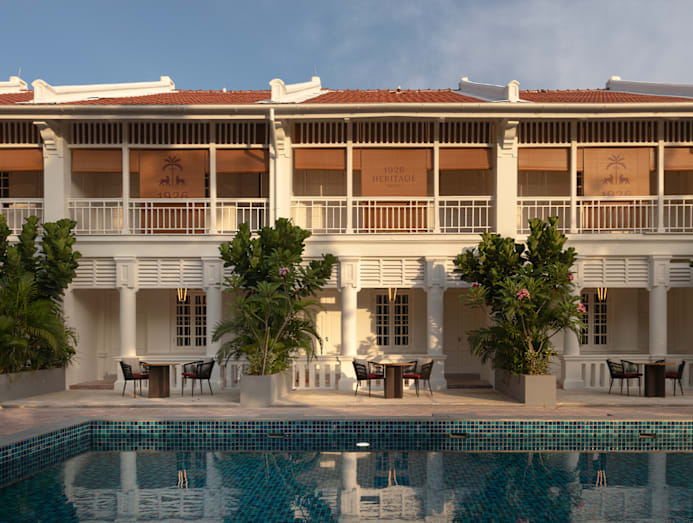
The cluster of buildings at 227 Jalan Burma was built in 1926 as quarters for British administrative officers and reopened in 2026, its centenary year, under The Unlimited Collection by Ascott. In a restoration led by Ng Sze Wee of Singapore-based Office Of, much of the original masonry, timber, staircases and wrought-iron balustrades has been retained and conserved in place. New insertions are limited to structural and functional necessities, including services, lighting, acoustics and discreet technology. The tall ceilings, deep windows and generous proportions of a building designed for the equatorial climate remain intact.
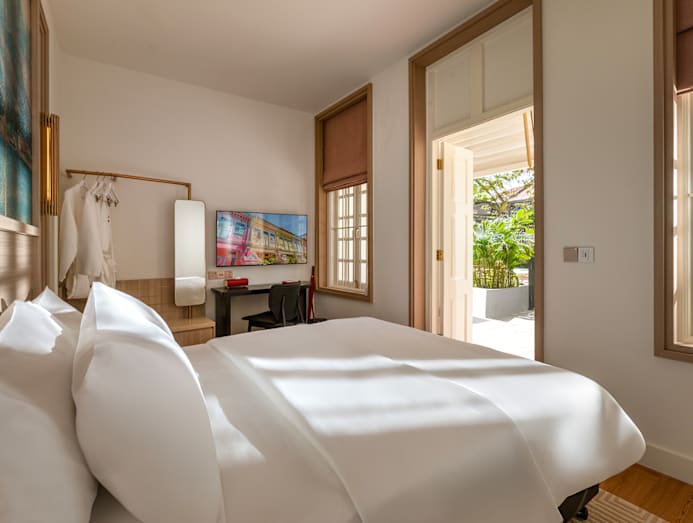
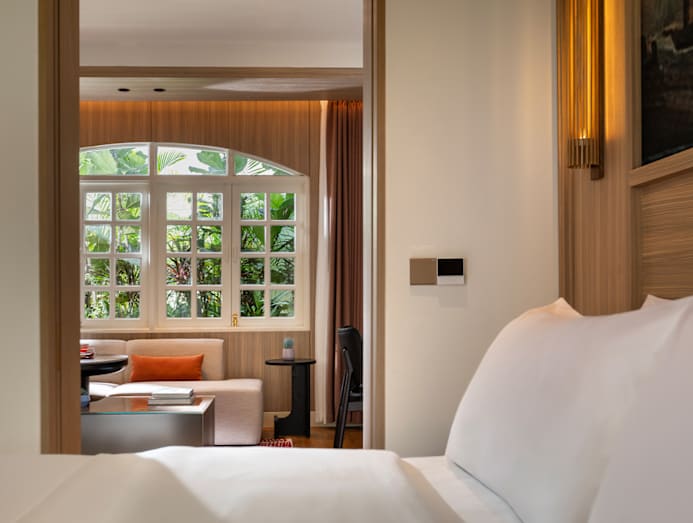
The white-and-beige facade reflects the Anglo-Malay architecture associated with George Town’s colonial transitional period. Inside, grand double doors lead into the central bungalow’s reception area, where the focal point is a straw-marquetry wall, made using a French technique, depicting the hotel’s emblem of a palm tree flanked by two panthers. The motif recurs in newer joinery throughout the property. In the guest rooms, a painting of Penang as Prince of Wales Island occupies the headboard wall, one of several period references woven into the interiors.
Rooms range from Heritage Rooms to the Straits Suite, which has a separate bedroom, living area and study. On the ground floor, the 52-sq-m Heritage Garden Patio Room comes with a private patio and garden with direct pool access. Sensorium operates the spa, while the Burma Room and Heritage Hall handle meetings and events. Dining includes Root House by Gen, a Chinese bistro led by chef Johnson Wong, whose Penang restaurant Gen returned to Asia’s 50 Best Restaurants’ extended 51–100 list in 2026. U-Bar serves casual drinks, while the Heritage Collection by Daily Coffee runs from breakfast through dinner.
THE QING SUITES
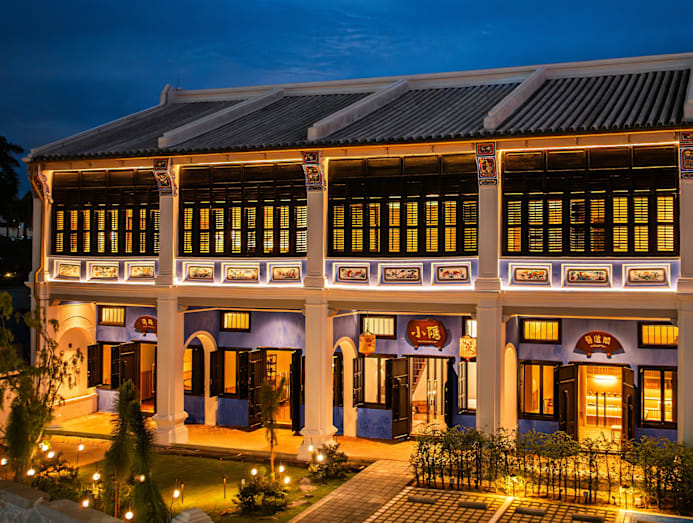
The Blue Mansion on Leith Street was built in the late 19th century by Cheong Fatt Tze, the Hakka merchant often described as the “Rockefeller of the East”. It was restored in the 1990s by conservation architect Laurence Loh, with the project winning UNESCO’s Most Excellent Project title at the Asia-Pacific Heritage Awards in 2000. Across the street, five terrace houses built in 1904 as servants’ quarters for the mansion household have reopened as The Qing Suites, led by Loh’s son, Shen Loh-Lim. The property opened in December 2025 with 13 suites ranging from 44 sq m to 67 sq m.
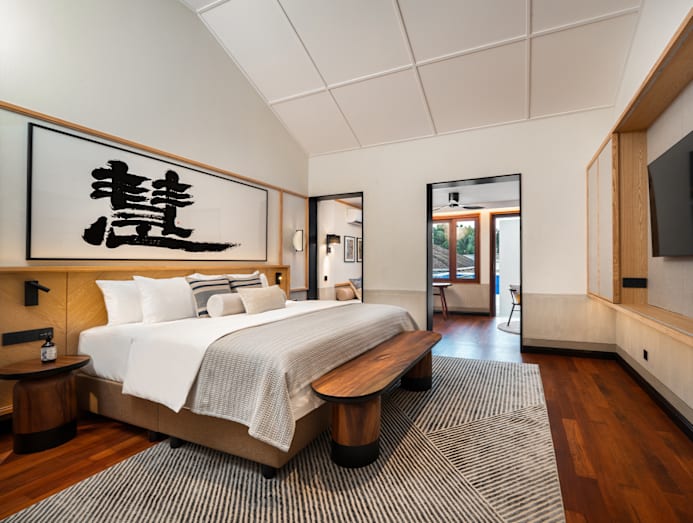
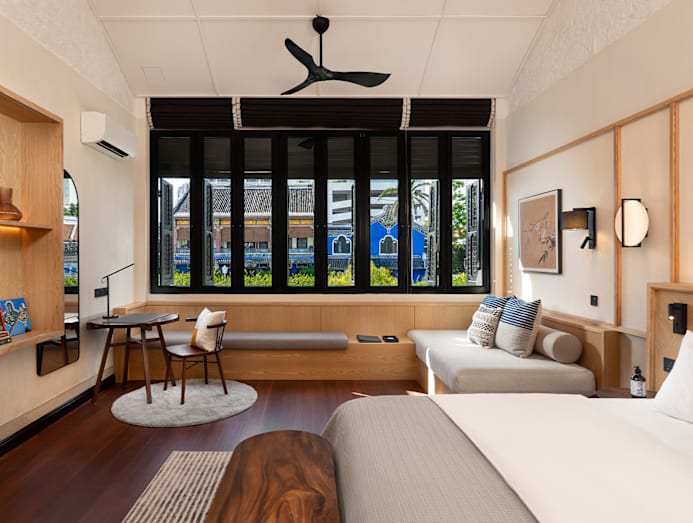
The facade was restored using traditional craft techniques, including Chien Nien sculptural reliefs and Cai Hui decorative painting, carried out by some of the artisans who worked on the Blue Mansion. Inside, hexagonal terracotta tiles were left in place, cracks included; salvaged timber floors were retained where they remained usable; and old clay roof tiles were reused as flooring in the garden courtyards. The arches connecting the five terraces were built by Italian craftsman Giovanni Santo, who was then working on the restoration of Fort Cornwallis. The central courtyard remains open to the sky. After a feng shui consultation, the main entrance was aligned with the door opposite the Blue Mansion, preserving what may have been an original energy axis.
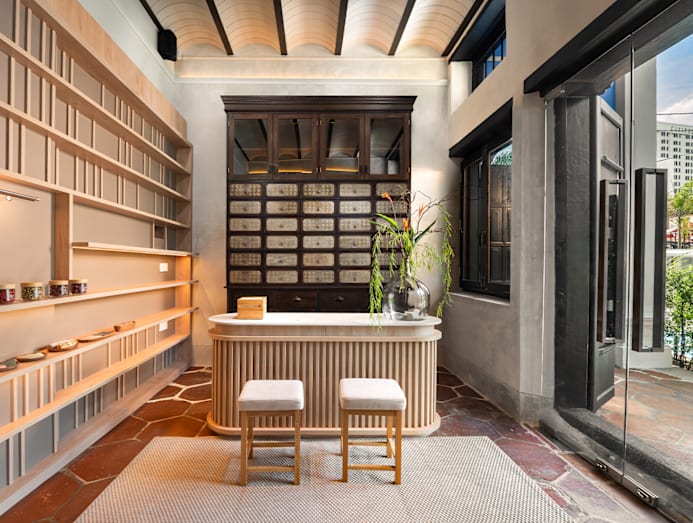
The 13 suites are divided into three categories. Signature Suites face the mansion through black timber-framed windows; Garden Suites open onto private walled courtyards, with terracotta tiles running from indoors to outdoors; and Terrace Suites have access to a rooftop garden. Furniture was commissioned from Penang makers including Dad’s Wood and Pirates Studio. On the ground floor, Virtue TCM offers treatments rooted in Traditional Chinese Medicine (TCM), beginning with pulse diagnosis before moving on to gua sha, cupping and meridian massage. Cheong Fatt Tze’s father was reportedly a TCM practitioner, giving the spa a historical link to the site.
THE MILLEN
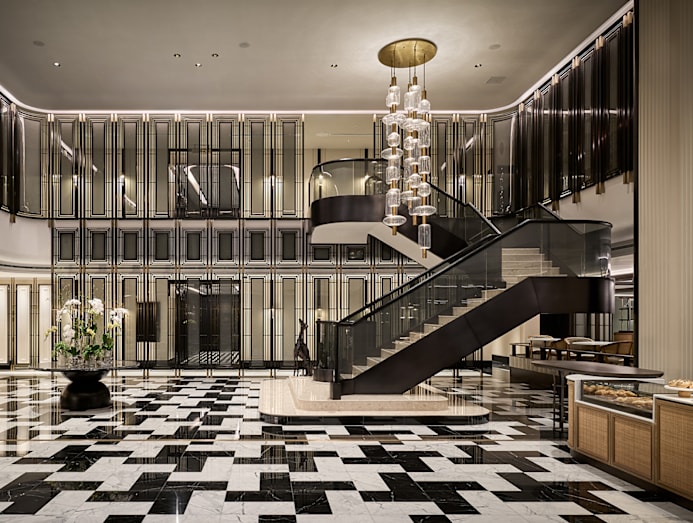
The northern seafront road now known as Jalan Sultan Ahmad Shah was formerly Northam Road, an address long associated with Penang’s colonial-era mansions and wealthy merchant families. By the late 19th century, British administrators and Straits Chinese merchants were building residences along the corridor, helping establish its reputation as Millionaire’s Row. The Millen Penang, Autograph Collection, now operates at 55 Jalan Sultan Ahmad Shah, in a building formerly known as the Northam All Suite Hotel. It was redesigned by Kuala Lumpur-based Bluwater Studio.
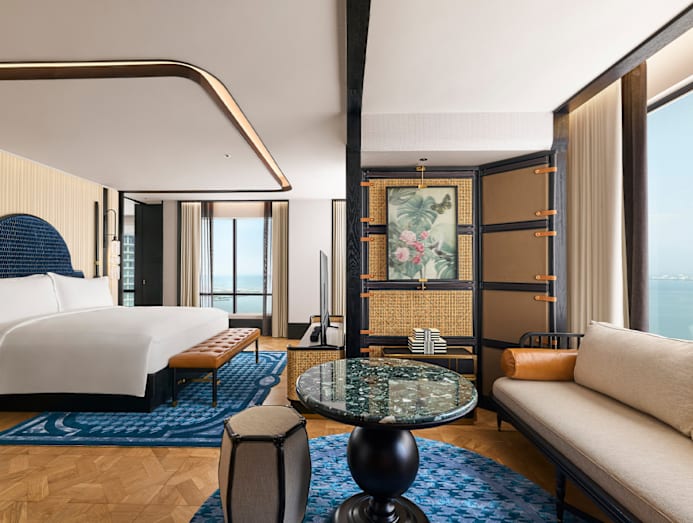
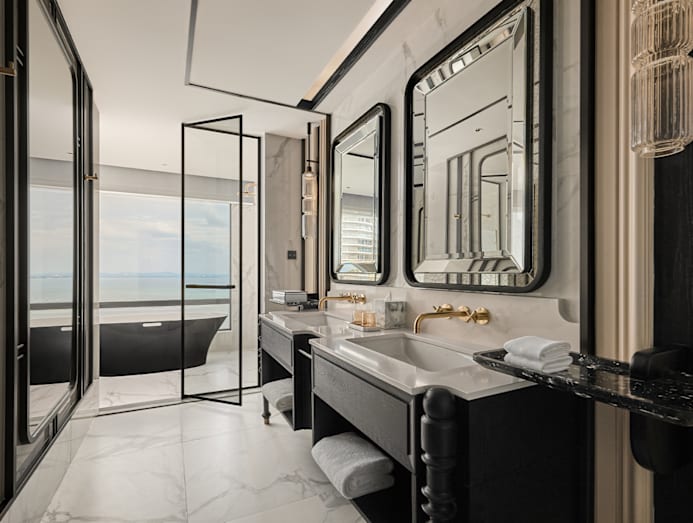
The gold-tinted facade is visible from the street, but the redesign’s main advantage is space. Rooms start at 56 sq m and extend to a 156 sq m two-bedroom Presidential Suite, with floor-to-ceiling windows framing the sea or Penang Hill views. Interiors are finished in whites and creams, with dark wood accents and upholstery in deep blue and ochre. Marble-clad bathrooms have dual vanities and freestanding bathtubs, while custom organic toiletries are scented with nutmeg, once one of Penang’s key crops.
In the lobby, Pamela Tan of Poh Sin Studio’s Bloom Totem serves as the focal point: a sculptural fountain inspired by the geometric patterns found in Penang’s architectural heritage. Other works, including Aboud Fares’ Forged in Motion, a horse mid-gallop rendered in twisted iron strands, and pieces by Loh Chee Peng and Thomas Powell, are placed throughout the property. Good Society operates as a coffee salon by day, serving afternoon tea and artisanal coffee, before turning into a cocktail bar by night. Lili focuses on Malaysian cuisine, while Blacklinen serves charcoal-grilled aged meats and premium seafood. The Nut&Meg Spa draws on Indian, Malay and Chinese healing traditions across four private treatment rooms.
ARGUS RESIDENCE
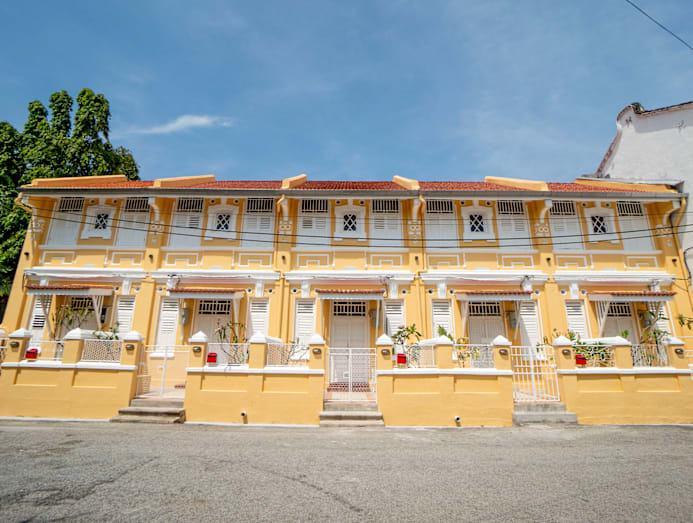
The present Church of the Assumption on Farquhar Street dates to 1860–61, though the parish’s roots go back to George Town’s founding in 1786. Behind it, a row of terrace houses on Argus Lane dating to 1928 for Eurasian Catholic families, including De Souza, Scully, Newman and Cutter. The houses remained occupied through the Japanese Occupation and the decades that followed, until the death of the last resident, Ann Cutter, a few years ago. They were later handed by the Catholic Church to George Town Heritage Hotels for restoration and long-term care.
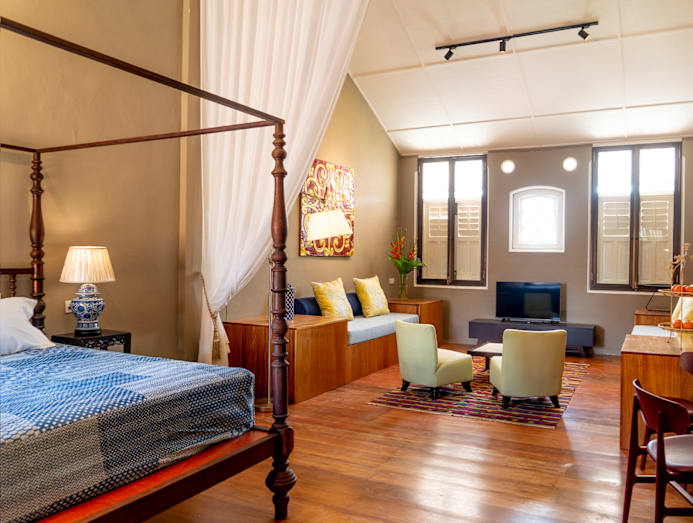
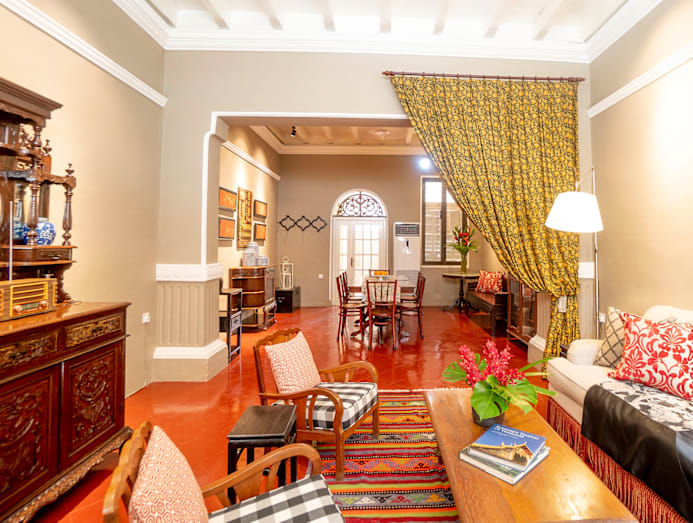
The 12-month restoration was led by Chris Ong, whose other properties, Seven Terraces Hotel and Muntri Mews, are rooted in Peranakan material culture. Argus Residence takes a different direction, drawing on British colonial and Eurasian domestic traditions. The facades are painted in a warm yellow that once covered both the houses and the neighbouring church, using Mini Copper, a breathable paint formulated for heritage buildings. Inside, an Edwardian sideboard anchors the living area, alongside Russian tea kettles and curtains in William Morris patterns. In the separate bathroom pavilion, water flows from a repurposed lion’s-head doorknocker into a clawfoot bathtub. Upstairs, a four-poster colonial bed and daybeds that convert into sleeping spaces allow each 2,000 sq ft house to accommodate up to six guests. Each house is named after one of the families who lived there.
Many of the decorative pieces at Argus Residence were made by Ong’s carpenter, Chew Lau Bit, using 19th-century wood carvings salvaged from demolished buildings. A writing desk by local manufacturer HinLim sits by the window, alongside a vintage record player. Guests can reach Seven Terraces Hotel’s dining venues via a back lane linking the two properties.
BERTAM WELLNESS SPA & VILLAS
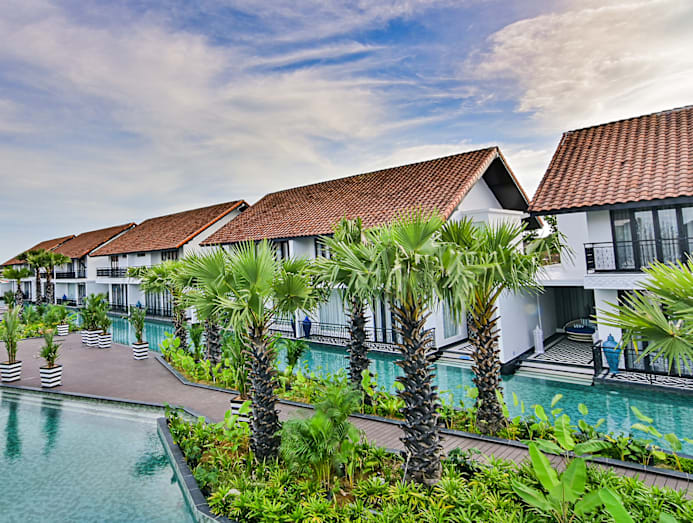
Bertam Wellness Spa & Villas sits in Kepala Batas, within a compound of lagoons and gardens about 43km from Penang International Airport. A member of Small Luxury Hotels of the World, it is a purpose-built retreat rather than a heritage conversion, with a design that draws on Moroccan riad architecture and Malaysian vernacular traditions.
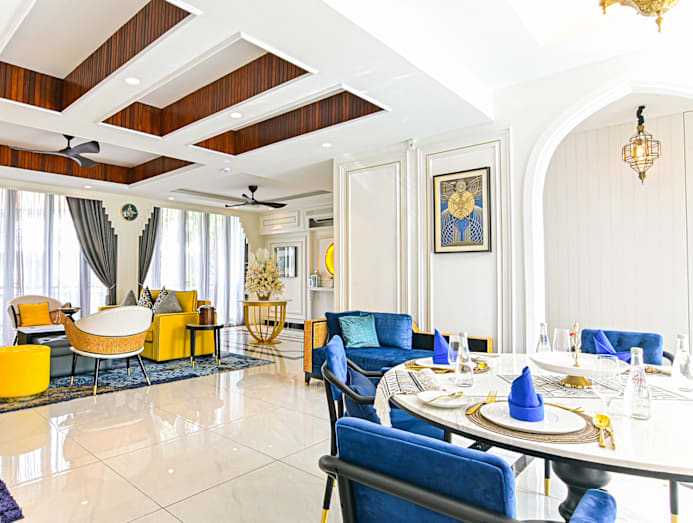
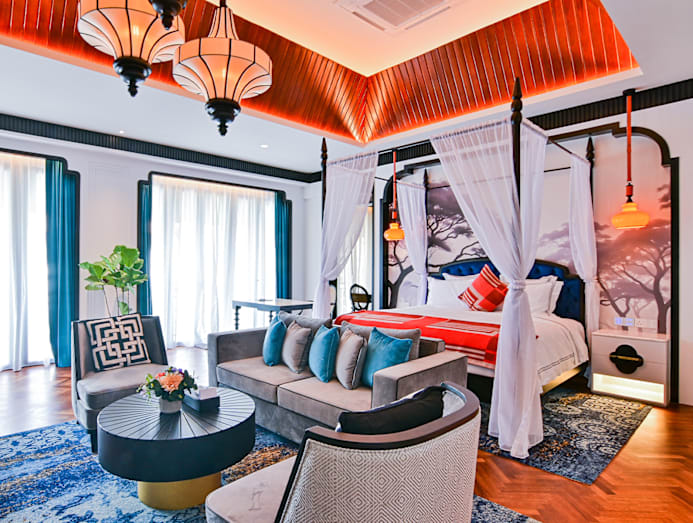
Guests stay in villas, with three categories available. The Moroccan Villa has arched doorways, a private pool, a Jacuzzi and a daybed, with interiors rich in colour and texture. The Oriental Villa features soft neutrals offset by warm accents; its bathroom is arranged around a standalone soaking tub facing the inner garden courtyard, with an open-air rain shower alongside. The Family Villa is a duplex without a private pool, opening directly onto the lagoon, with a second bedroom on the upper floor.
The spa menu includes singing bowl therapy, salt chamber healing, floating baths and equine-assisted therapies, alongside Ayurvedic rituals, massages and body treatments. Zahraa, the 30-seat restaurant, has a hand-painted floral ceiling and a menu built around organic produce, with plant-based and non-plant-based options at every meal. A sunken bar set within the lagoon and reached by a small bridge serves drinks and light bites through the day.