Inside 1887 by Andre Chiang at Raffles Hotel: A time-travelling menu rooted in Singapore’s past
Inspired by more than a century of menus and memories, the celebrated chef returns with a restaurant that blends history, craftsmanship and choice into a distinctly modern dining experience.
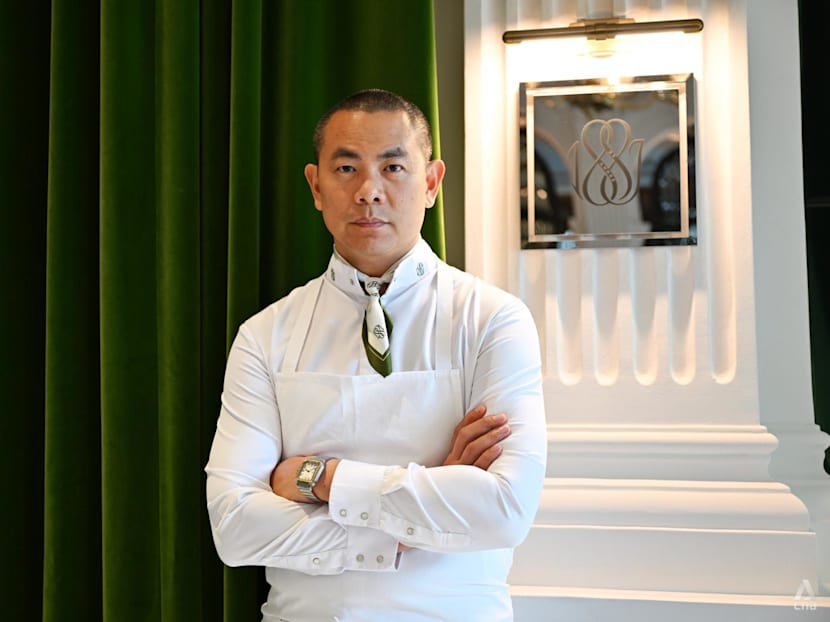
Chef Andre Chiang unveils 1887 by Andre at the Raffles Hotel. (Photo: CNA/Raydza Rahman)

This audio is generated by an AI tool.


Turtle soup with golden sherry, followed by a meaty, spiced Duck Apicius; and, for dessert, a coupe of wild rose ice cream. That’s what would have made for a good meal at the Raffles Hotel in the late 1800s. And, for chef Andre Chiang’s triumphant return to the Singapore fine dining scene, it’s also what serves as powerful creative inspiration in the most anticipated restaurant opening of the year.
After closing his two-Michelin-starred Restaurant Andre in 2018 at the height of its acclaim, many wondered if the celebrated chef would ever return to the city that helped define his career. With 1887 by Andre at Raffles Hotel, he finally does — but instead of picking up where he left off, he’s chosen to do something entirely different.
“It’s not just about showcasing my cuisine anymore. It’s really about connecting stories and histories and the land… to give something special to Singapore,” he said.
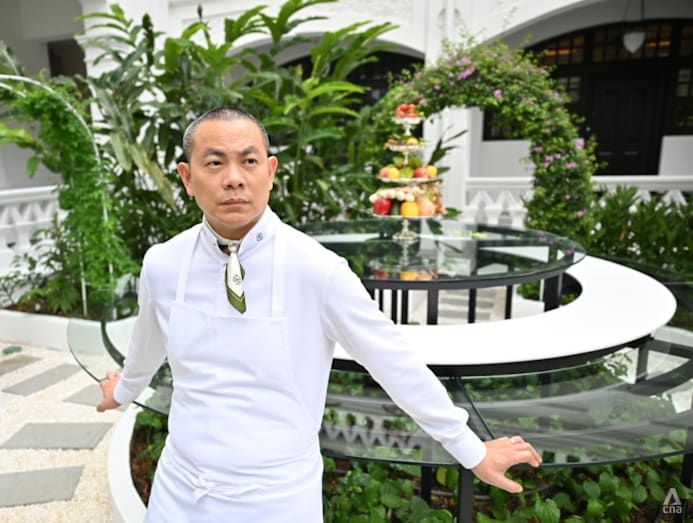
Set within one of the city’s most storied landmarks, 1887 is a restaurant that looks both backwards and forwards, and one that rethinks what fine dining can be today.
Opening its doors on Mar 31, it is ostensibly a restaurant, but also a time machine. “My vision is to bring this restaurant back to where it was before… ideally back to day one,” he said — 1887, of course, being the year the Raffles Hotel was established.
A bit of wallpaper and wainscoting won’t cut it. The space the restaurant occupies once served as the hotel’s historic formal dining room. Known as Elizabethan Grill and also Raffles Grill, it has seen all manner of grand events including the coronation of King George VI and Queen Elizabeth in 1937.
To bring appropriate pomp and circumstance to the space, Chiang worked with interior designer and personal friend Bill Bensley, creating a dining room filled with silver palm sculptures, punkah fans and a hand-painted ceiling designed to evoke a view of tropical foliage against a glasshouse roof.
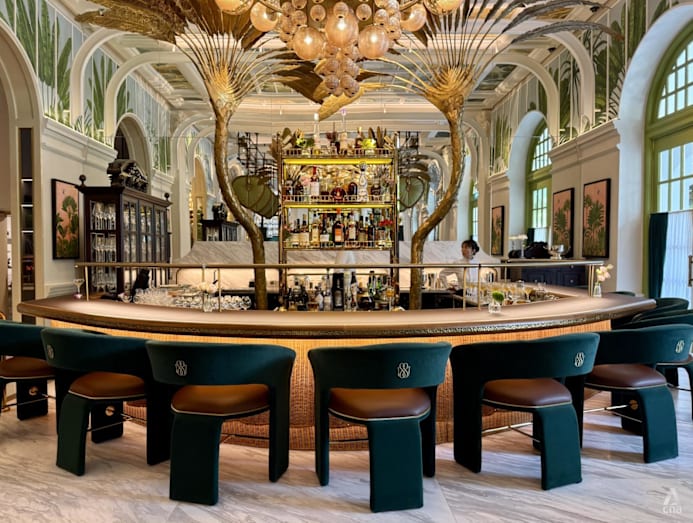
Victorian maximalism is the order of the day. Silver cloches, antique tableware and goblets for drinking water — all the details matter. “They are things we cannot replicate anymore,” Chiang said. “That is luxury — pure craft.”
When he invited us to leaf through the pages of an old book containing menus from past events at the hotel, we pored over the contents together in fascination. Each one tells a story. A menu served on the Elizabethan Grill’s opening night on Jun 1, 1953, for example, offered “consomme Westminster”, “filets of sole Elizabeth”, “supreme of chicken Windsor” and “bouchee Balmoral”; the price per person was $35.
Chiang and his team spent more than a year delving into archives like these and researching the cuisine of the 1900s in order to create a fitting menu for the restaurant.
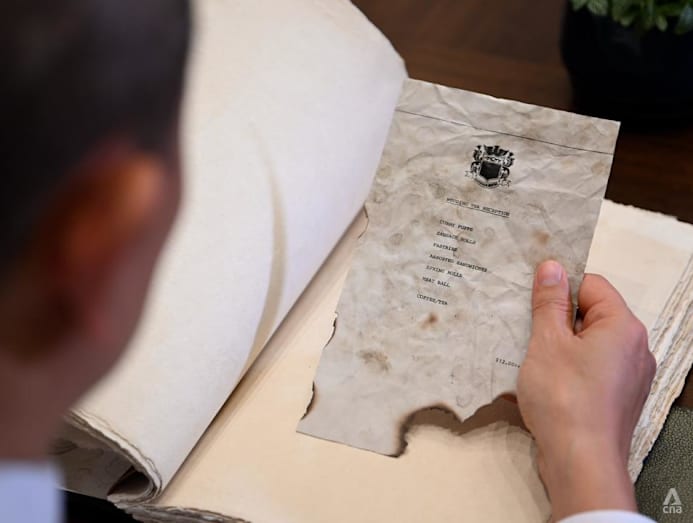
“The more I look, the more inspiration I have. Like, just now, I flipped through the archive and saw they served a ‘wild rose ice cream’. I thought, ‘Wow, they were so creative'. I immediately had the image of how I was going to do a wild rose ice cream.” He added, “This history, these stories, shouldn't be buried somewhere in the archives. We should be able to give it life, so people can savour it and say, ‘This is a flavour from 130 years ago’.”
That said, “We’re not trying to restore history, but rather, we get a lot of inspiration from it.”
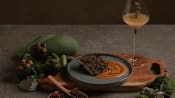
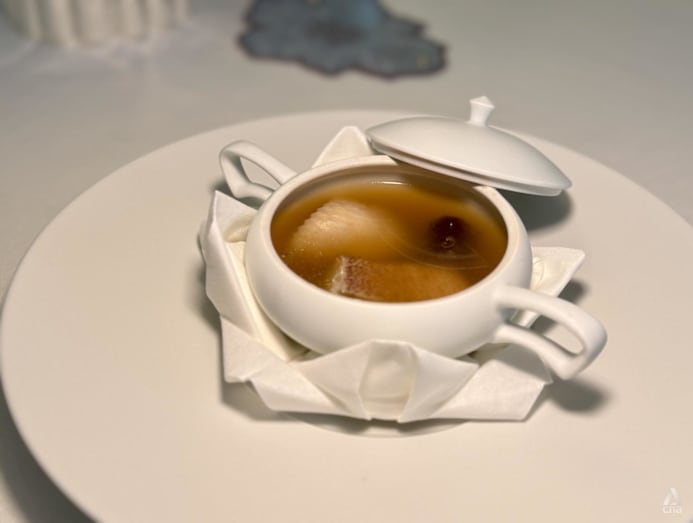
For example, a discovery of turtle soup on a menu from 1917 — the dish was haute cuisine and a status marker at the time — led him to interpret the dish in his own way. “Turtle Soup from 1887” is not made with turtle at all, but rather double-boiled chicken, grouper and herbs. “If I blindfolded you, you would think it was turtle soup,” he said.
The restaurant’s menu also follows the tradition of naming dishes in honour of prominent people, like the Mousse au Chocolat “Sarah Bernhardt”, named after the 19th century French actress and artist Chiang considers to represent his target audience.
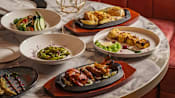
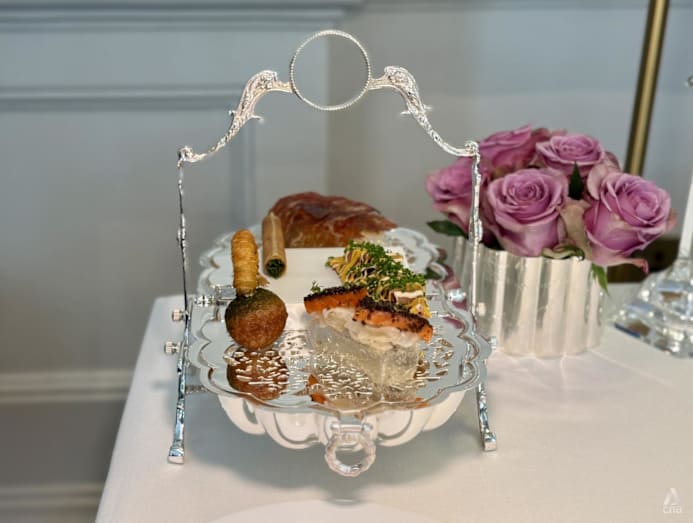
If you wanted to dine like the Victorians did, you could order the Grand Plateau de 1887, a spread of hors d’oeuvres on a silver tray; the caramelised Duck Apicius roasted with spices; the Skate Meuniere or the crepe Suzette.
But, your eye might be tempted away by the menu’s locally-inspired dishes of Lobster Heh Mee “Al Ajillo”, Blanquette de “Bak Kut Teh” and Chiang’s version of his ideal chicken rice, where the rice is baked together with the chicken so it absorbs all its juices.
Then there are also dishes that bear the stamp of Chiang’s own style — favourites from his menus at Restaurant Andre that fans still remember and miss.
While Restaurant Andre, built around Chiang’s “Octaphilosophy” expressing his worldview through eight elements like texture and memory, served a single tasting menu that was meticulously choreographed, Chiang wanted 1887 to take the opposite approach. The face of dining, of course, is changing.
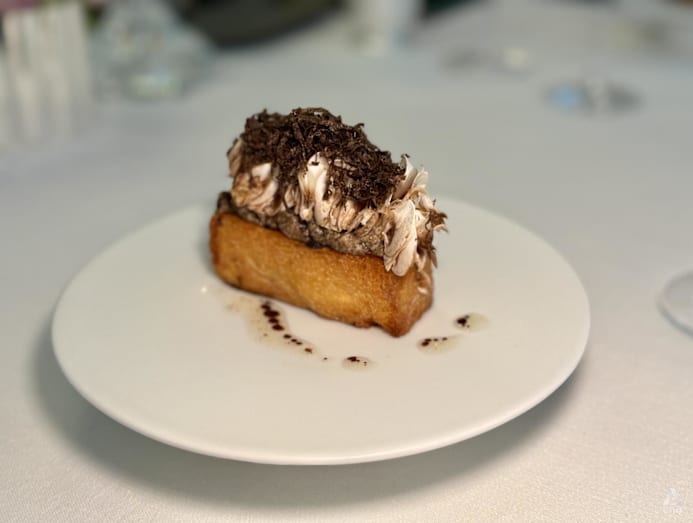
Instead of a fixed menu, there are nearly 60 dishes. And, instead of asking diners to follow his vision, Chiang is now inviting them to shape their own. “The new direction of dining is to give back this authority to the diner,” he said. “More and more people don’t want to go through three hours with 15 courses. You want to dine at your pace.”
That means you can come in for a full, multi-course experience, or just a few dishes. You can lean into classic European flavours, explore local interpretations, or go all-in on Chiang’s more contemporary creations. Or, travel everywhere in one meal.
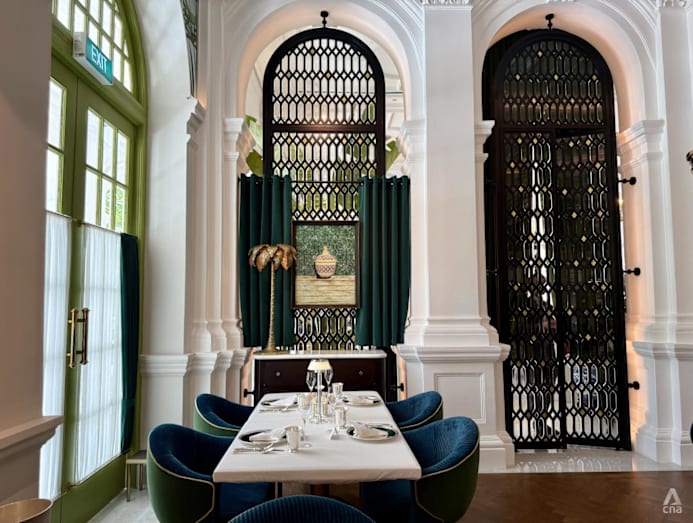
“You can stop anywhere you want, or mix and match,” he explained. “I call it the taste of time, because I think you can decide which time period you want to go to and what you're looking for, and it's timeless. It's not something that you have to change every season. It tells the story of the past 100 years.” This, he thinks, is the beauty of an environment that allows flavours to flow fluidly. “I think that’s 1887.”
He added, “I think people will really appreciate that you're not just seeing history but touching history, tasting history — and, yet, something contemporary at the same time.”
The dishes may move across time and place, but they’re tied together by Chiang’s instinct for flavour. For those who loved Restaurant Andre, 1887 will feel like a new experience. The technical precision is still there. So is Chiang’s ability to create dishes that feel at once comforting and unexpected. But the experience is broader, more open and less centred on him as a chef. “I see myself more as a director or curator,” he said.
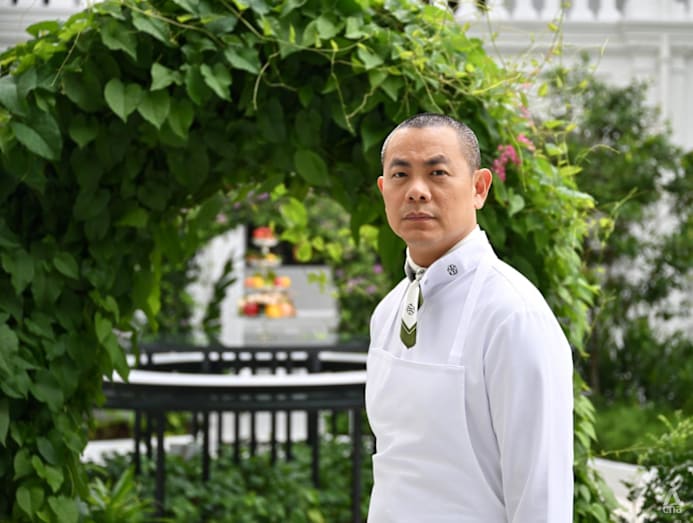
If the project should raise questions about complicated aspects of colonial history, Chiang’s opinion is that history is “a sum of who we are”. For him, the past isn’t something to erase or glorify, but something to learn from — much like his own journey across different countries and cultures.
The aim is not to replicate but to create, and that means cooking with a different perspective. It is like “restoring a painting — you have to peel off bit by bit and try to see how it originally looked, and sometimes you have to reinterpret the part that is missing for the better.”
1887 is still unmistakably Chiang’s in its precision, clarity of flavour and attention to detail. But it’s also broader, more open and less about a single point of view. For diners, that makes the experience feel lighter, more personal and, in some ways, more relevant to how we eat now, without compromising on the special quality of a meal being an occasion to savour.