Can Chinese tea pairing rival wine? Jin Ting Wan’s Jacky Zhao Gang thinks so
Jacky Zhao Gang, head tea master of Jin Ting Wan, explains how Chinese tea can complement Cantonese cuisine, why it should be taken seriously, and what Singapore still gets wrong about tea culture.
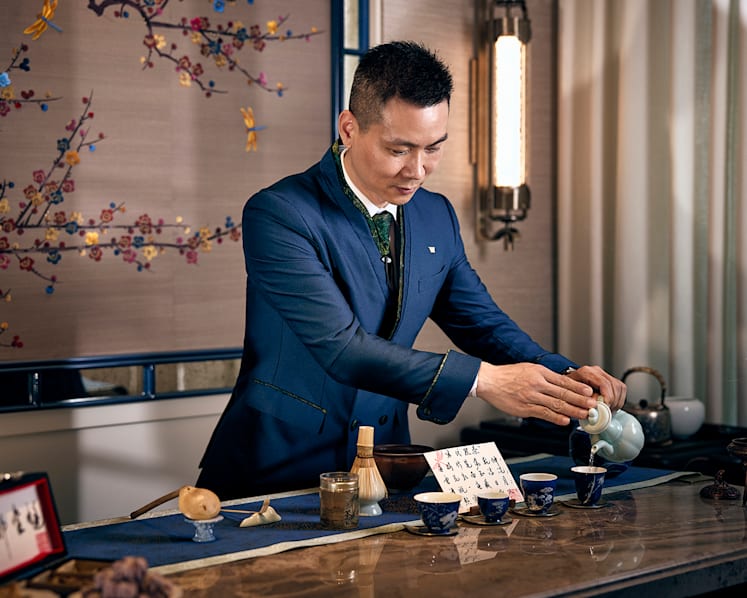
Jacky Zhao Gang, head tea master of Jin Ting Wan. (Photo: CNA/Dillon Tan)

This audio is generated by an AI tool.


It was late on a Monday afternoon when I met Jacky Zhao Gang. The 40-year-old is the head tea master of Jin Ting Wan, the fine-dining Cantonese restaurant perched 55 storeys above the city in Marina Bay Sands. Staff, suppliers and contractors bustled about as the restaurant prepared for dinner service.
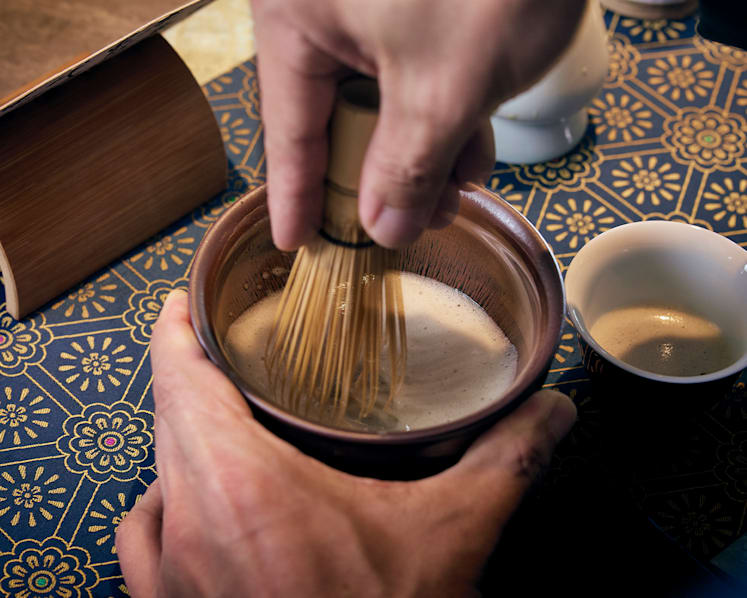
But Zhao was a picture of calm. In the restaurant’s tea appreciation nook, he methodically prepared a Song dynasty-style tea experience, whisking powdered tea until a froth formed.
If this sounds familiar – like the art of making matcha – you’re not wrong. The Song-era technique is believed to have influenced the Japanese tea ceremony after envoys returned from China in the 12th century.
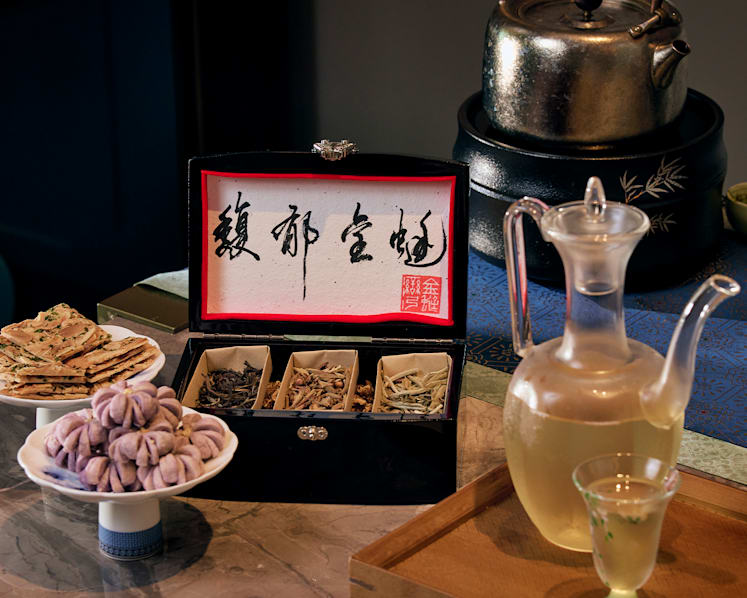
To make the experience even more authentic, Zhao penned a poem on a small placard with a calligraphy brush. In a final flourish, he lit a stick of agarwood incense, letting its intoxicating aroma fill the space. “This is how the ancients used to enjoy their tea,” he proclaimed.
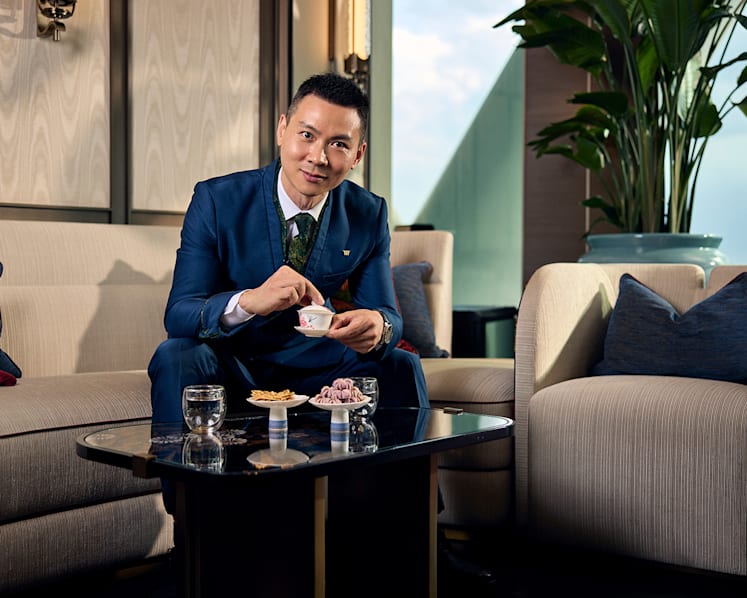
Like the scholar-literati of old, Zhao is very much a polymath. His many talents include an encyclopaedic knowledge of Chinese tea and a deep mastery of tea culture. Since beginning his journey in 2003, he has worked alongside Michelin-starred chefs and served celebrities such as Tony Leung and Jam Hsiao.
“I’ve met a lot of celebrities,” said the Sichuan native, speaking in Mandarin with a smattering of English. “When they drink tea, they typically ask for something soothing for the throat, or a ‘cooling’ tea like chrysanthemum. Chinese singer Han Lei, who is of Mongolian ethnicity, likes chrysanthemum tea. Tony Leung loves pu’er tea.”
THE ANDRE CHIANG CONNECTION
While working at Wing Lei Palace at Wynn Palace Macau in the pre-Covid era, Zhao met Andre Chiang. The Taiwanese chef was then on the cusp of opening Sichuan Moon, a high-end contemporary take on Sichuanese cuisine in the same hotel.
Chiang’s reputation preceded him. “[Before I met him], I was intimidated by him. I heard he had a fiery temperament and frequently berated his staff,” Zhao recalled. But subsequent interactions proved those rumours false. “When we worked together from 2019 to 2023, he didn’t even scold me once!”
Sichuan Moon needed a tea master skilled in the performative Sichuan style of gongfu tea, in which tea is poured from long-spouted teapots and paired with martial-arts movements. Who better than Zhao, a Sichuan native with that exact skill set?
Zhao has high praise for Chiang. “In my heart, he’s my Bruce Lee. He’s given me a lot of encouragement over the years. Before I met him, I hardly gave interviews to the media. But for tea pairings, I had to explain things. I gained confidence from him.”
The two bonded over a shared passion for tea, and still enjoy catching up over tea. “We don’t see each other very often, but from time to time, we meet up. He comes to Singapore once in a while. He has a new restaurant now, 1887 by Andre at Raffles Singapore. He holds a very important place in my heart – I consider him my second shifu (teacher).”
CHINESE TEA PAIRING – THE NEXT DINING TREND?
At a time when alcohol consumption among Singaporeans is declining – particularly among younger consumers – could Chinese tea pairing be a worthy alternative?
“Absolutely,” Zhao said. “It also has tremendous potential, especially as diners shift towards more health-conscious and inclusive dining experiences.” Tea, he added, offers a broad, nuanced flavour spectrum that can accompany a meal from start to finish.
Zhao is careful not to suggest that tea could replace wine, given that Jin Ting Wan boasts an extensive wine list, including Chinese labels that are relatively hard to come by. “I don’t see tea as a substitute for wine, but as a peer,” he explained. “It stands independently as a refined pairing option with its own structure, heritage and credibility.”
Tea becomes a particularly worthy contender within the realm of Chinese cuisine. Sommeliers sometimes find it challenging to pair wine with Chinese food because of its broad range of flavours and the fact that dishes are often served all at once, family-style.
Asked to compare tea pairing with wine pairing, Zhao pointed to three key differences. Tea, he said, tends to work more quietly alongside food, enhancing flavours without competing, whereas wine often brings a more defined structure to the table.
Tea also expresses itself with greater subtlety. Its aromas are understated and restrained, which aligns naturally with Chinese cuisine, where the dish is meant to lead. Finally, tea is highly versatile. It suits guests of all ages and every stage of the meal, whether to refresh the palate, balance richness or provide a gentle finish.
WHAT’S LACKING IN SINGAPORE’S TEA CULTURE
But before tea can be considered a true peer of wine, Zhao believes Singapore’s tea culture needs to mature. “Local diners tend to have a traditional Chinese foundation, but are also shaped by Western influences and modern lifestyles, which often leaves their understanding of tea at a surface level,” he observed.
From what he has seen at many teahouses in Singapore, staff simply use pre-boiled water to make tea, without paying much attention to the finer details of preparation. “The teahouse staff feel that they just need to add hot water to tea to make tea, but in fact, this isn’t the case,” Zhao lamented.
“For Chinese people, half the experience comes from enjoying the sensation of tea in the mouth, while the other half comes from appreciating tea culture. That’s why we want to organise more tea-based activities at Jin Ting Wan – when you drink a cup of tea, you also get to know its origin, history and special qualities.”
From his observations, Zhao believes three key developments will take place in Singapore over the coming years. First, tea pairing will become standard in high-end Chinese dining, much like wine pairing. Next, traditional, more elaborate tea rituals will evolve into more modern, streamlined experiences. Finally, local diners will grow more discerning, looking beyond tea names to provenance, craftsmanship and vintage – signalling a more sophisticated tea culture.
BUILDING A TEA MENU TAILORED TO SINGAPORE
While wine sommeliers are commonplace in Singapore, tea masters like Zhao are far rarer. Traditionally seen as people who simply brew and serve tea, tea masters today shoulder a far broader responsibility.
Within Singapore’s vibrant, multicultural dining landscape, Zhao sees his role as a bridge between traditional tea culture – with its millennia of history – and modern diners.
“My core role is to translate traditional Chinese tea culture into contemporary, experiential moments. We need to preserve the depth and ritual of tea while presenting it in a way that resonates with today’s aesthetic and pace,” he said, referring to local diners’ preference for fast, efficient service.
The tea menu at Jin Ting Wan is built on three pillars. It covers China’s core tea categories, balancing classics with rarities. All six major Chinese tea categories – green, white, oolong, black, pu’er and flower teas – are represented, ensuring there is something for every palate.
“At the same time, preserving the integrity of traditional flavour profiles was essential. We therefore selected benchmark teas from classic, authoritative regions, ensuring each category is represented by teas that express its authentic character,” Zhao explained.
To keep the tea list dynamic and engaging, Zhao also introduced an element of discovery. This takes the form of rotating seasonal or small-batch offerings of lesser-known premium teas, allowing guests to try something new while maintaining overall coherence.
Finally, the tea list is structured by flavour intensity and mouthfeel. This, Zhao said, makes food pairing more intuitive and allows the tea master to guide guests with confidence. The structure offers depth and credibility for experienced tea drinkers while remaining approachable and engaging for those new to Chinese tea.
One thing is clear: no tea is chosen simply because it is rare or highly prized. It is tea in service of the cuisine, not the other way around.
WHAT DINERS SHOULD TRY AT JIN TING WAN
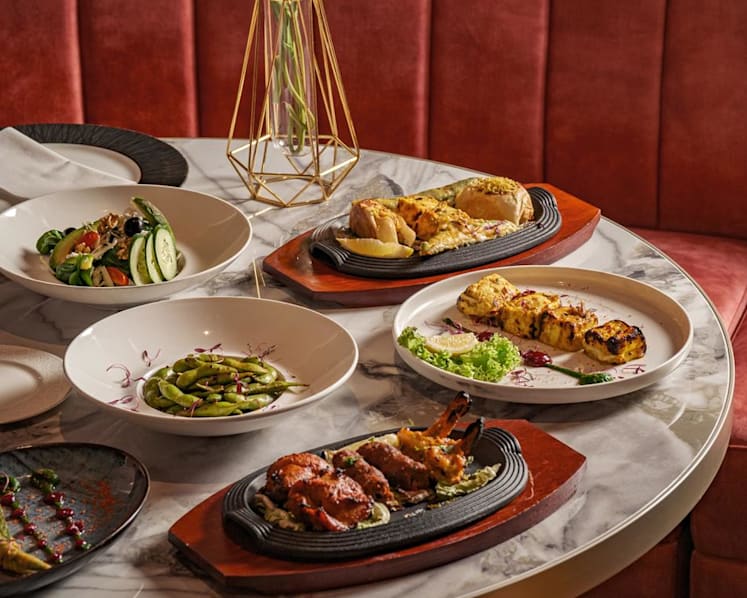
As a Cantonese restaurant, Jin Ting Wan’s food emphasises freshness and layered flavours.
In devising tea pairing menus, Zhao’s foremost consideration is that the tea must never overpower the dish – it should enhance, not compete. After dish compatibility come terroir, seasonality and, finally, rarity.
“Terroir defines a tea’s foundation; seasonality affects freshness and drinkability; rarity is a value-add, never a priority,” said Zhao.
As for what diners should try on their next visit, Zhao recommended the Roasted ‘Pipa’ Duck with Tangerine Peel and Water Chestnut, paired with Aged White Tea with Tangerine Peel.
The duck is tender, with a smoky, caramelised edge, complemented by the refreshing sweetness of the water chestnuts. The aged white tea brings mellow, natural depth, while the tangerine peel adds a subtle herbaceous lift without overshadowing the duck’s savoury richness. The tea’s smooth texture mirrors the duck’s tenderness, while the peel’s lingering finish echoes Cantonese cuisine’s emphasis on purity and balance.
Other classic pairings include suckling pig with Wuyi Rock Oolong – “the tea cuts through the richness and lifts aromatics”; steamed seafood with Silver Needle White Tea – “the flavours are clean and light, making it highly complementary”; and Ripe Pu’er as a post-meal drink – “it offers a comforting, grounding end that also helps with digestion”.
FROM CHENGDU TO THE WORLD
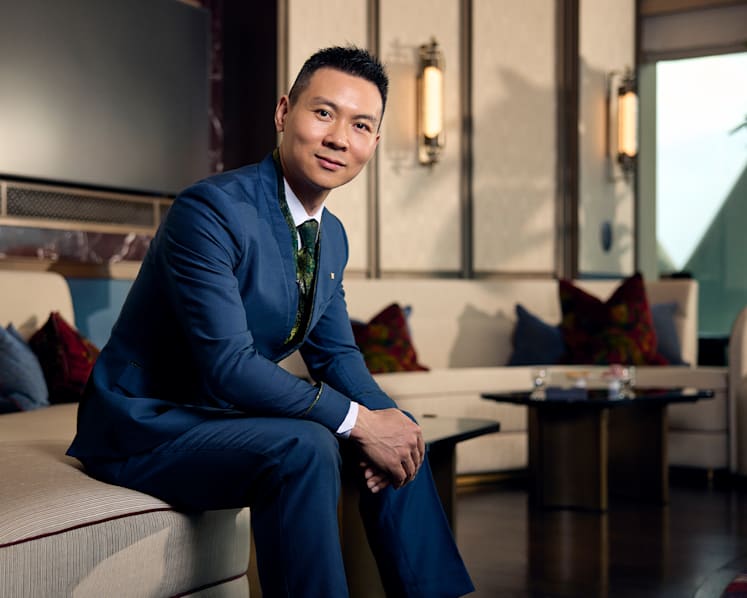
The best things happen when you don’t plan them, as the saying goes. For Zhao, becoming a tea master and working across China, Japan and Singapore was never something he intentionally set out to do. When he first started, he said, he did not even know what pu’er tea was.
As a 20-year-old busboy in his first job at a Chengdu restaurant, he was deeply impressed by the resident tea master’s skill set. “He was using a teapot with a very long spout and performed his moves with such confidence and ease. It looked so impressive and visually enticing.
“I didn’t think much about tea as a career, but I did imagine [a future in F&B, where] I would one day become a chef or restaurant manager. But then I looked at my payslip – I was only earning 600 RMB (US$88; S$112). The tea master was earning 10 times more, and he looked so suave doing what he did. It also impressed the girls!” Zhao recalled with a laugh.
Zhao’s interest was piqued, and he spent his breaks learning those moves from the tea master, who became his shifu. From then on, he persevered, and the craft changed the course of his life.
In Singapore, Zhao heads to Chinatown whenever he wants a taste of home. “There’s a nice restaurant there, Dong Fang Mei Shi Fan Dian, on New Bridge Road. They serve many Sichuan dishes. It’s definitely different from what we get in Sichuan, but it’s still very good food.”
Does that make him a fan – as many Singaporeans are – of mala? Of course. “In my heart, mala is like a ‘superhero’. It offers a very direct connection to your senses – and so does tea. When you drink tea, your senses are awakened.”